
By Diana N. Kintu
Washington, D.C.: Uganda is participating in the 2026 Spring Meetings of the International Monetary Fund (IMF) and the World Bank, taking place in Washington, D.C. from 13 to 18 April 2026.
The high-level meetings bring together global policymakers, finance ministers, central bank governors, private sector leaders, and development partners to discuss pressing issues shaping the global and regional economic outlook.
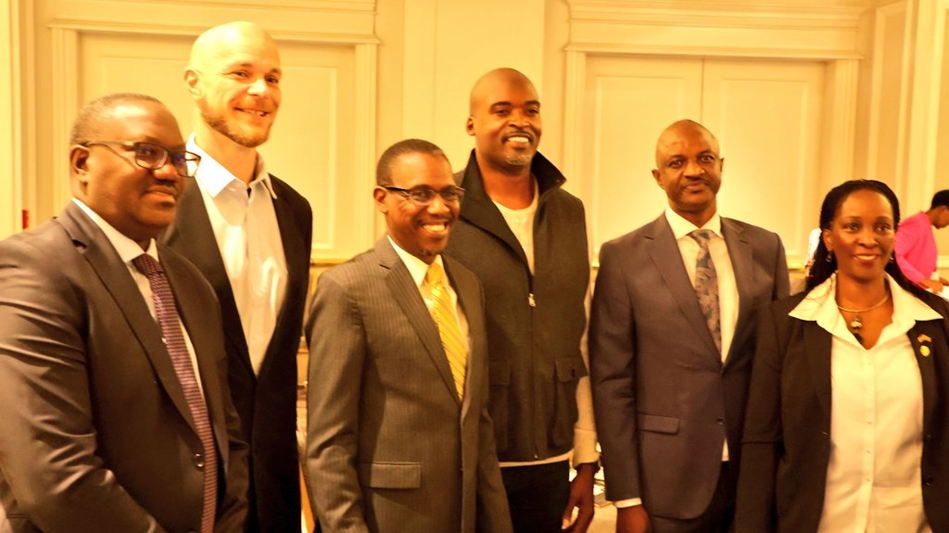
According to the Ministry of Finance, the Ugandan delegation is led by the Minister of State for Finance (General Duties), Henry Musasizi, alongside senior government officials responsible for economic planning, fiscal policy, and monetary coordination.
The Spring Meetings are being held under the theme “Building Prosperity through Policy,” focusing on global economic stability, growth prospects, poverty reduction, and strategies to strengthen resilience in developing economies.
Discussions are expected to centre on how governments can mobilise investment, improve productivity, and accelerate inclusive growth amid tightening global financial conditions.
Uganda’s Permanent Secretary and Secretary to the Treasury, Ramathan Ggoobi, said the country’s priority at the meetings is to advance negotiations for a new Extended Credit Facility (ECF) programme with the IMF and to secure additional concessional financing from the World Bank.
“Our focus this year will be on advancing negotiations for a new ECF programme with the IMF, and also negotiating for more concessional financing from the World Bank for our transformative projects and for financing the budget,” he stated.
He explained that the financing discussions are intended to support Uganda’s national development agenda, particularly infrastructure expansion, economic transformation projects, and fiscal sustainability efforts.
The delegation also includes key senior officials such as Attorney General Kiryowa Kiwanuka and Governor of the Bank of Uganda, Michael Atingi-Ego. Their participation is expected to strengthen Uganda’s engagement on legal, financial, and monetary policy matters during high-level bilateral and multilateral sessions.
In addition to the IMF and World Bank meetings, Uganda will take part in the second US–Uganda Business and Investment Forum, where government officials are expected to engage with investors on opportunities in energy, infrastructure, agriculture, and digital innovation.
The delegation will also hold discussions with senior officials from the World Bank and IMF, including the IMF Africa Department leadership.
Uganda is further expected to participate in the Coalition of Finance Ministers for Climate Action, signalling its commitment to integrating climate resilience into national economic planning and aligning development priorities with global climate financing frameworks.
The Spring Meetings are widely regarded as a key platform for shaping international financial policies and development strategies. This year’s discussions are expected to focus on unlocking private investment, strengthening fiscal stability, and addressing debt vulnerabilities in emerging and developing economies.
According to the latest Africa Economic Update by the World Bank (April 2026), economic recovery in Sub-Saharan Africa is slowing, with growth forecasts revised downward due to multiple external and internal pressures.
The report highlights geopolitical spillovers from global conflicts, rising debt servicing costs, and structural constraints as major factors limiting economic expansion across the region. The report also recommends an ecosystem-based policy approach that aligns reforms with national capacities to enhance productivity and support long-term structural transformation.