

By Caroline Nakire
Government has promised to keep engaging the United States until Washington lifts its highest level travel warning against the country, even after Uganda was officially declared free of Ebola.
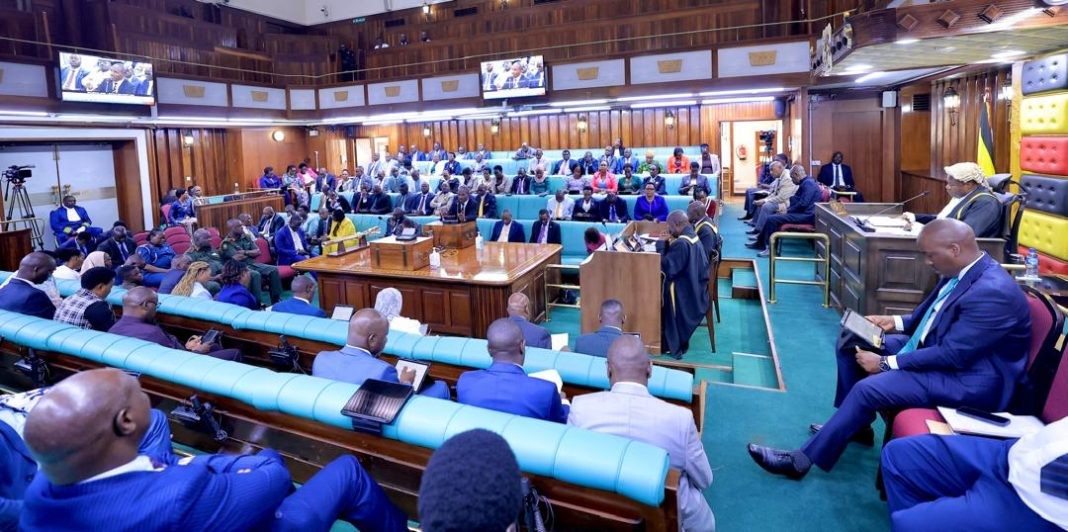
The assurance was given in Parliament on Wednesday by the Minister of State for Foreign Affairs, Haruna Kasolo, following growing anxiety over the damage the advisory could inflict on tourism and other sectors that depend on foreign visitors.
The United States re-listed Uganda on 9th November 2026 among 23 countries placed under a Level Four advisory, “Do Not Travel for Any Reason”, the most severe category issued by the US State Department. Washington cited the Ebola outbreak that was reported in Uganda in July 2026 as the reason for the classification.
Uganda, however, insists the listing no longer reflects the reality on the ground. After the last Ebola patient was discharged and the mandatory surveillance period passed without any fresh infections, the World Health Organisation formally declared the country Ebola-free. Health officials say the outbreak was contained swiftly and no new cases have been recorded since.
It is that contradiction, a clean bill of health from the WHO on one hand, and a maximum travel warning from Washington on the other, that has unsettled MPs and tourism operators.
The matter was raised on the floor of Parliament by the Member of Parliament for Kole South, Boniface Okot, who warned that the advisory was already hurting ordinary Ugandans whose livelihoods depend on visitors.
“Many players in the tourism sector claim this negative advisory is affecting them and even all Ugandans, a great deal,” Okot told the House.
Tourism is one of Uganda’s top foreign exchange earners, supporting hotels, tour guides, transport operators, craft sellers and communities around national parks. Operators fear that a Level Four warning will scare away American tourists, lead to cancelled bookings and force insurance companies to advise their clients against travelling.
Responding to the concerns, Kasolo told MPs that diplomacy, not confrontation, would guide Uganda’s next steps. He disclosed that the Minister of Foreign Affairs, Adonia Ayebare, had already held bilateral talks with the US Deputy Secretary of State on 28th August 2026. During that meeting, both sides had agreed to strengthen cooperation and keep channels of communication open.
But, Kasolo admitted, that first round of talks had not delivered the desired result.
“Now that the first engagement has not worked, we shall continue with more engagements and we will keep updating Parliament,” he said.
He added that American officials had, in fact, praised Uganda for the speed and professionalism with which it handled the Ebola outbreak. He said Washington had also reaffirmed the long standing partnership between the two countries in responding to public health emergencies.
According to Kasolo, the two sides had further committed to continued cooperation on health matters and on issues relating to national sovereignty.
For now, Government says Parliament will be kept informed as the engagements continue. MPs, however, want more than updates. They want a clear timeline for when the advisory will be reviewed and what evidence Uganda will present to prove that the country is safe for travel.
Behind the diplomatic language lies a broader concern: that travel advisories, once issued, often linger long after the health threat has passed, and the economic cost is borne not by governments, but by hotel workers, guides, drivers and small business owners.
As the festive season approaches, traditionally one of the busiest periods for tourism, pressure is mounting on Government to secure a swift revision of the advisory.