

By Caroline Nakire
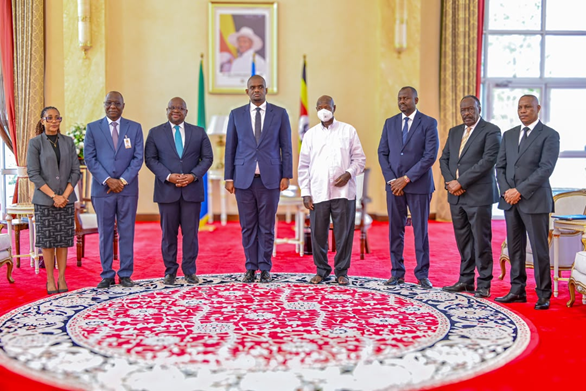
Entebbe — President Museveni and the H.E Ndejembi, Vice President of Tanzania have agreed to deepen economic cooperation and speed up the implementation of joint development projects between the two countries.
The two leaders met at State House, Entebbe, during a one-day working visit by the Tanzanian Vice President. The visit was aimed at reviewing progress in the bilateral relationship and reinforcing a partnership built on trade, infrastructure, energy and regional integration.
The Vice President conveyed greetings from the President of Tanzania and said Tanzania remains committed to close cooperation with Uganda. The message was that the two countries share common development priorities and a common interest in regional prosperity, and that continued cooperation is essential to achieving their respective development objectives.
President Museveni welcomed H.E Ndejembi and reaffirmed Uganda’s commitment to working closely with Tanzania. Continued dialogue, he said, is vital to strengthening the historical relationship between the two countries and to ensuring that joint initiatives deliver mutual benefits.
The discussions focused on four strategic areas: infrastructure development, energy cooperation, cross-border trade and regional economic integration.
Both leaders agreed that the value of cooperation will be measured by delivery. They emphasised the need for sustained engagement and closer coordination between their governments so that strategic projects are implemented in good time.
In particular, they highlighted initiatives that improve transport connectivity, ease trade, stimulate economic growth and create opportunities to improve livelihoods in both countries. Better links, they agreed, would benefit traders, transporters, farmers and businesses that depend on the movement of goods across the border.
Uganda and Tanzania enjoy longstanding diplomatic and economic relations. Both are members of the East African Community, which promotes economic cooperation and the free movement of goods, services and people among partner states. That shared membership gives their bilateral work a wider regional purpose.
The most prominent joint project is the East African Crude Oil Pipeline. The pipeline will transport Uganda’s crude oil from Hoima to the port of Tanga in Tanzania for export. It is expected to strengthen energy cooperation, improve regional infrastructure connectivity and create economic opportunities for both countries.
For Uganda, the pipeline provides a route to international markets. For Tanzania, it brings investment and new infrastructure. For both governments, it has become a test of whether bilateral commitments can be turned into practical results.
The Entebbe meeting closed with an agreement to maintain regular engagement. Officials described the talks as constructive, with an emphasis on follow-up between ministries and technical teams to ensure that agreed projects do not stall.
The message from both sides was clear: cooperation must move beyond statements and produce tangible benefits for citizens in Uganda and Tanzania, and contribute to wider economic integration and prosperity in East Africa.