

By Diana N. Kintu
The Government of Uganda has reaffirmed its commitment to the ongoing Trade Order operations, a nationwide initiative aimed at restoring order and improving the business environment in urban centres.
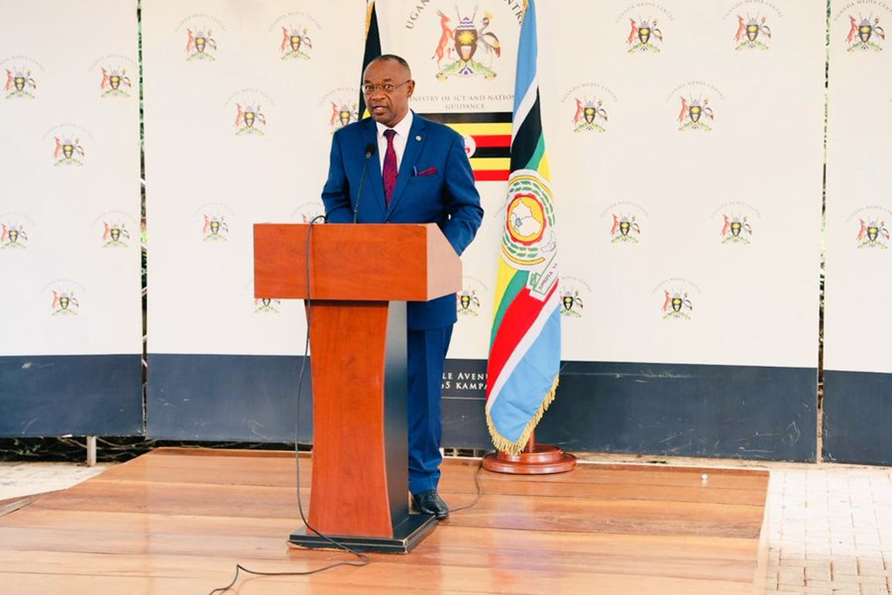
In a statement issued by Raphael Magyezi, the Minister of Local Government, Cabinet confirmed on 27 April 2026 that the implementation of the directive would proceed as earlier planned, with additional measures introduced to address emerging concerns raised by the public and stakeholders.
The Trade Order, initially rolled out through a circular dated 10 March 2026, requires local governments to reorganise urban trade by relocating vendors into gazetted markets and designated trading spaces. It also mandates the removal of campaign posters, enforcement of proper food handling standards, and the cleaning and maintenance of marketplaces. Furthermore, the directive seeks to regulate trade licensing in accordance with the Trade (Licensing) Act, Cap 101.
The order extends beyond market operations to include stricter enforcement of development approvals under the Building Control Act and the Physical Planning Act. In addition, it calls for the streamlining of public transport systems to ease congestion and improve mobility within towns and cities.
According to the statement, Cabinet has instructed the Ministry of Local Government to intensify community sensitisation efforts to ensure that the public fully understands the purpose of the directive and actively participates in its implementation. Authorities believe that increased awareness will help address resistance and misconceptions surrounding the exercise.
To support this process, Government will establish an inter-ministerial task force tasked with coordinating implementation efforts alongside key stakeholders. These include religious institutions, market vendors, and traders’ associations, all of whom are expected to play a role in ensuring compliance and smooth transition.
Government has also acknowledged concerns from traders who have not yet secured space in formal markets. In response, it has pledged to identify and provide alternative trading areas to ensure that no livelihoods are unnecessarily disrupted during the transition.
Speaking on the matter, Mr Magyezi emphasised the importance of adherence to the directive, noting that unauthorised trading in undesignated areas would not be permitted. He urged traders and the general public to support the initiative, highlighting its long-term benefits for urban development.
He stated that collective effort is essential in creating towns that are organised, clean, healthy, and safe for all citizens. His remarks underscored the Government’s position that the Trade Order is a necessary step towards sustainable urban management.
The statement further encouraged local governments to introduce weekly market days in accessible locations. This measure is intended to provide flexible trading opportunities, particularly for small-scale traders, while improving access to goods and services for surrounding communities.
Officials from the Ministry noted that the guidelines are designed to improve sanitation standards, ease traffic congestion, restore drainage systems, and promote orderly urban growth.
Enforcement mechanisms will be strengthened to ensure compliance, while structured feedback channels have been opened to allow citizens to raise concerns and offer suggestions.
Mr Magyezi reassured the public that the Trade Order is not intended to undermine livelihoods but rather to create a more structured, efficient, and sustainable business environment. He called on Ugandans to cooperate with local authorities, stressing that the success of the initiative depends on collective responsibility and adherence to established regulations.