

By Christine Keehe
In a world where strength is measured by what men hold together, their families, their jobs, their pride, there lies an unspoken epidemic. Behind the veneer of resilience, many Ugandan men are quietly shattering. Like fragile glass hidden beneath layers of armor, their pain is invisible, their struggles unheard. They carry burdens too heavy to voice, walking through life with silent wounds that threaten to break them apart. The question is not just why men are breaking, but why, for so long, we refused to see the cracks in their armor. Because in silence, they are dying, slowly, unseen, and ultimately alone. They build towering dreams from fragile hope; they provide like steady rivers carving valleys, enduring. But beneath the surface, many Ugandan men are quietly unraveling, their threads snapping in silence, unnoticed until their fabric is torn beyond repair.
There is a silence that kills
Moses Katongole, a psychologist and mental health expert, says that in some men, there exists a silence that does not roar or shout; it seems like poison in society’s veins. It whispers in crowded taxis winding through Kampala’s arteries, echoes in the hollow corridors of Nakasero’s offices, hums across construction sites sprawled in Kira’s dust, settles on boda-boda stages in Kawempe, and hums softly in WhatsApp groups filled with laughter and jokes. It is the silence of men who are present yet vanishing. They appear. They provide. They endure. But something unseen is cracking beneath their masks. Shadows shift. The ground trembles. We are quick to spot the tremors when economies falter, when governments crumble, when pandemics grip us with fear. But do we notice when men, fathers, brothers, sons, shatter? Because they are. And they are doing so faster than we dare to admit.
The numbers that refuse to whisper
Globally, over 720,000 lives are lost each year to the silent scream of suicide, according to the World Health Organization. But behind these stark figures lies a darker truth: men are the silent majority, walking wounded in the shadows of statistics. Nearly three-quarters of suicides in some regions are men. Most of these men suffer in silence, their pain wrapped in shame, their cries muffled by cultural walls.
In Uganda, statistics still indicate that the numbers are less loud but no less clear. Estimates from the Uganda Bureau of Statistics and WHO paint a grim picture: about 9 to 12 lives lost per 100,000 each year, roughly 4,000 to 5,000 souls slipping away into the quiet darkness. The majority are men, silent victims of invisible battles. Ministry officials at the Ministry of Health Uganda acknowledge the rising tide of mental health struggles, yet stigma and a dearth of services act as barricades, barriers that keep men from seeking help until their crisis is an avalanche. At Butabika, Uganda’s mental health fortress, clinicians see the pattern etched into every case: “Men come late. When they arrive, their wounds are already deep and deadly.”
Sidebar: Uganda by the numbers
According to the UBOS estimates, WHO country data, and Ministry of Health briefings, estimated annual suicide deaths: 4,000–5,000. The male-to-female ratio: a chasm, men far more likely to fall silent into the abyss. Uganda’s mental health treatment gap: over 75% of those in need remain unseen and unheard. Number of psychiatrists for over 45 million people: fewer than 50, pale soldiers fighting a vast, silent war. This is more than just a cold statistic. It is an unspoken script, an echo of a pattern that raises a haunting question: Are men not only suffering in silence but dying alone in it?
The men who leave, and the lives they return to
Across Uganda, a familiar refrain drifts through homes like ghostly whispers: “He is working in Dubai.” “He went to Qatar.” “He is in Saudi Arabia.” Men chase distant horizons, labouring in the furnace of foreign lands to forge survival. They undertake grueling work, lifting bricks into the sky, standing guard in the dead of night, cleaning in silence, each task a silent plea for a better life. They endure long hours, limited rights, emotional disconnection, like ships passing in the night, their souls adrift far from home. They send money across borders, building houses that remain empty shells, funding lives they no longer inhabit.
But when they step back onto Ugandan soil, the picture often shatters. The reunion, supposed to be warm, feels more like a stranger’s shadow. A program officer with Platform for Labor Action whispers, “Many returning migrant workers struggle to find their place again. There’s a chasm, unmet expectations, unspoken wounds, silent conflicts.”
“You suffer there for them… then come back and feel like a ghost in your own home.” — Returnee worker, Wakiso
They come back to children who barely recognize their faces, to relationships frayed by years of absence, to homes that now seem foreign. And for many, the emotional toll is a silent tsunami, depression, anger, withdrawal, the slow collapse of the human spirit. The consequences ripple outward: increased alcohol dependency, spiraling depression, silent suffering cloaked in bravado. And in that quiet, invisible space, many quietly break.
So, who bears the blame? The man who left? The family that adapted? Or the broken system that made departure the only escape?
“Omusajja takaba”: the cost of silence
In many Ugandan cultures, boys grow up with a stern decree: “Omusajja takaba”, a man does not cry. Strength becomes a fortress of silence. Pain is a private burden, locked behind the walls of masculinity. Dr. Juliet Nakku, a senior psychiatrist at Butabika, offers this truth: “Men internalize stress like a quiet storm, until it becomes a hurricane.” But mental health experts warn that this fortress is a prison, one that exacts a heavy toll. According to Mental Health Uganda, men are far less likely to seek counselling. Their emotional distress often manifests as anger, substance abuse, or quiet despair, cloaked in stoicism. Many wounds remain hidden until a crisis erupts in a tragic finale.
How men’s pain often shows
Their pain often leaks out through alcohol dependence, drinking not for pleasure, but as relief; sudden bursts of aggression or irritability; withdrawal from loved ones; risky behaviour’s; and a chilling emotional shutdown. In everyday life, this manifests vividly: the man who drinks daily, not for joy but to silence the noise within; the father who provides yet never shares his pain; the young man who masks suffering with humour. They are the walking wounded, visible in their silence, invisible in their suffering.
Provider, protector… and prisoner?
In Uganda, masculinity is a fragile tower built on provision. A man must earn, protect, and endure, like a fortress guarding its own heart. But what happens when the walls crumble? When work disappears? When dreams turn to dust? Mathew Kalema, a father of six, exclaims: “Financial pressure is the silent assassin of men’s mental health. When they can’t provide, they feel like they’ve lost their very soul.” And what do they do with this loss? They internalize it, shame, withdrawal, spiralling into substance abuse, an emotional free fall. Society’s response? Judgment. “A man is respected when he provides, but left to drown when he struggles.”
Fathers: celebrated… or remembered too late?
Every year, Uganda joins the world in honouring fathers, photos flashed, messages shared, tributes written in fleeting pixels. But beneath the veneer of celebration, an uncomfortable truth lingers: many fathers are unseen in their suffering. They are celebrated only for what they give, their invisible burdens hidden behind a stoic face, financial worries, psychological scars, and relational wounds.
“We honour fathers for their provision but rarely ask if they are okay.” Men are lauded for their strength but left alone in their struggles, silent sentinels of a fragile masculinity.
The identity crisis no one is talking about
Today’s Ugandan man stands at a crossroads, caught between tradition and modernity. The old call to be unbreakable, dominant, and invincible clashes with the new mandate to be present, vulnerable, and human. But no map exists for this journey. Andrew Ntanakye, a social researcher, observes: “Men are navigating two conflicting worlds, expected to be both stoic and sensitive, yet given no guidance on how to reconcile these roles.” He lives in a perpetual tension like a tightrope walker with no safety net, struggling to balance strength and vulnerability, mastery and fragility. In that fragile space, many begin to fracture.
Are men failing, or being failed?
It’s easy to cast blame: “They don’t open up.” “They drown their pain in liquor.” “They are emotionally unavailable.” But this is only half the story. “If vulnerability is punished, silence becomes survival.” The deeper question reverberates: Who taught them to be silent? Who built these walls?
What must change, urgently?
This is more than a man’s issue. It is a societal wound. We need to shatter the fortress of silence by normalizing male vulnerability; that emotion is a human right, not a sign of weakness. We must carve out safe spaces, not just bars but honest, open conversations. We need to redefine masculinity; strength must include asking for help, expressing pain, and admitting struggle. Mental health campaigns should speak directly to men, and at home, boys must grow up hearing: “You are allowed to feel.”
A question that should haunt us
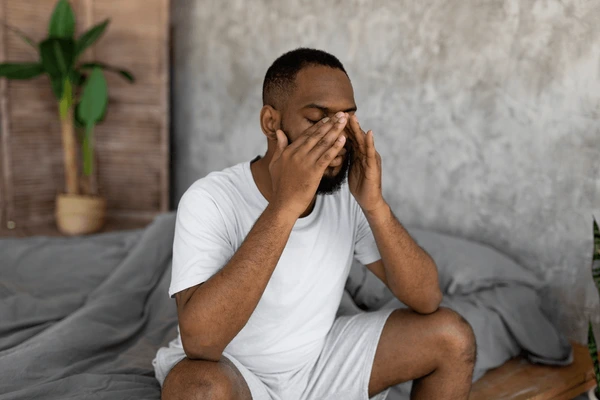
If men are breaking faster, is it because they are weak… or because we have never made room for their full humanity? A man sits quietly at the edge of his life. Not loud. Not dramatic. Not asking for help. And therein lies the tragedy. The most perilous battles are not fought in the open; they are fought in silence, behind walls we never see. If we continue to measure men solely by what they provide, if we brush aside their pain, if we only celebrate their strength, then we are doomed to lose them. In construction sites, in foreign lands, in rented rooms across Kampala, in homes that no longer feel like home, silently, tragically, they fade away.
One day, we will ask: “What happened to our men?” But the real question we should have asked is: “Why didn’t we listen when they still had voices?”
If the silent storms raging inside our men continue to go unnoticed, the cost will be devastating. Homes, communities, and the very fabric of society hang in the balance, each silent collapse a warning sign we can no longer afford to ignore. The walls of stoicism must come down, replaced by spaces where vulnerability is valued rather than condemned. Because the true strength of a nation lies not in how loudly its men shout, but in how bravely they are allowed to speak. It’s time we listen, before the silence claims them all.