
By Diana.N Kintu
The Ministry of Finance, Planning and Economic Development (MoFPED) has unveiled its Strategic Plan for 2025/26–2029/30, setting out an ambitious roadmap designed to reinforce fiscal credibility, mobilise coordinated financing, and accelerate Uganda’s drive towards achieving a US$500 billion economy by 2040.
The five-year strategy, launched in Kampala, outlines key reforms and investment priorities intended to strengthen macroeconomic stability, improve public expenditure efficiency, and support structural transformation across sectors. The plan aligns with the country’s long-term development aspirations and seeks to position Uganda for sustained high growth over the next decade.
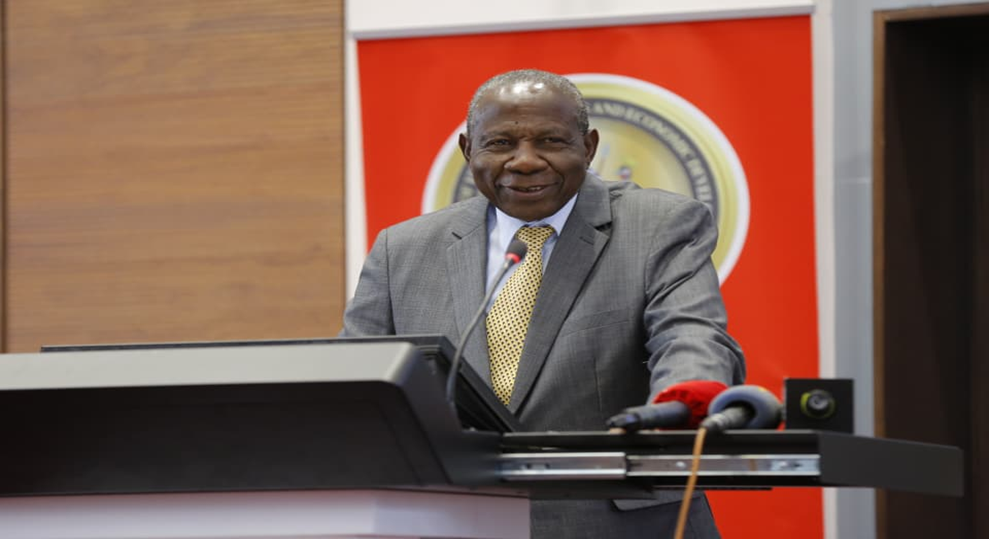
Speaking at the launch, the Minister of Finance, Matia Kasaija, described fiscal discipline as the foundation of the country’s economic transformation agenda. He emphasised that prudent financial management and improved domestic revenue mobilisation would be critical in driving Uganda’s tenfold growth ambition.
“By maintaining disciplined fiscal management, strengthening domestic revenue mobilisation, and ensuring our public investments deliver measurable returns, we lay the foundation for the tenfold economic growth ambition,” Mr Kasaija said.
The Minister noted that the Strategic Plan is complemented by a newly introduced Client Charter and Service Delivery Standards, which are intended to enhance professionalism, integrity and accountability within the Ministry. He explained that improved service delivery and transparency would help build public trust and investor confidence, both of which are essential for economic expansion.
The Permanent Secretary and Secretary to the Treasury, Ramathan Ggoobi, described the Strategic Plan as more than a policy document, calling it “a bold statement of intent and a practical roadmap for the next five years”. He said the strategy focuses on strengthening macroeconomic and fiscal policy credibility while mobilising and coordinating financing instruments to reduce the cost of capital and crowd in private investment.
According to Mr Ggoobi, the plan places strong emphasis on expanding and diversifying sustainable sources of financing without compromising debt sustainability. He stressed the importance of maintaining prudent borrowing levels while ensuring that borrowed funds are channelled into productive investments capable of generating long-term returns.
The Strategic Plan also prioritises strengthening public investment management systems to ensure that government-funded projects deliver value for money and contribute directly to structural transformation. Measures to improve the efficiency, credibility and development impact of public expenditure are central to the reforms, alongside efforts to build institutional capacity within the Ministry and its affiliated agencies.
In terms of economic performance targets, the Ministry aims to achieve average annual growth of at least eight per cent over the plan period. The strategy also seeks to accelerate poverty reduction, expand employment opportunities and preserve macroeconomic stability in the face of global and domestic shocks.
Among the flagship interventions outlined in the plan are financing for oil and gas commercialisation, capitalisation of development banks to enhance access to affordable credit, and targeted support for industrial transformation. The strategy further includes initiatives to empower women entrepreneurs and strengthen the Parish Development Model, which is intended to transition households from subsistence production into the money economy.
The oil and gas sector is expected to play a pivotal role in mobilising revenues and catalysing investment in infrastructure and industrial development. At the same time, officials stressed the need to ensure that natural resource revenues are managed prudently and invested in sectors that promote inclusive growth.
Both Mr Kasaija and Mr Ggoobi called for coordinated action across government institutions, affiliated agencies and development partners to guarantee effective implementation of the plan. They underscored the importance of timely execution, robust monitoring frameworks and measurable performance indicators to track progress.
“Together, let us build a competitive economy and move closer to our shared vision: a transformed, modern and prosperous Uganda,” Mr Kasaija concluded.
With its clear growth targets and emphasis on fiscal discipline, the Strategic Plan signals the Ministry’s determination to steer Uganda towards long-term economic resilience and prosperity, while laying the groundwork for achieving its ambitious 2040 vision.