

By Wakibi Iddi
The Government has called on the private sector to provide the financing, technology and skills needed to expand Uganda’s energy capacity and accelerate the country’s transition to cleaner, more reliable and affordable power.
Dr Brian Isabirye, Commissioner for Energy Resources at the Ministry of Energy and Mineral Development, said Government would provide policy direction and an enabling regulatory environment, while private-sector players provide the capital, technology and expertise required to translate policy into practical energy projects.
“Our role as government is clear. Ours is to set the direction. It is you, ladies and gentlemen from the private sector that provide the critical private investments, the technologies and the skills that Ugandans need to turn that direction that is set by policy,” Isabirye said.
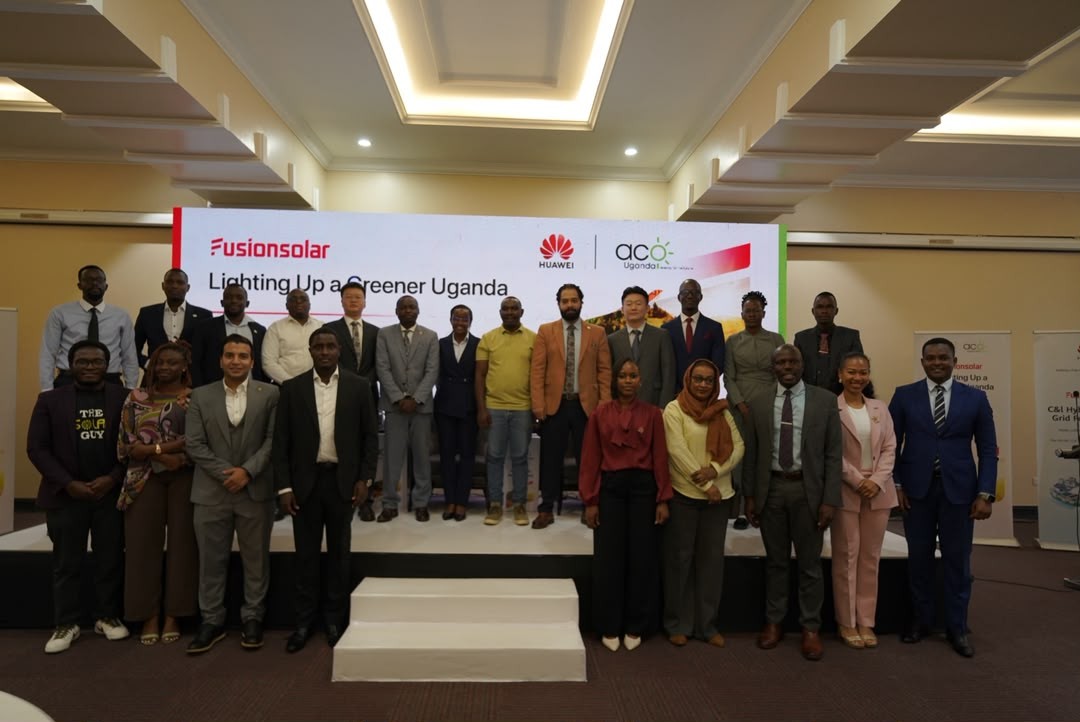
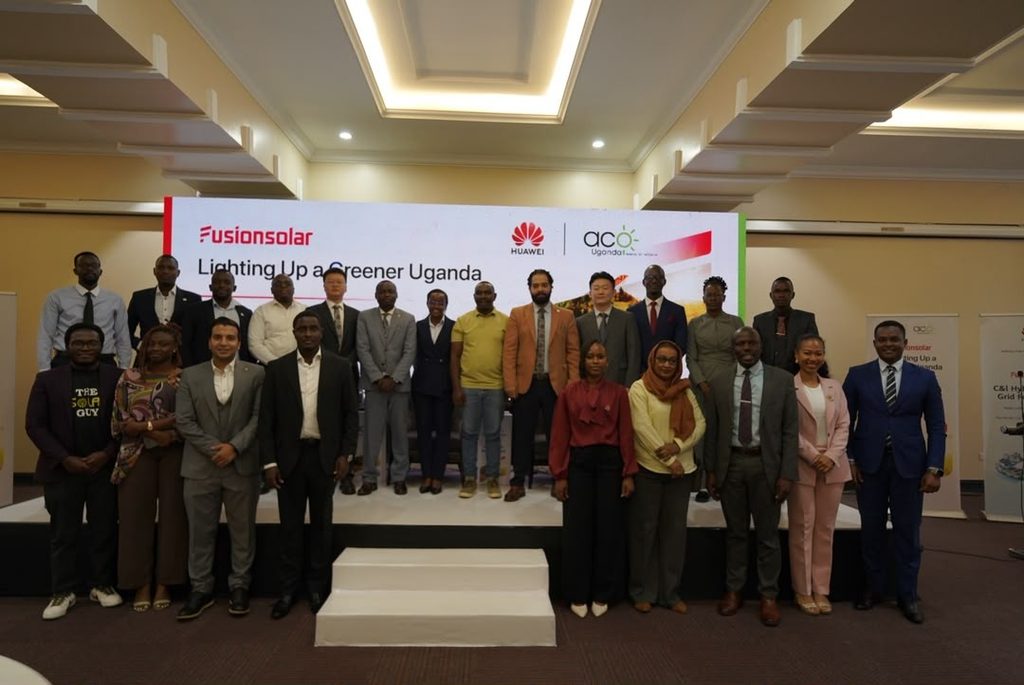
He was speaking at the ACO Uganda-Huawei Summit 2026 at Mestil Hotel in Kampala, held under the theme “Lighting up a Greener Uganda.”
Isabirye said Uganda’s electricity demand could grow by about 14 per cent annually as industrialisation, agro-processing, mining, tourism and other economic activities expand.
He said the Government’s ambition to grow the economy tenfold would require a dependable supply of affordable electricity, making investment in the energy sector increasingly important.
“Meeting this demand will require investments, and this investment has been estimated at about US$8 billion per year across the energy sector. You know and agree with me that public funds cannot be enough to meet this kind of demand,” he said.
Isabirye identified solar power and battery storage as key technologies that could help businesses supplement grid electricity and maintain operations during power interruptions.
He said solar-plus-storage systems could enable factories, hospitals, farms and other institutions to reduce daytime electricity costs, remain operational during outages and ease pressure on the national grid.
The Government is also encouraging financing models that can reduce the upfront cost of adopting solar technology. Isabirye said businesses could benefit from arrangements that allow them to pay for the electricity they consume rather than purchasing solar equipment outright.
He urged renewable-energy companies to ensure that investment in new systems also strengthens Uganda’s technical capacity through the training and certification of local professionals.
“Every system installed should build Uganda’s capability. I urge our partners to train and certify Ugandan technicians and engineers so that these systems are designed, installed and maintained by our own people,” he said.
Isabirye also cautioned against substandard solar equipment, saying poor-quality products could undermine public confidence in renewable energy. He said Government would continue working with regulators and private-sector players to reduce electricity costs, strengthen distribution networks and establish clear rules for businesses generating their own power.
Huawei Uganda Country Lead for Digital Power, Dylan Chan, said rising demand for cleaner and more affordable energy was creating opportunities for digital-power technologies.
“The potential and also the demand for greener and cheaper energy in this country, from our company’s perspective, keeps growing,” Chan said.
He said technology providers, developers, financiers and engineering companies needed to work together to deliver reliable energy solutions.
ACO Uganda Country Manager Hossam Omara said collaboration across the energy value chain would be essential, particularly for large projects requiring multiple areas of expertise.
“Some of the projects cannot be achieved by one company alone. It requires cooperation between technology providers, developers, EPC companies, installers, financiers and the end users,” Omara said.
ACO Uganda is targeting the commercial and industrial market with solar installations and battery-energy storage systems, offering services covering design, financing, installation, monitoring, operation and maintenance.
The discussions highlighted the need for stronger private-sector participation as Uganda seeks to expand energy access, meet rising electricity demand and support industrial and economic growth.