
By Caroline Nakire
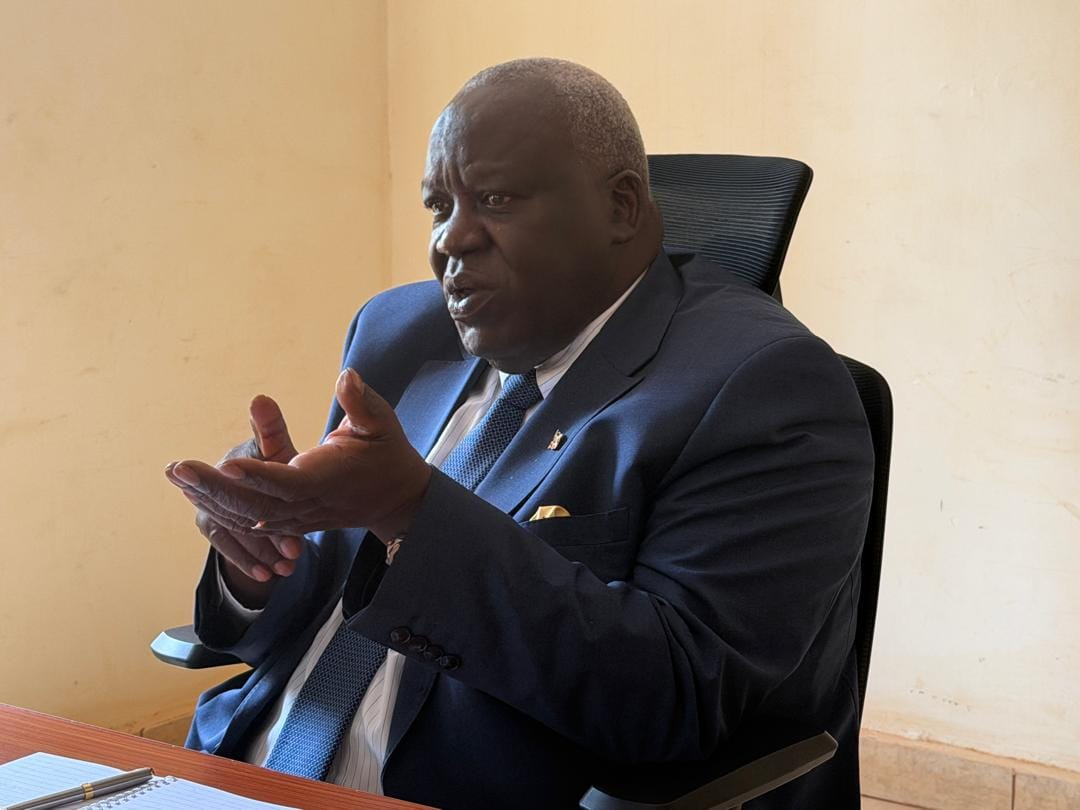
KIRYANDONGO | The State Minister for Relief, Disaster Preparedness and Refugees, Sam Engola, has warned officials against corruption in the registration and documentation of refugees and asylum seekers, calling for transparent processes and dignified treatment of displaced people.
Engola made the call on Wednesday while addressing Muslim refugees at Kiryandongo Refugee Settlement during an event to distribute six tonnes of relief food and officially hand over new community facilities.
The facilities include six mosques, a two-classroom block for madrasa pupils and, a rainwater harvesting tank. They were provided by LISA (Supporting and Sustaining Lives), with funding from Muslim Charity UK.
Engola said many refugees in Uganda had fled their countries to escape conflict and insecurity and seek safety.
He urged officials from the Office of the Prime Minister (OPM), the United Nations High Commissioner for Refugees (UNHCR), and other humanitarian organisations to ensure that refugee registration and documentation are conducted transparently and without corruption.
He also called for adequate provision of food and other necessities to refugees, particularly as humanitarian resources continue to face financial constraints.
Engola encouraged refugees who can safely return to their countries to consider voluntary repatriation, saying this would help the Government and humanitarian organisations concentrate available resources on those who remain unable to return because of ongoing conflict.
“President Yoweri Kaguta Museveni has guided that those refugees who can return to their countries should do so if peace prevails. However, Eritrean refugees can continue to stay, as the President noted that conditions do not yet allow for their return,” Engola said.
He noted that the Government had so far repatriated between 1,900 and 2,000 refugees from Khartoum, out of about 96,000 refugees it is currently hosting.
Engola also addressed infrastructure challenges affecting refugee settlements, revealing that Phase II of the Development Response to Displacement Impacts Project (DRDIP II) is expected to commence in October 2026.
The US$328 million World Bank-funded initiative is expected to address infrastructure and service delivery challenges in refugee-hosting areas.
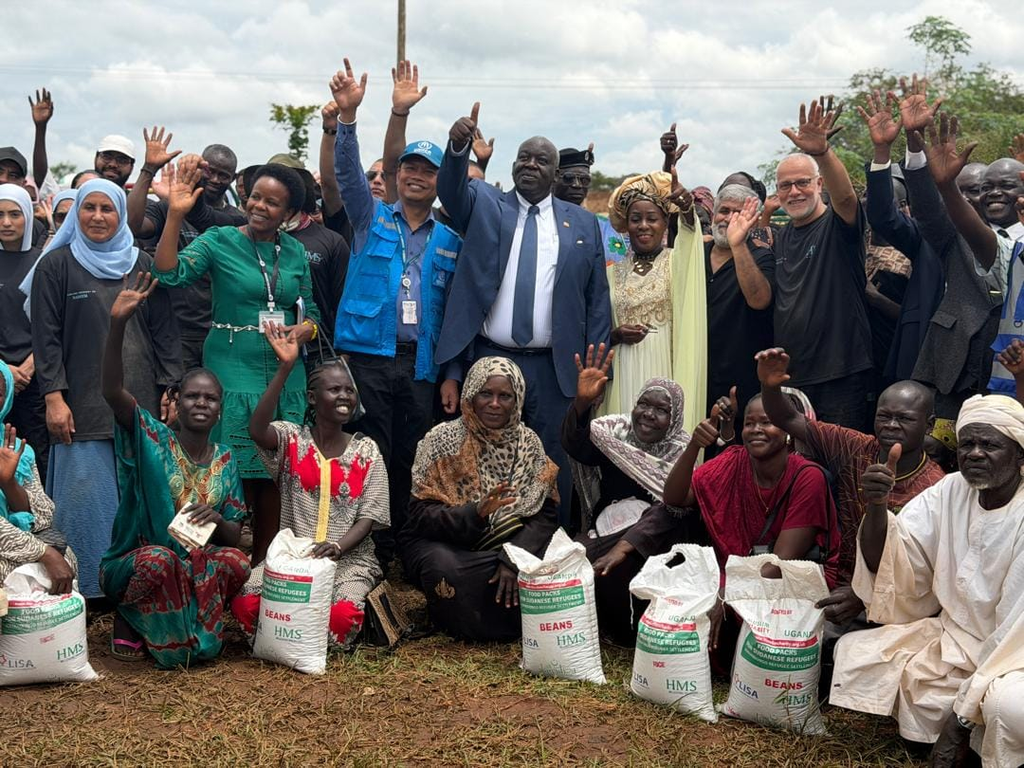
Hon. Sam Engola (centre) with LISA officials, humanitarian partners and Muslim refugees during food distribution at Kiryandongo Refugee Settlement.
The Board Chairperson of LISA, Dr Florence Nakiwala Kiyingi, said the organisation had identified the lack of suitable places of worship and community facilities as challenges faced by Muslim refugees, prompting its partnership with Muslim Charity UK.
She said LISA had also supported refugees through seed capital and vocational skills training in tailoring, baking and soap making to promote self-reliance.
The Kiryandongo District Qadhi, Sheikh Suleiman Bayo, commended LISA for supporting Muslim refugees and said the Uganda Muslim Supreme Council remained open to partnerships aimed at supporting vulnerable communities.
The Imam of Masjid Abu Bakr Siddiq, Sheriff Mohammed Abakar, urged beneficiaries to take care of the new facilities and ensure they are used for their intended purposes.
The infrastructure provided through the partnership between LISA and Muslim Charity UK, including Masjid Umar Ibn Al-Khattab, Masjid Abu Bakr Siddiq, Madrasa Abu Bakr Siddiq and rainwater harvesting facilities, has a combined value of more than Shs350 million.
The Commandant of Kiryandongo Refugee Settlement, Amaruma Manza Vincent, said the 27-square-kilometre settlement currently hosts about 169,800 refugees from 15 countries, with women forming the majority.
Amaruma said the settlement works with 68 partner organisations involved in various areas of refugee response.
However, he said the settlement continues to face operational challenges, including human resource shortages, transport and logistics constraints, inadequate security personnel, and limited base-camp infrastructure.