

By Diana N. Kintu
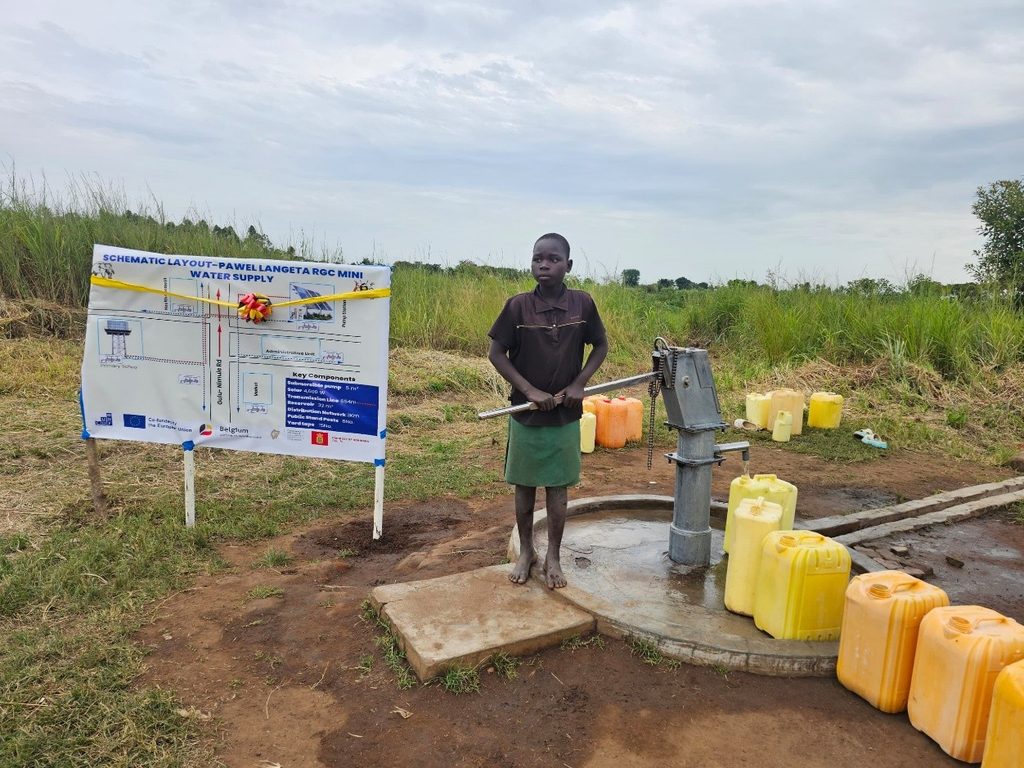
For women and girls in Kal, Langetta and Opok villages, fetching water has meant long walks and, for some, crossing a busy highway just to reach a source. A new piped water system now under construction is designed to end that.
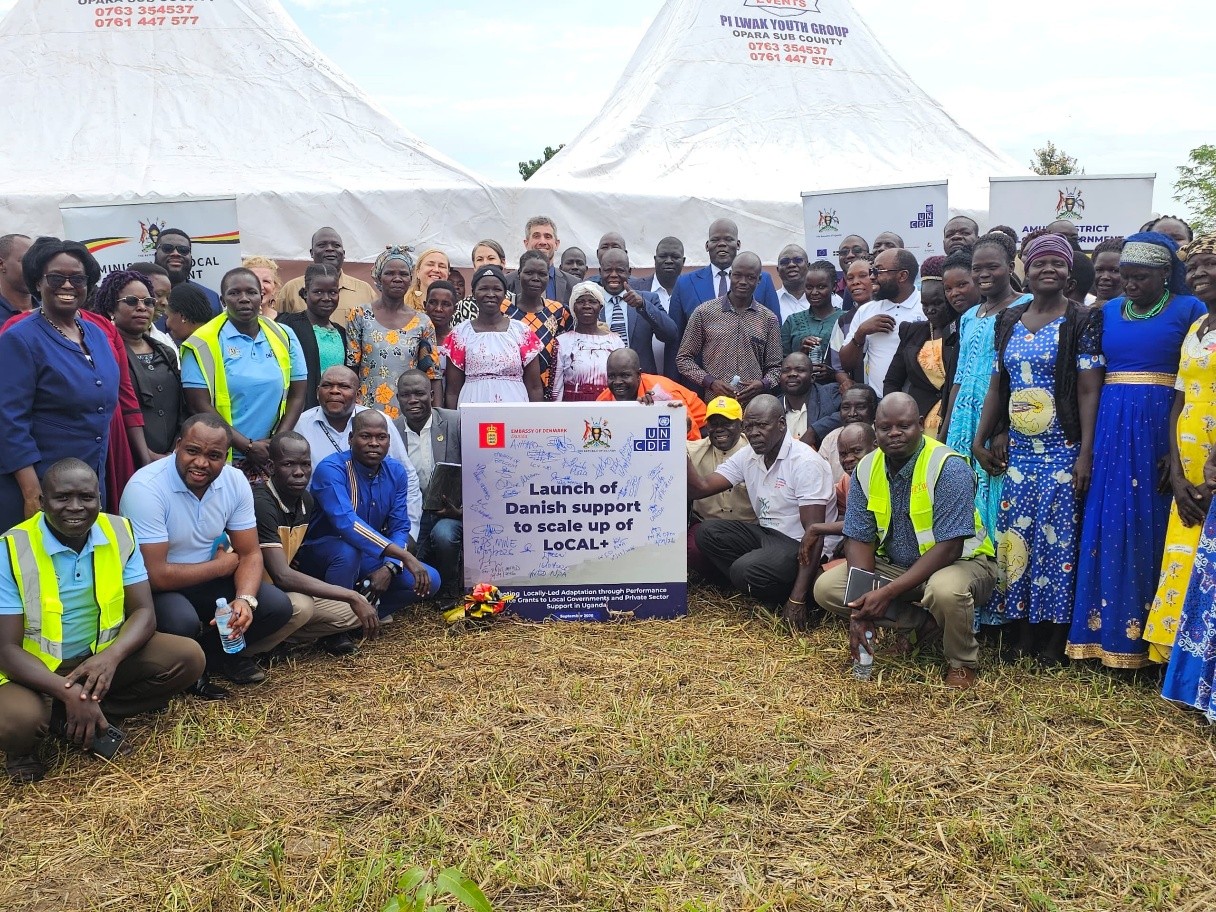
The Ministry of Local Government, through the LoCAL Facility, has launched construction of the Pawel Langetta Mini Water Supply in Kal Village, alongside new Danish support to scale up the LoCAL programme in Amuru District and nine other districts.
The system will pump up to 5,000 litres per hour, store as much as 32,000 litres, and distribute water across five kilometres, serving an estimated 1,300 people, along with key public institutions including Pawel Langetta Primary School, Pawel Health Centre III, local markets and Opara Sub-county Headquarters.
The intervention lands in a community that has faced persistent water scarcity. Beyond improving basic access, it’s expected to cut the distance residents travel for water, improve school attendance and retention, and reduce the vulnerability of women and girls to domestic and gender-based violence linked to long water-fetching journeys.
The system will also support small-scale irrigation at the primary school, create opportunities for women in market activities, and contribute to better sanitation and health outcomes community-wide.
Representing Permanent Secretary Ben Kumumanya, Commissioner for Urban Inspection Andrew Otim Kibwota thanked the Government of Denmark for its continued support in expanding climate-resilient investment to more communities.
The Ministry of Local Government, through the LoCAL Facility, has launched construction of the Pawel Langetta Mini Water Supply in Kal Village, alongside new Danish support to scale up the LoCAL programme in Amuru District and nine other districts.
“Climate resilience must translate into practical solutions that improve lives. This support brings climate finance closer to the people who need it most,” Kumumanya said.
The project builds on a growing coalition of international backers. A UNCDF representative, Mr. Oyekunle-Ajai, traced that support back to its origin at the event in Kal Village.
“In 2023, Belgium provided critical seed funding to launch LoCAL in Uganda. This was followed by the European Union, Ireland, and now Denmark,” he said.
Ireland’s Ambassador to Uganda, H.E. Mags Gaynor, framed Uganda’s role in the wider climate finance landscape.
“Ultimately, I am confident that Uganda is well placed to demonstrate how to attract more public and private climate finance in Uganda with the right systems for evidence-based and locally-led adaptation investment,” Gaynor said.
Denmark’s own commitment is substantial. Ambassador of Denmark to Uganda, H.E. Signe Winding Albjerg, said Denmark has committed USD 23.47 million through UNCDF to help rural Ugandan communities adapt to climate change impacts. The four-year support is expected to expand the Performance-Based Climate Resilient Grant and Technical Assistance programme from 14 to 32 districts, with 62 climate-resilient investments already projected for 2026/27, worth USD 4.8 million.
For Pawel Health Centre III, the water system addresses a problem staff have lived with directly. Senior Clinical Officer and In-charge Akun Lucy Odong said the change will be felt immediately in-patient care.
“With water now closer to the health centre, sanitation and hygiene will improve, while patients, caregivers and expectant mothers will no longer have to cross the Juba Highway in search of water. This will also help reduce home deliveries associated with limited access to water at the facility,” Odong said.
The Assistant Commissioner for Monitoring and Evaluation at the Office of the Prime Minister, Otutu Nathan, urged district local governments to track community satisfaction once construction is complete, ensuring the project’s impact is measured, not just assumed.
The launch drew representatives from the Ministry of Finance, Planning and Economic Development, the Office of the Prime Minister, the National Planning Authority, the Ministry of Water and Environment, senior Ministry of Local Government officials, and development partners including Denmark, Ireland, Belgium, UNCDF and the European Union.
For a mother in Kal Village today, the promise is specific and immediate: water close enough that her daughter’s route to school no longer runs through a water source across a highway.
Source: Ministry of Local Government, Uganda, under the LoCAL Facility.