

By Wakibi Iddi
The National Curriculum Development Centre (NCDC) is preparing to introduce a lighter primary school curriculum designed to reduce learning overload and give children more time to develop talents, life skills and practical competencies.
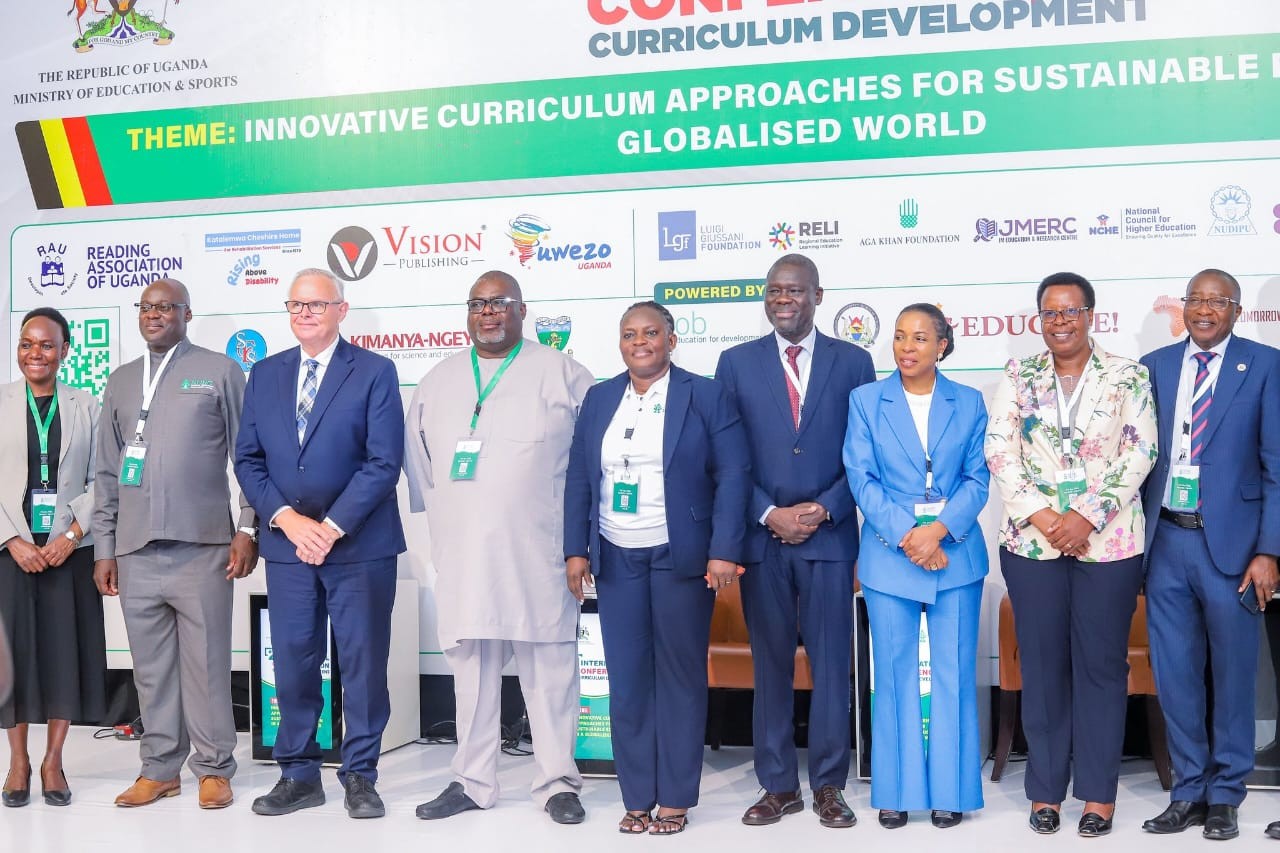
The proposed reforms were announced on Thursday during the opening of the 2nd International Conference on Curriculum Development at Speke Resort Munyonyo in Kampala. The two-day conference, organised by NCDC under the Ministry of Education and Sports, brings together education leaders, curriculum experts, teachers, researchers, policymakers and development partners to explore innovative approaches to education.
Held under the theme, “Innovative Curriculum Approaches for Sustainable Education in a Globalised World,” the conference is examining ways of preparing Ugandan learners for the demands of the 21st century while making education more relevant to national development.
Dr Richard Irumba, Chairperson of the conference organising committee, said the proposed primary curriculum will address curriculum overload, improve learning experiences and create opportunities for children to discover and develop their abilities.
“One of the major principles guiding the review is reducing the curriculum overload that has left many children spending long hours at school while carrying heavy bags filled with learning materials,” Irumba said.
He revealed that government expects to begin rolling out the revised primary curriculum in 2027, starting with the foundation level and progressively extending it to higher classes.
According to Irumba, some upper-primary learners could complete classroom lessons by around 2:30 p.m., leaving the remaining time for sports, debates and other extracurricular activities.
“Learners have different talents, and schools should provide opportunities beyond football, netball and volleyball to accommodate children gifted in areas such as debate, swimming and other activities,” he said.
Irumba also highlighted the need to improve access to learning materials. He said government is working to progressively improve the textbook-to-learner ratio from the current average of about one textbook for five pupils towards one textbook for every two learners.
However, he acknowledged that successful curriculum reform requires greater involvement from parents, teachers, learners, policymakers, administrators and political leaders.
NCDC Director Dr Bernadette Nambi Karuhanga said curriculum is a critical driver of human capital development and national economic transformation. She noted that Uganda is increasingly embracing competency-based learning to equip learners with skills needed for lifelong learning and the modern workplace.
“Curriculum is central to national development. It is not simply an administrative or classroom matter, but a foundational driver of social and economic transformation,” Nambi said.
She urged stakeholders to move beyond developing recommendations and focus on translating them into practical interventions that improve learning outcomes.
Prof George Openjuru, Chairperson of the NCDC Governing Council, said successful reforms require continuous stakeholder engagement, alignment with national priorities and sustained investment.
The reforms signal a shift towards an education system that seeks not only to prepare children for examinations, but also to help them discover their talents, build practical skills, solve problems, innovate and contribute meaningfully to society.