
By Wakibi Iddi
President Museveni has revealed that the late Kenyan politician Cyrus Jirongo alerted him in 2019 that Uganda was procuring petroleum products through middlemen in Kenya, a disclosure that later contributed to changes in the country’s fuel supply system.
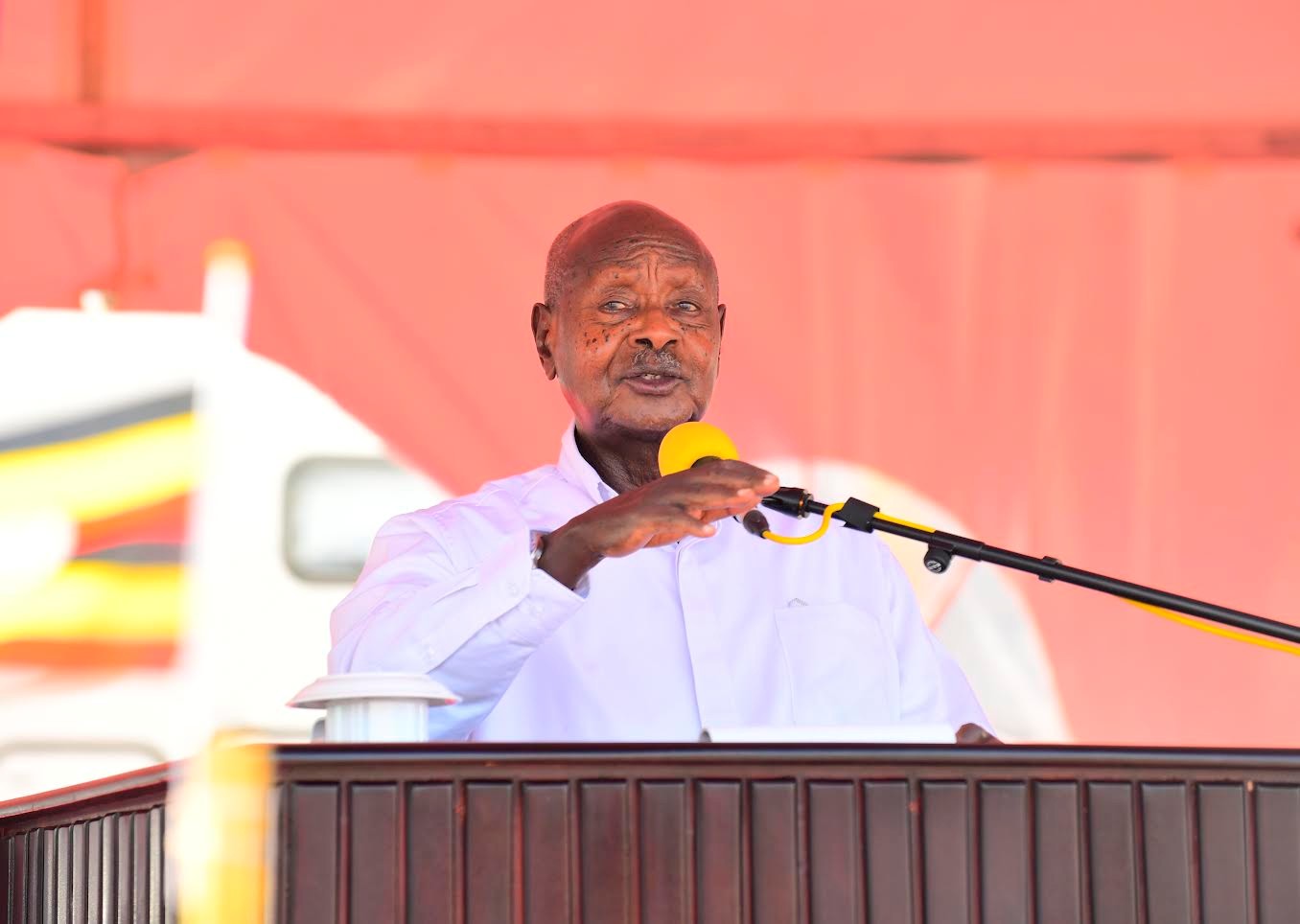
Museveni made the revelation while laying the foundation stone for the 320-million-litre Kampala Storage Terminal in Mpigi District. He said he had not been aware that Uganda was relying on intermediaries to source petroleum products and immediately tasked the then Minister of Energy, Irene Muloni, to investigate the matter.
“It was a Kenyan Senator called Jirongo who told me this around 2019. I immediately tasked the then Minister Irene Muloni to sort out that mess,” President Museveni said.
The President Museveni said the intervention did not immediately change the procurement system, but Uganda later moved towards more direct petroleum sourcing, including through a supply arrangement with Vitol.
He cited reductions in the prices paid for key petroleum products following the new arrangement. He said the price of diesel fell from US$118 to US$83 per metric tonne, while petrol declined from US$97.50 to US$61.50. Aviation fuel, he added, dropped from US$114.25 to US$79.25 per metric tonne.
The President also credited cooperation between Uganda and Kenya in improving petroleum logistics. Kenya subsequently allowed Uganda to transport petroleum products through its pipeline system, while Uganda acquired a 20.15 per cent shareholding in the Kenya Pipeline Company.
The government has since strengthened the role of the Uganda National Oil Company (UNOC) in petroleum importation, as part of efforts to reduce reliance on intermediaries and improve efficiency in the supply chain.
The new Kampala Storage Terminal is a major component of that strategy. Developed by UNOC in Mpigi District, the facility will have a storage capacity of 320 million litres of petroleum products. It is intended to strengthen Uganda’s strategic fuel reserves, improve supply security and reduce vulnerability to disruptions in the regional petroleum supply chain.
Uganda currently relies heavily on imported petroleum products, making adequate storage and reliable supply routes critical to the economy. The government is therefore pursuing a broader petroleum strategy involving direct procurement, strategic storage, domestic refining and regional infrastructure.
Jirongo, a former Lugari Member of Parliament and Cabinet minister in Kenya, died in December 2025. His disclosure to President Museveni in 2019 has now emerged as an important part of the history behind Uganda’s efforts to reform its petroleum procurement system.
President Museveni’s revelation comes as Uganda continues to expand its petroleum infrastructure, with the Kampala Storage Terminal expected to strengthen national fuel reserves and support a more integrated and secure petroleum supply chain.