

By Diana N. Kintu
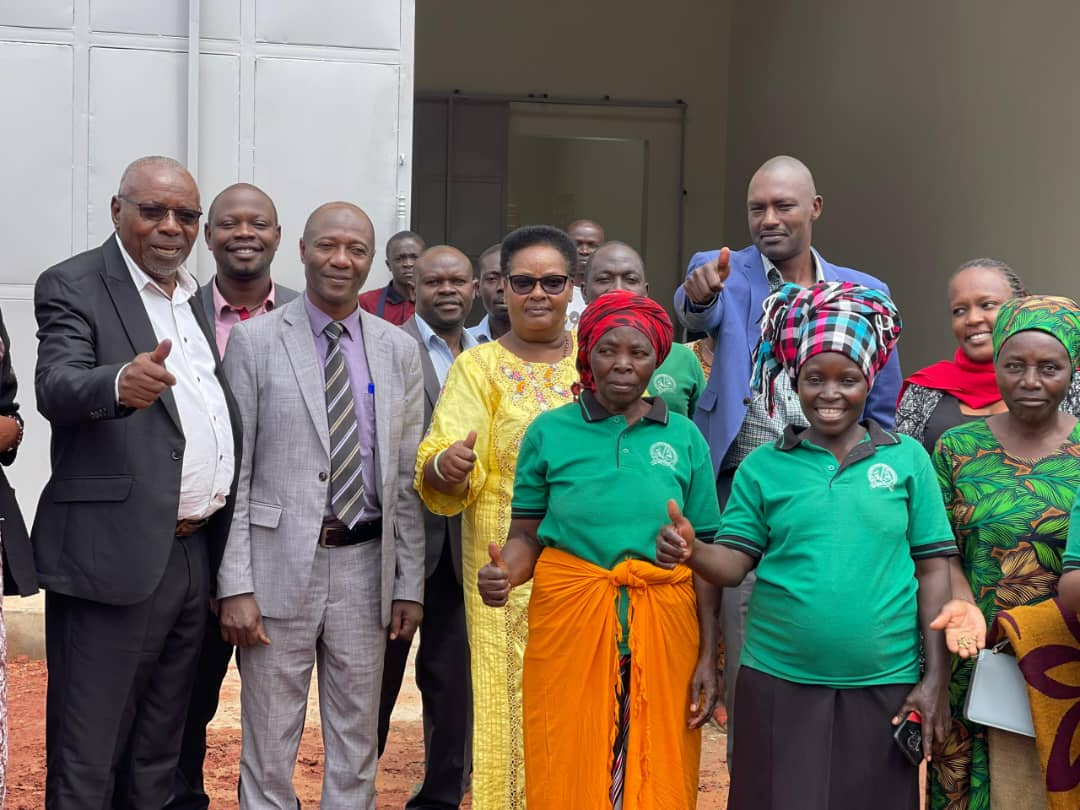
Bunyangabu: Farmers in Bunyangabu District are set to benefit from a modern coffee processing facility commissioned under the Local Economic Growth Support (LEGS) Project, in a move to strengthen value addition and improve household incomes.
The facility, constructed at a cost of UGX 427 million, has a capacity of 2.5 tonnes of coffee per hour. Officials said it will enhance quality, reduce reliance on middlemen, and significantly increase earnings for local farmers.
During the commissioning of the plant, the Minister of State for Local Government, Victoria Rusoke Businge, urged farmers to scale up production.
“This facility must operate at full capacity. I encourage cooperatives to establish nurseries to guarantee a steady supply of quality seedlings,” she said.
For years, farmers in Bunyangabu sold coffee to middlemen, often transporting it as far as Kasese, exposing them to exploitation and low prices.
“We used to sell a kilogram at UGX 4,000 to 5,000 because of poor post‑harvest handling,” said farmer Adonia Kimanywenda. “With this plant, prices are expected to rise to UGX 12,000 per kilogram. This gives us hope for better livelihoods.”
Representing the LEGS Project, Eng. Isaac Opolot encouraged farmers to embrace interventions such as the e‑voucher system, through which the government subsidizes 50 percent of agricultural inputs, and community nurseries to boost production.
“These interventions will help farmers produce enough coffee to match the capacity of the new facility,” he explained.
The commissioning adds to earlier LEGS investments in Bunyangabu, including the rehabilitation of community access roads such as the Bubwika–Yerya Bridge and the Buhesi–Mitandi road, thereby improving connectivity and access to markets. Other interventions include market infrastructure such as the Kagera Market Shed, the Nyamiseke–Mahoma road, and the Bunaiga Gravity Water Scheme, all of which are designed to support local economic growth.
Minister Rusoke also raised concerns over rising teenage pregnancies and school dropouts. “Parents and leaders must prioritize keeping children in school. Safeguarding their future is as important as economic empowerment,” she said.
District technical leadership, led by Chief Administrative Officer Nsubuga Hood, pledged continued support to farmers to ensure sustainability and effective utilization of the facility.
Community members welcomed the development, saying it will reduce poverty, improve household incomes, and position Bunyangabu as a hub for coffee value addition.
Source: Ministry of Local Government commissioning ceremony, Bunyangabu District, March 26, 2026.