

By Diana.N.Kintu
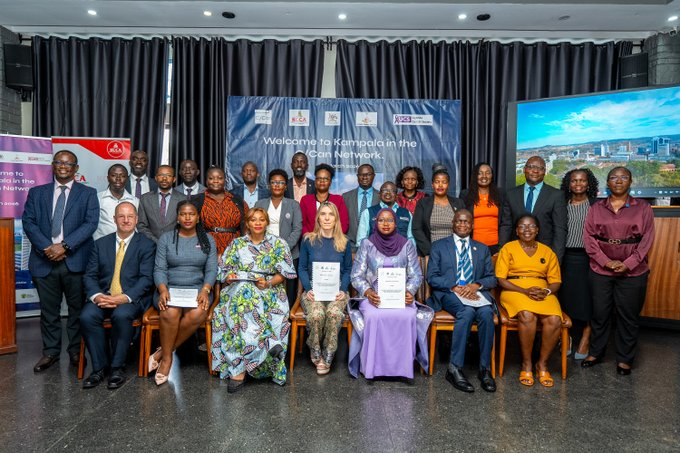
Kampala has officially joined the City Cancer Challenge (C/Can) Network, becoming the 18th city worldwide and the sixth in Africa to participate in the global initiative aimed at expanding access to timely, equitable, and quality cancer care.
The milestone was marked by a launch ceremony held on Wednesday at Fairway Boutique Hotel, where leaders from the Kampala Capital City Authority (KCCA) and officials from C/Can signed a five-year Memorandum of Understanding (MoU). The agreement will guide strategic collaboration in strengthening cancer diagnosis, treatment, and care systems within the city.
KCCA Executive Director, Ms Sharifah Buzeki, described Kampala’s inclusion in the network as a significant step forward in addressing the growing burden of cancer in Uganda. She noted that the capital city plays a central role in the country’s healthcare system, particularly in specialised treatment.
“Kampala is the referral hub for oncological care in Uganda. If we get it right here, we strengthen the entire country’s response,” Ms Buzeki said, underscoring the importance of building resilient and well-coordinated health systems at the city level.
According to health data, Kampala recorded at least 5,600 new cancer cases in 2024, with cervical and prostate cancers among the most prevalent. Nationally, Uganda registers an estimated 35,000 new cases annually, highlighting the urgent need for improved prevention, early detection, and treatment services.
“Cancer remains a major public health challenge. Our goal is to support prevention efforts, expand access to quality care, and ultimately improve the productivity and well-being of our population,” Ms Buzeki added.
C/Can Chief Executive Officer, Ms Isabel Mestres, emphasised that tackling cancer requires coordinated, multi-sectoral approaches. She highlighted the importance of data-driven decision-making, strong health systems, and partnerships across institutions.
“Cancer is complex. That means we need reliable data, strong systems, and collaboration. No single institution can solve it alone,” she said. “Through this partnership, we are joining forces to help cities achieve their cancer care goals.”
The Chief Executive Officer of the Uganda Cancer Institute, Dr Jackson Orem, welcomed the partnership, describing it as a timely boost to ongoing government efforts in cancer control and management.
“The fight against cancer is always a collective effort; it cannot be fought alone. We welcome C/Can to reinforce what government is already doing,” he noted, adding that partnerships such as this are critical in strengthening national capacity.
Officials also pointed to practical improvements already undertaken, including infrastructure upgrades around the Uganda Cancer Institute. These enhancements are intended to protect sensitive medical equipment, support facility expansion, and improve the overall quality of care provided to patients.
Ms Patience Asiimwe from the Uganda Cancer Society described Kampala’s inclusion in the network as “another exciting step” towards achieving equitable access to treatment and palliative care services.
At the city level, public health leaders stressed the importance of awareness, early detection, and routine screening. Ms Sarah Zalwango, Acting Director for Public Health and Environment at KCCA, noted that many cancer cases could be prevented or effectively treated if detected early.
“This is a critical issue that can be prevented at an early stage, but many people are not aware,” she said, highlighting cervical cancer as one of the leading threats to women in Kampala.
Through the partnership, stakeholders aim to expand screening programmes, strengthen the health workforce, improve access to essential medicines and technologies, and develop robust data systems to guide evidence-based decision-making.