
By Diana.N.Kintu
President Yoweri Kaguta Museveni has appointed seasoned journalist Alan Kasujja as the new Executive Director of the Uganda Media Centre, according to a press release issued by the Ministry of ICT and National Guidance.
Kasujja succeeds Ofwono Opondo, who recently transitioned into elective politics. His appointment comes at a time when the government is intensifying efforts to expand the country’s economy and strengthen its communication strategy, particularly in the digital era.
With more than 25 years of experience in journalism, Kasujja is widely regarded as one of Africa’s most accomplished media professionals. He spent 13 years with the BBC in London, where he served as a lead presenter on Newsday and hosted the flagship podcast Africa Daily.
During his tenure, he played a significant role in amplifying African stories on the global stage, earning recognition for his analytical depth, professionalism, and balanced reporting.
Prior to his international career, Kasujja was a prominent figure in Uganda’s media landscape. He hosted The Big Breakfast on Capital FM and anchored the influential political talk show The Fourth Estate. He also co-moderated Uganda’s first televised presidential debate in 2016, further cementing his reputation as a credible and authoritative voice in public discourse.
In his inaugural remarks, Kasujja pledged to strengthen government communication by fostering a more coordinated and responsive system. He emphasised the need for a unified communications framework that effectively connects government institutions with the media and the public. He also highlighted the importance of digital transformation, noting that Uganda must position itself strategically to enhance its global visibility and engagement.
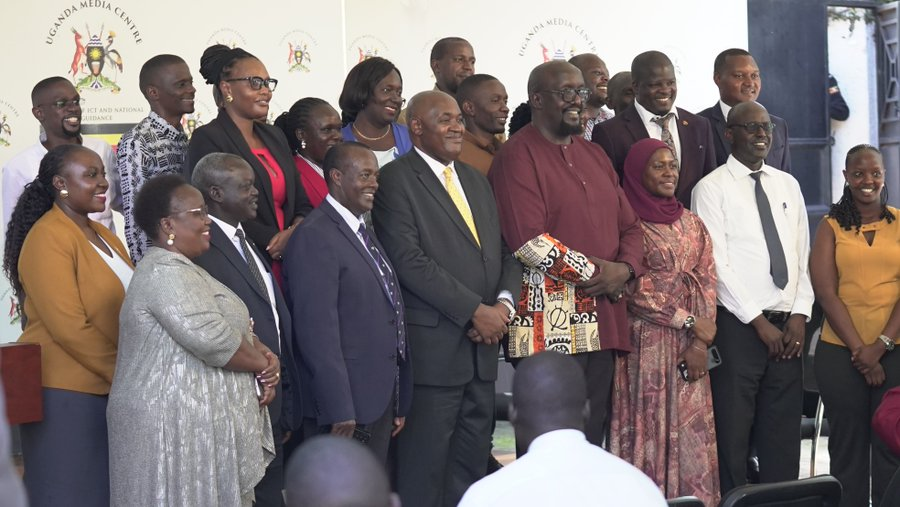
During the inauguration ceremony, Permanent Secretary Aminah Zawedde called upon staff of the Uganda Media Centre and the wider media fraternity to support the new leadership. She underscored the importance of unity, professionalism, and a shared sense of purpose in building public trust and delivering accurate information to citizens.
Dr Zawedde further commended the President’s decision, expressing confidence that Kasujja’s extensive experience would strengthen public communication and engagement.
The Minister for ICT and National Guidance, Chris Baryomunsi, described the appointment as a significant milestone for the institution. He noted that the leadership transition marks the beginning of a new phase in government communication, with a stronger focus on innovation and public outreach.
According to the Ministry, Kasujja’s international exposure is expected to drive a digital transformation at the Uganda Media Centre. This includes enhancing the institution’s online presence, enabling real-time engagement with citizens—particularly the youth—and reinforcing its role as a reliable source of verified information. The move is also seen as part of broader efforts to counter misinformation and strengthen public confidence in official communication channels.
Born in Uganda around 1978, Kasujja spent part of his early life in Kenya, where his family had sought refuge during the rule of Idi Amin. He later returned to Uganda and pursued a law degree at Makerere University, before ultimately choosing a career in journalism. This academic background has contributed to his analytical approach and strong understanding of governance and public affairs.
Kasujja’s career began during Uganda’s media liberalisation in the 1990s, initially working as a freelance writer and photographer at New Vision. He later joined Sanyu FM and subsequently Capital FM, where he rose to prominence as a calm, articulate, and incisive interviewer. Over the years, he has built a reputation for professionalism and credibility, both locally and internationally.