

By Diana N.Kintu
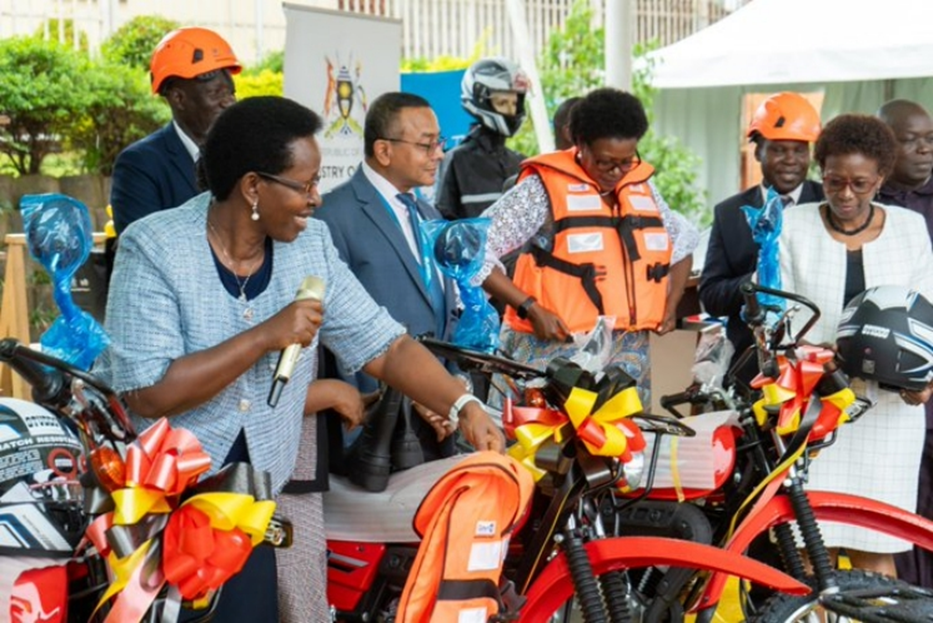
The Minister of Health, Jane Ruth Aceng, has flagged off a consignment of operational equipment aimed at strengthening immunisation services across Uganda. The equipment was procured through the Gavi Equity Accelerator Fund in partnership with UNICEF, as part of ongoing efforts to improve vaccine access in underserved communities.
During the flag-off ceremony, Dr Aceng noted that the equipment will significantly enhance the ability of health workers to reach populations that have historically faced challenges in accessing routine immunisation services, particularly in remote and hard-to-reach areas.
The consignment includes motorcycles, field tents, sleeping bags, helmets, and gumboots, which will be distributed to districts across the country. Health officials say the equipment will help frontline health workers conduct outreach programmes more effectively, particularly in areas where transportation and field conditions have often hindered the delivery of essential health services.
According to the Ministry of Health, motorcycles will enable health teams to travel more easily to rural and isolated communities where health facilities are located far apart. The additional field gear, including tents and protective equipment, will support outreach teams who spend extended periods in the field during immunisation campaigns.
Dr Aceng emphasised that strengthening operational capacity at the district level remains critical to ensuring that every child has access to life-saving vaccines.
“This morning, I flagged off operational equipment procured through the Gavi Equity Accelerator Fund which will strengthen the ability of our health workers to reach communities that have previously faced challenges in accessing immunisation services,” she said in a statement shared on her official social media platform.
In addition to the operational equipment, the ministry has also launched the distribution of more than 1,000 solar-powered cold chain vaccine refrigerators and freezers. These units were procured through support from Gavi, the Vaccine Alliance, and partners, including the World Health Organization and UNICEF.
Health officials say the solar-powered fridges will play a crucial role in maintaining the integrity of vaccines by ensuring they are stored at the required temperatures. Reliable cold storage is essential for preserving vaccine potency, especially in rural areas where electricity supply can be unreliable or unavailable.
The new equipment is expected to strengthen Uganda’s national cold chain system and ensure that vaccines remain safe and effective from storage facilities to the point of delivery in communities.
Experts note that solar-powered refrigeration is particularly beneficial in remote health centres, where consistent electricity supply has long been a challenge. By relying on solar energy, the refrigerators will enable health facilities to store vaccines safely while reducing operational disruptions.
The Ministry of Health says the initiative forms part of broader efforts to improve the country’s immunisation programme and expand coverage among children and vulnerable populations. Immunisation remains one of the most effective public health interventions for preventing life-threatening diseases such as measles, polio, and tuberculosis.
Government officials believe that improving logistics and infrastructure for vaccine delivery will significantly contribute to reducing child mortality and strengthening Uganda’s public health system.
The ministry further reaffirmed its commitment to ensuring equitable access to vaccines for all communities, regardless of their geographic location. By equipping health workers with better tools and improving cold chain systems, authorities hope to close gaps in immunisation coverage and reach children who may have previously been missed.
The distribution of the equipment is expected to begin immediately, with districts prioritised based on service delivery needs and existing infrastructure gaps. Health authorities have welcomed the continued support from international partners, noting that collaborative efforts remain vital in sustaining immunisation programmes and advancing Uganda’s broader public health agenda.