

By Diana N. Kintu
The Uganda Vocational and Technical Assessment Board (UVTAB) has commenced the assessment of 4,463 trainees enrolled under the Presidential Industrial Hubs initiative, in a move aimed at strengthening vocational skills development and enhancing youth employability across the country.
The assessments, which run from 24 to 27 February 2026, are being conducted across 91 industrial hubs nationwide. Candidates were briefed on 20 February, while assessors received their orientation on 24 February ahead of the practical examinations.
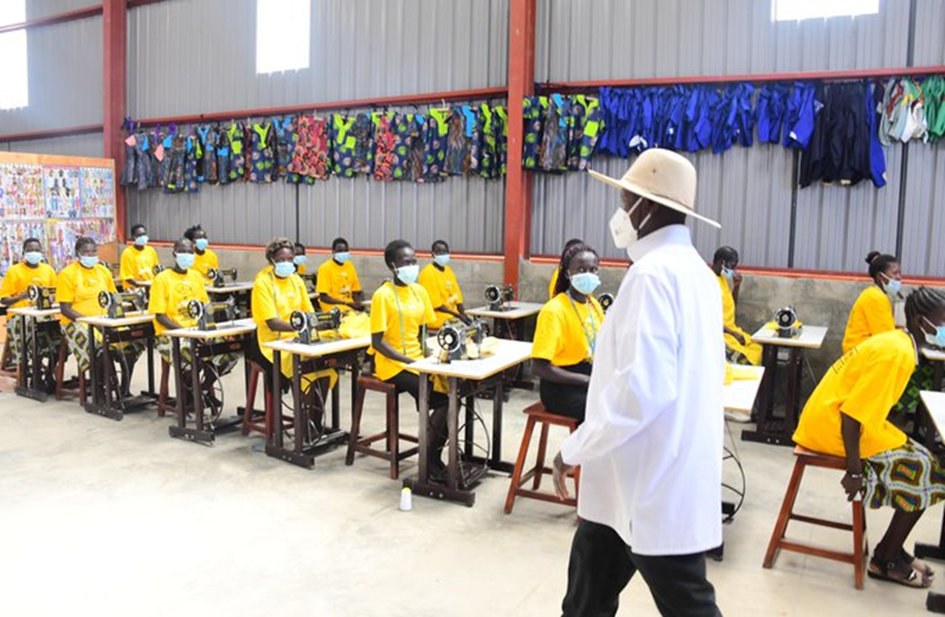
According to UVTAB, trainees are being examined in seven key occupational areas: bakery, tailoring, hairdressing, leather design, welding, building and construction, and carpentry and joinery. The selected trades reflect sectors with strong potential for self-employment and job creation, particularly among young people.
To ensure smooth and credible evaluation, UVTAB has deployed 250 practical assessors across 19 hubs. The Board has also put in place special arrangements to accommodate candidates under Special Needs Education, including the provision of specialised staff and appropriate assessment adjustments.
The Executive Secretary of UVTAB, Mr Onesmus Oyesigye (CPA), said the initiative is specifically designed to target young Ugandans who are interested in acquiring hands-on, employable skills.
“The assessment aims at certifying their competencies to enable them access employment opportunities or establish their own enterprises,” Mr Oyesigye said.
He described the ongoing exercise as a significant milestone in the country’s efforts to build a competent and skilled labour force capable of supporting Uganda’s economic transformation agenda. He noted that formal certification would enhance the credibility of the trainees’ skills, improve their competitiveness in the labour market, and increase their chances of securing gainful employment.
The Presidential Industrial Hubs initiative was introduced as part of broader government efforts to address youth unemployment by equipping young people with practical skills that respond directly to market demands. The programme provides free vocational training, tools, and start-up support to beneficiaries drawn from different regions of the country.
Assessments are currently taking place at several hubs, including Mengo-Kayunga, which has 237 candidates; Busoga (240); Karamoja (197); Sebei (241); Bunyoro (234); Bugisu (240); Lango (243); Acholi (243); Madi (235); Teso (240); and Zombo (236).
Other hubs participating in the exercise include Bukedi, Kasese, Kigezi, Mubende, Masaka, Ankole, Ntoroko and Tooro, each hosting between 218 and 247 candidates. The distribution reflects the government’s intention to ensure regional balance and equitable access to skills training opportunities.
Mr Oyesigye commended Yoweri Museveni for championing what he described as a transformative agenda aimed at empowering youth who previously lacked access to employable skills. He said the industrial hubs have already begun to positively impact communities by promoting self-reliance and entrepreneurship among beneficiaries.
He further emphasised that the initiative aligns with the objectives of Uganda’s Fourth National Development Plan (NDP IV), which prioritises human capital development, industrialisation and job creation as key drivers of socio-economic growth.
“With structured training and credible certification, these young people are better positioned to contribute meaningfully to household incomes and national productivity,” Mr Oyesigye said.
As the assessments continue throughout the week, education officials say the outcomes will play a crucial role in determining the readiness of trainees to transition into the labour market or launch small-scale enterprises, reinforcing government efforts to build a resilient and productive workforce.