

By Caroline Nakire
For many skilled young people in Kampala, the biggest challenge is not acquiring a skill but accessing the equipment needed to turn that skill into a source of income.
The Presidential Common User Facility at Mulago Skilling Centre is intended to address this challenge. On Friday, 20 November 2026, youth leaders were urged to mobilise graduates to take advantage of the free production equipment available at the facility.
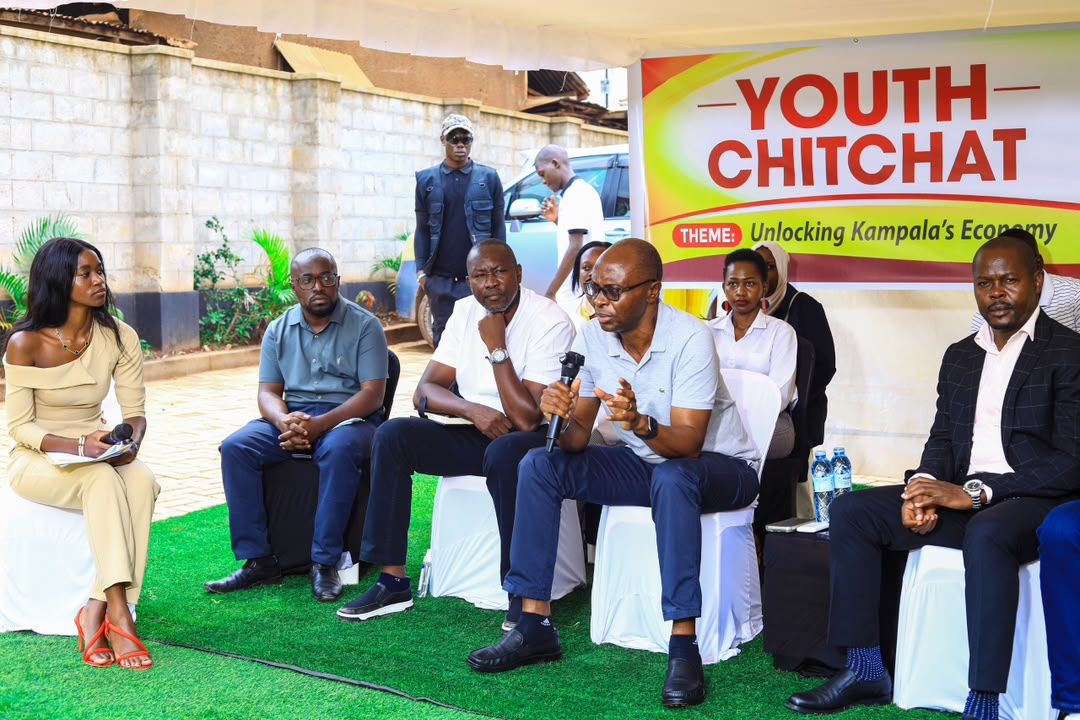
Addressing National Youth Council leaders and Local Council youth leaders in Kampala, the Senior Presidential Advisor in charge of Political Mobilisation, Mr Moses Byaruhanga, said the facility provides free access to industrial equipment for graduates of the Presidential Initiative on Skilling the Girl and Boy Child (PISGBC).
Instead of spending huge sums of money purchasing machinery, beneficiaries can access the shared workshop in Kawempe Division to manufacture products and sell them.
According to Mr Byaruhanga, the initiative emerged from concerns raised by young people who had acquired skills and mobilised money to purchase raw materials but could not afford to hire machinery for production.
He recalled meeting a group of graduates who were struggling to access equipment for making shoes, books and other products.
“Their complaint was simple. They had the skills and they had materials, but they had nowhere affordable to produce,” he said.
Mr Byaruhanga said he presented the proposal to President Yoweri Kaguta Museveni, who approved it with support from the State House Comptroller.
He explained that access to the facility would be free during the first year, after which beneficiaries would make a small contribution towards operational costs, mainly electricity and water.
“We agreed that the first year is free. Later, they will contribute something small for utilities. We shall agree on that minimal charge together,” Mr Byaruhanga said.
The Mulago facility is a pilot project, with plans to establish similar centres in other divisions of Kampala if the initiative proves successful.
Beyond the facility, Mr Byaruhanga updated the youth leaders on other Government programmes targeting young people.
On youth SACCOs, he said Government is committed to providing Shs200 million to youth SACCOs in each division of Kampala. Makindye Division has so far received Shs50 million as the first instalment, which he attributed to the organisation of its youth structures. The remaining funds are being processed.
“We are processing that money and you will soon receive it,” he said.
Regarding the Parish Development Model (PDM), Mr Byaruhanga reminded the leaders that 30 per cent of parish funds are allocated to youth. He challenged them to monitor the implementation of the programme to ensure young people receive their designated share.
He also announced plans to increase PDM funding in the Kampala Metropolitan Area from Shs100 million to Shs300 million in the next financial year.
However, he expressed concern about the performance of the Emyooga programme in Kampala, revealing that only 303 of the 566 SACCOs were active, while the remaining 263 could not be traced.
Mr Byaruhanga said Government would reorganise and streamline the programme to improve accountability and address the challenges affecting its implementation.
“The Government has made some losses in Emyooga. We have decided to reorganise and streamline the project,” he said.
The Deputy Resident City Commissioner for Kawempe, Mr Kagenyi Lukka, encouraged young people to overcome inferiority complexes and embrace their potential to create wealth through skills and innovation.

The National Youth Council Chairperson, Mr Daniel Ongom, thanked Mr Byaruhanga for engaging youth leaders and urged them to take responsibility for ensuring that Government programmes deliver the intended benefits.
The Managing Director of the facility, Mr Didas Businge, clarified that the Mulago centre is not another training institution but a production facility designed for people who have already acquired skills.
He said the facility is equipped with machinery for tailoring, embroidery, knitting, shoemaking and book production, among other activities.
Speaking on behalf of Kampala youth leaders, Kawempe Division Youth Councillor, Ms Nambooze Haulah, welcomed the initiative but appealed to Government to consider establishing a small revolving fund to enable beneficiaries to access raw materials and make full use of the equipment.
“Our goal is to see this facility producing successful businesses,” she said.
The impact of the initiative is already reflected in the experience of Ms Maria Kevin Namatovu, a beneficiary who manufactures reusable sanitary pads at the centre. She said access to free workspace and machinery had enabled her to increase production and earn a living.
“I don’t rent this place and the machines are free of charge,” she said.
Her experience illustrates the potential of shared production facilities to help skilled young people overcome equipment barriers and turn their skills into viable enterprises.