

By Diana N. Kintu
Entebbe: President Yoweri Kaguta Museveni has challenged African military leaders to champion Pan-Africanism and economic integration, arguing that the continent cannot achieve lasting prosperity or security by relying on foreign assistance but by expanding markets, strengthening production, and working together.
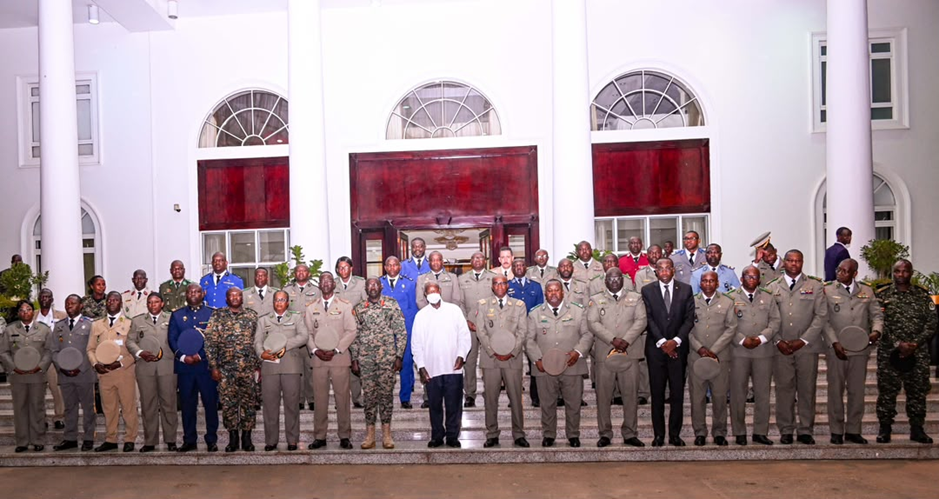
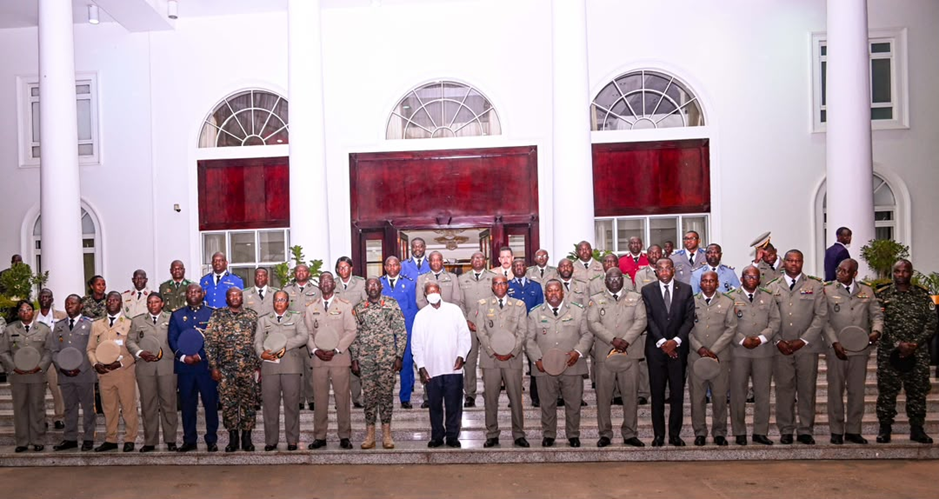
Speaking during a Lecture of Opportunity to a delegation of 37 student officers from the War College of Mali at State House Entebbe on Thursday, President Museveni said Africa’s future depends on fulfilling what he described as three historical missions: creating prosperity, guaranteeing strategic security, and promoting continental unity.
“Prosperity cannot come from begging,” President Museveni said. “It comes from producing goods and services that other people are willing to buy.”
Drawing on more than six decades of involvement in African affairs, the President explained that while political independence was an important milestone, Africa must now focus on building productive economies capable of creating jobs, increasing incomes and improving living standards.
Using his experience as a cattle farmer, he said wealth grows when producers have access to larger markets rather than relying only on local demand.
“My tribe cannot make me prosperous because they produce the same things I produce. It is the wider Ugandan market that buys my milk and beef,” he said.
He noted that as countries increase production, national markets eventually become too small, making regional economic integration essential.
“Pan-Africanism is not just an ideology; it is an economic necessity. Africa provides the larger market that will sustain our prosperity,” the President said.
Museveni also urged African countries to accelerate socio-economic transformation by moving households from subsistence farming to commercial production, saying families must produce not only for food but also for income.
On security, he argued that economic progress cannot be sustained without strong defence institutions capable of protecting national development.
“You may become prosperous, but if you cannot defend yourself, others will destroy what you have built,” he said.
The President observed that modern security challenges now extend beyond land, air and sea to include space, making closer political and security cooperation among African countries increasingly important.
He welcomed ongoing regional cooperation among Mali, Burkina Faso and Niger, saying stronger partnerships would enhance Africa’s ability to safeguard its sovereignty and respond to emerging security threats.
Addressing global competition for Africa’s natural resources, Museveni warned that the continent remains vulnerable because many post-independence leaders failed to fully pursue political and economic integration.
“The new scramble for Africa is a reality because we did not unite ourselves after independence,” he said.
He further called for greater investment in value addition, noting that processing agricultural products creates more jobs, raises export earnings, and increases farmers’ incomes.
On combating terrorism, Museveni said African countries must address both the ideological causes of violent extremism and strengthen professional armed forces capable of defeating armed groups.
Earlier, Commander Joint Staff Training and Doctrine Brig. Gen. Wycliffe Keita said the delegation was in Uganda to study the country’s experience in national security, defence transformation, governance and development.
“Today’s audience with Your Excellency is the pinnacle of our study visit,” Brig. Gen. Keita said. “You are widely recognised for promoting African solutions to African challenges.”
The Commandant of the War College of Mali, Brig. Gen. Moussa Yoro Kanté, thanked Uganda for strengthening defence cooperation between the two countries, saying the partnership had contributed to the training of Malian officers and reinforced shared efforts to promote peace and stability across the continent.
The delegation, comprising officers from Mali, Burkina Faso, Cameroon, Chad, Guinea, Morocco, Senegal, and Togo, also engaged President Museveni on regional security, terrorism, the renewed global competition for Africa’s resources, and Uganda’s National Enterprise Corporation model.