

By Diana Kintu
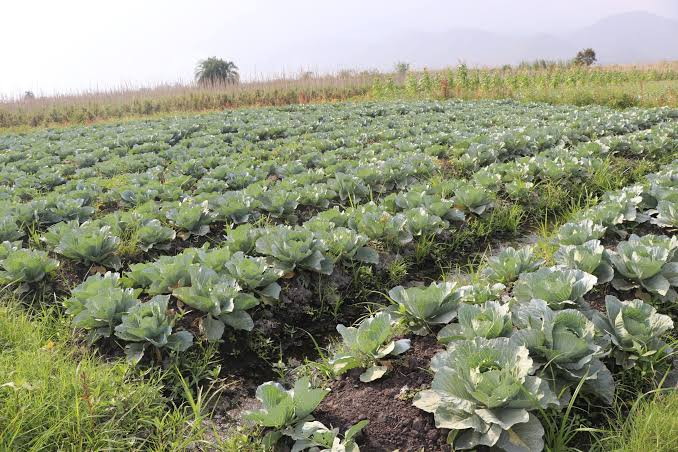
Agricultural systems driving local livelihoods and food security. Source: Economic Policy Research Centre
Call to Action: Confronting the Climate Crisis
Today, June 5, 2026, the global community stands at a critical crossroads. Decades of industrial emission, ecosystem destruction, and unsustainable resource consumption have brought the planet to an environmental tipping point. Across the globe, nations are organizing under the United Nations’ flagship banner for World Environment Day, rallying behind the urgent campaign hashtag #Now for Climate. While the official international ceremonies are being hosted thousands of miles away by the Republic of Azerbaijan, the true battlefield for survival is local.
Here in East Africa, Uganda is confronting this global crisis by introducing its own localized, deeply resonant national theme: “Climate Action Starts with You: Act Now.” This theme is designed to strip away the abstract nature of global climate policy and place the power, and the responsibility, directly into the hands of ordinary citizens, households, and local communities.
For generations, Uganda has been celebrated as the “Pearl of Africa,” a land blessed with an extraordinary climate, fertile soils, vast freshwater bodies, and diverse ecosystems that range from the snow-capped Rwenzori Mountains to the thick tropical rainforests of the central region. However, these natural gifts are no longer guaranteed. The changing global climate is rapidly altering the landscape of the country, transforming familiar weather patterns into unpredictable, destructive cycles.
Rainy seasons that smallholder farmers relied on for generations have either shifted unexpectedly or vanished entirely, replaced by prolonged, harsh dry spells. When the rains do arrive, they frequently manifest as violent, concentrated downpours that trigger devastating landslides in mountainous regions like Bududa and overwhelm the drainage systems of major urban centers.
This dramatic shift has turned environmental conservation from a niche concern championed by scientists and non-governmental organizations into a vital matter of national survival. Because the very fabric of Uganda’s society and economy is inextricably linked to the natural world, the degradation of the environment poses a direct threat to the daily livelihoods of millions of citizens.
World Environment Day 2026 is therefore not merely a date on the calendar for administrative speeches and corporate tree-planting photo opportunities. Instead, it serves as a crucial national mirror, forcing the country to assess the current state of its natural heritage, acknowledge the severe environmental damage that has been done, and commit to a massive, collective effort to restore balance before the damage becomes entirely irreversible.
To understand the true weight of this day, one must listen to the voices of those charged with leading the country’s environmental defense. Speaking on the strategic national direction for this year’s celebrations, Wilbert Ikoli, the Manager of Environment Education and Advocacy at the National Environment Management Authority (NEMA), emphasizes that the time for passive observation has come to an end:
“Uganda is no longer dealing with a distant threat; we are feeling the heatwaves, urban flooding, and crop failures right now. As NEMA, our mandate is to regulate policy, but policy on paper cannot plant a tree or clean a river. That is why our 2026 national theme places the burden of action directly at the household level. If individual households do not take ownership of their waste and ecosystems, we cannot win this battle. Climate action cannot wait for high-level summits; it must start in your home today.”
The Cradle of the Crisis: West Nile’s Climate Frontline
While awareness campaigns and policy dialogues are echoing across every district in Uganda today, the official national ceremonies for World Environment Day 2026 are cantered at Paridi Stadium in Adjumani District. This choice of location is highly deliberate, serving as a powerful, living illustration of how humanitarian crises and environmental sustainability are deeply intertwined.
The West Nile sub-region has long been praised for its radical hospitality, opening its borders to neighbours fleeing conflict in South Sudan and the Democratic Republic of Congo. Today, West Nile hosts an astonishing 1.4 million refugees, with Adjumani District alone providing sanctuary to more than 230,000 displaced persons. While this humanitarian response is a testament to Uganda’s progressive refugee policies, it has also placed an unprecedented, unsustainable strain on the local environment and its delicate natural resources.
When hundreds of thousands of people are integrated into a rural landscape over a short period, their basic survival needs immediately clash with the surrounding ecosystem. Without access to modern energy grids or alternative fuels, both the refugee populations and the local host communities rely almost exclusively on the surrounding woodlands for biomass energy.
Every single day, thousands of metric tons of wood are harvested from the forests of Adjumani to be converted into charcoal and firewood for cooking. Additionally, timber is urgently required to construct temporary shelters, community clinics, and schools, while vast tracts of natural vegetation must be cleared to make way for subsistence agricultural plots. The cumulative result of this rapid, unmanaged demand is a severe acceleration of deforestation, soil erosion, and the drying up of local water catchments.
The environmental crisis in West Nile serves as a stark warning for the rest of the country. It demonstrates that when human survival is at stake, long-term environmental conservation is frequently sacrificed for short-term necessity, creating an ecological deficit that could take generations to repair.
The stripped hillsides of Adjumani have led to a noticeable drop in local rainfall consistency, an increase in average daily temperatures, and a loss of biodiversity that once sustained the region’s soil health. Bringing the national spotlight to Paridi Stadium today is an effort to mobilize international donors, government agencies, and humanitarian organizations to transition from emergency relief to sustainable, long-term environmental restoration.
The reality on the ground in these settlements reveals the intense daily struggle to balance human dignity with ecological preservation. Michael Vance, a community leader and welfare representative within one of Adjumani’s largest refugee settlements, describes the immense environmental pressure facing the area:
“People come here with absolutely nothing but their lives, fleeing violence and searching for safety. Once they arrive, their most immediate need is to cook a meal for their children, and the only energy source available is the trees around us. We know that we are destroying the very environment that is hosting us, and we see the consequences every day the firewood is getting harder to find, the soil is turning into dust, and the heat in the afternoon is becoming unbearable. But a mother cannot tell her children they will not eat because she wants to save a forest.
We desperately need a massive shift toward clean energy solutions, like solar cookers and energy-efficient stoves, provided at a systemic scale. If the international community does not step up to help us restore these forests, this region will soon become a desert, and that will spark an entirely new crisis over water and arable land.”
The Economic Base: Anchoring Vision 2040
To fully comprehend why environmental degradation represents a national emergency, one must look directly at the economic architecture of Uganda. For decades, macroeconomic planning has focused on transforming the country from a peasant-based society into a competitive, modern, and prosperous middle-income nation under the guidance of Uganda Vision 2040.
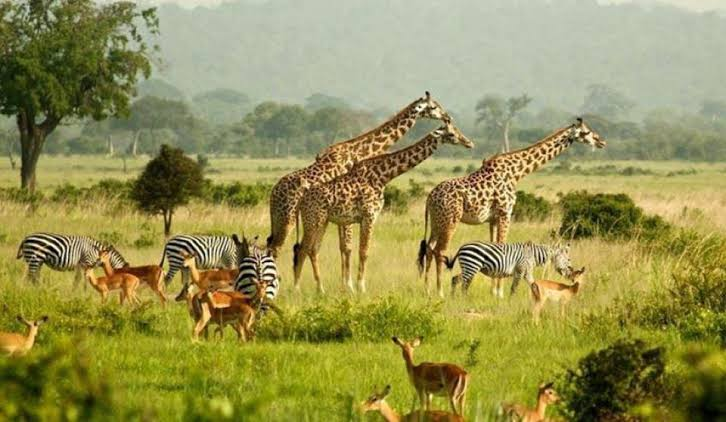
Uganda’s diverse ecosystems and natural heritage. Source: Gorilla Trekking Uganda From Kigali
To achieve this, the government has prioritized specific economic pillars known as the “ATMs” including Agro-industrialization, Tourism, Manufacture, and Mineral Development. While these sectors are correctly identified as the primary engines of wealth creation and employment, a critical truth is frequently overlooked: every single one of these economic pillars is fundamentally anchored in, and entirely dependent upon, the health and stability of the natural environment.
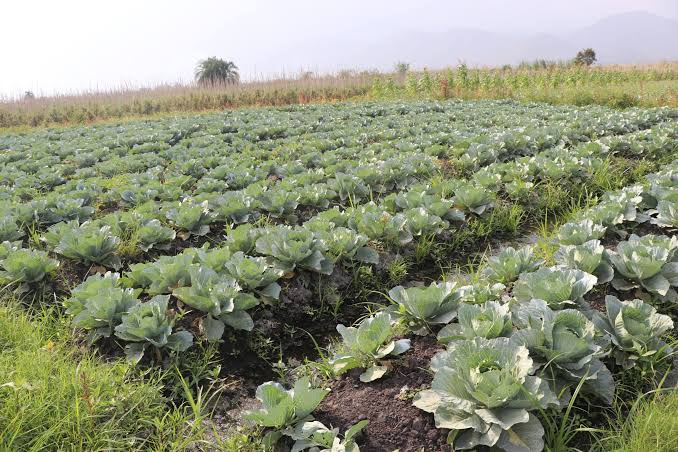
Consider agriculture, which remains the backbone of the Ugandan economy, employing over 70% of the working population and supplying the raw materials required for any meaningful agro-industrial transition. Unlike developed agrarian economies that rely heavily on artificial irrigation and climate-controlled infrastructure, Uganda’s agricultural sector is almost completely dependent on natural rainfall and the inherent fertility of its soils.
When climate change disrupts the seasonal cycles, causing prolonged droughts that wither crops in the fields or sudden downpours that wash away topsoil, the entire economic ladder shakes. Food prices in urban centers spike immediately, inflation rises, export revenues from key cash crops like coffee and tea plummet, and millions of rural households lose their primary source of income, plunging them back into poverty.
Similarly, the tourism sector, which stands as one of Uganda’s highest foreign exchange earners, is entirely built upon the country’s natural capital. International visitors do not travel to Uganda to see concrete skyscrapers; they come to experience the unique biodiversity of Queen Elizabeth National Park, trek through the pristine forests of Bwindi Impenetrable National Park to see the mountain gorillas, and marvel at the spectacular flow of the River Nile.
If these ecosystems are allowed to degrade if savanna grasslands are encroached upon, if rivers are polluted with industrial waste, and if tropical forests are cleared for timber the tourism industry will inevitably collapse. The manufacturing and mineral sectors are equally dependent on nature, relying on reliable water supplies for industrial processing and steady hydroelectric power generated by the natural flow of our rivers.
The National Environment Management Authority has been vocal about this economic interdependence, warning that ignoring the environment in pursuit of rapid industrialization is a self-defeating strategy. Wilbert Ikoli notes that national wealth cannot be sustained if the country’s natural foundations are systematically destroyed:
“There is a dangerous misconception among some business leaders and policymakers that we must choose between economic development and environmental conservation that we must sacrifice our forests and wetlands in order to build factories and boost GDP.
This is completely false and short-sighted. If you look closely at our national priorities, you will see that our economy is nature-based. When a wetland is destroyed to build a warehouse, we lose the natural water purification system, which means the cost of clean water for our citizens skyrockets. When we allow air pollution to go unregulated in our industrial zones, our public health bill increases dramatically as thousands of citizens flock to hospitals with respiratory illnesses. Protecting the environment is not an alternative to economic growth; it is the absolute foundation of sustainable economic growth. If we bankrupt our environment, we bankrupt our country.”
A Unified Front for National Survival
As World Environment Day 2026 unfolds, the lessons from Adjumani and the clear vulnerabilities of our core economic pillars remind us that Uganda’s future is tightly bound to its ecosystems. We cannot build factories on dead land, nor can we sustain an agricultural economy without reliable rains. The choice before us is clear: we must treat environmental preservation as a core component of national security and economic planning. By protecting the soil, restoring the forests of West Nile, and aligning our development goals with ecological limits, we ensure that the “Pearl of Africa” remains prosperous, resilient, and green for generations to come.