

By Iddi Wakibi
Uganda and South Sudan have agreed to remove barriers hampering cross-border trade and improve market access as the two countries seek to expand bilateral commerce.
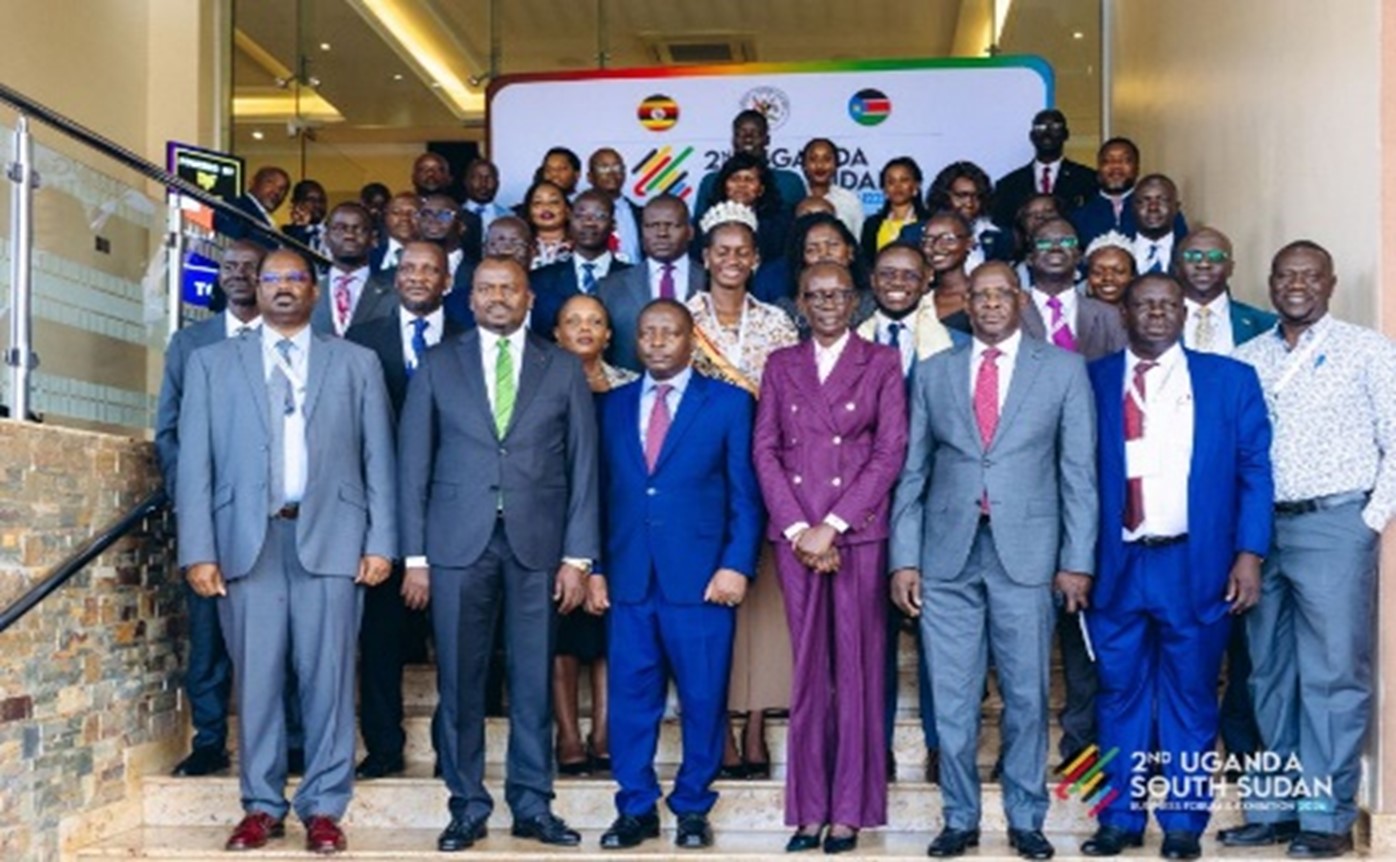
The commitment was formalised through a memorandum of understanding (MoU) signed on Wednesday in Kampala during the second Uganda–South Sudan Business Forum and Exhibition at Mestil Hotel.
The forum was held under the theme, “Easing the Cost of Doing Business and Unlocking Regional Market Opportunities for Uganda and South Sudan.”
Uganda’s Minister of State for Industry, David Bahati, and South Sudan’s Minister of Trade and Industry, Labanya Margaret Mathya, signed the agreement, which provides for trade promotion, information exchange, investment facilitation and monitoring of government commitments.
The urgency of the agreement is reflected in the imbalance in bilateral trade. Bahati said Uganda exported goods worth about $524 million to South Sudan, while South Sudan’s exports to Uganda stood at approximately $22 million.
“We need South Sudan. As much as you need us, we also need you,” Bahati said.
He identified delays associated with South Sudan’s electronic permit system, repeated cargo inspections, multiple checkpoints, unofficial charges and inconsistent clearance procedures along the Kampala–Gulu–Nimule–Juba corridor as some of the major obstacles facing traders.
Bahati called for transparent permit procedures, clear charges and an end to duplicate payments. He also urged both countries to ensure coordinated operations between Uganda’s One-Stop Border Post at Elegu and facilities at Nimule.
Uganda’s Ambassador to South Sudan, Brig. Gen. Ronnie Balya, said joint technical committees would oversee implementation of the MoU through a roadmap containing timelines, measurable targets and regular review meetings.
“We should judge the success of the MoU not by the signing ceremony alone,” Bahati said, stressing that its value should ultimately be measured by tangible economic outcomes. South Sudan also raised concerns affecting its traders.
South Sudan’s Ambassador to Uganda, Paul Malong Akaro, said South Sudanese traders faced difficulties accessing Ugandan manufacturers and distributors directly.
“Our traders don’t have access to manufacturers to buy goods from Uganda,” Akaro said, calling on Uganda’s Ministry of Trade to address the issue.
He also urged greater cooperation between the two countries’ standards agencies to resolve challenges affecting South Sudanese dried-fish exports transiting through Uganda.
Mathya described Uganda as a priority trading partner and said South Sudan was taking steps to address some non-tariff barriers, including removing certain alien registration requirements and visa-related obstacles. She clarified, however, that foreign nationals working in South Sudan still require work permits.
“South Sudan welcomes all investors of every kind,” she said.
Beyond border reforms, Bahati called for greater consumption of locally produced goods and proposed exploring joint steel manufacturing. He said Uganda spends approximately $1 billion annually on steel imports despite the availability of substantial iron ore deposits in both countries.
Closing the forum, Minister of State for Foreign Affairs in charge of Regional Cooperation Haruna Kasolo Kyeyune called for stronger coordination among government agencies and continued private-sector participation.
“The significance of the MoU will ultimately depend on its implementation,” Kasolo said.
The agreement provides a framework for addressing trade barriers, but its success will ultimately be measured by whether traders experience faster clearance, lower transaction costs, improved market access and fewer administrative obstacles along the Uganda–South Sudan trade corridor.