
By Diana N. Kintu
Uganda has 187 women in Parliament, and women account for 49 per cent of Cabinet. Yet, beyond these numbers lies a more consequential question: how much influence do women have over the laws, policies and budgets that shape the country’s future?
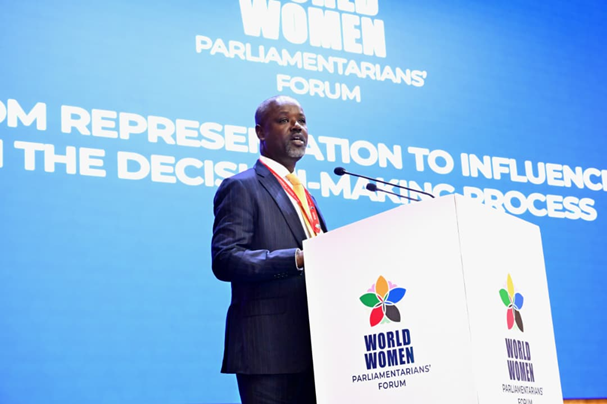
That question was central to remarks by Deputy Speaker of Parliament Thomas Tayebwa, who led Uganda’s delegation to the World Women Parliamentarians Forum in Ulaanbaatar, Mongolia.
Addressing the forum on 12 October 2026, Tayebwa highlighted Uganda’s progress in increasing women’s representation in leadership while emphasising that occupying positions of power is only the first step towards influencing national decisions.
Women hold 187 of Parliament’s 529 seats, representing approximately 35 per cent of the House. They also account for 49 per cent of Cabinet, with women serving as Vice President, Prime Minister and Deputy Prime Ministers.
Tayebwa attributed this progress to deliberate measures introduced since the National Resistance Movement government came to power in 1986. These include affirmative action enshrined in the Constitution and gender and equity assessments in the budgeting process, supported by the Equal Opportunities Commission.
However, he argued that representation must translate into meaningful participation in decision-making.
“Representation is only the beginning,” he said.
The real measure of progress, he emphasised, lies in women’s ability to influence legislation, government policy and budget allocations. These decisions determine national priorities, the distribution of public resources and the extent to which different groups benefit from government programmes.
Held on 12 and 13 October under the theme “From Representation to Influence in the Decision-Making Process,” the forum brought together women parliamentarians and other leaders to exchange experiences and explore ways to strengthen women’s influence in governance.
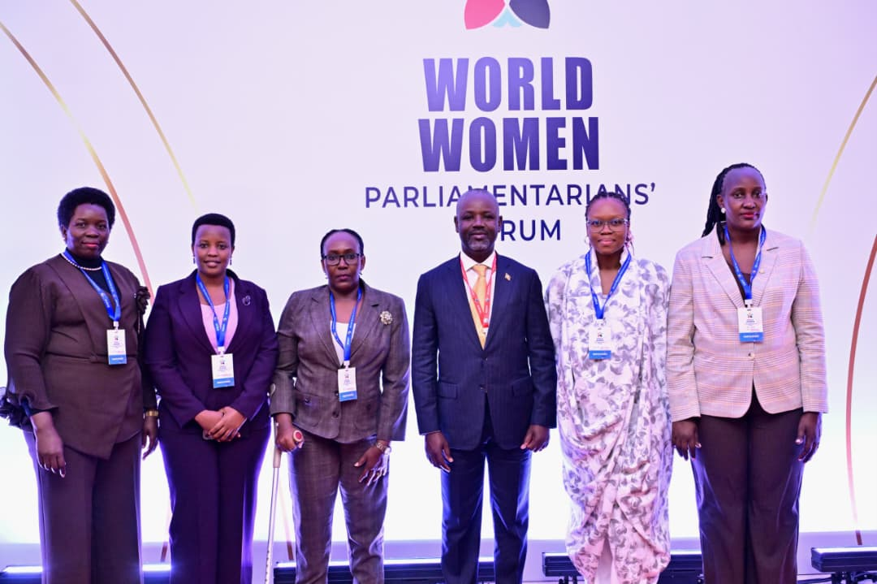
Uganda’s delegation included Lira Woman MP Auma Linda Agnes, National Female MP representing Persons with Disabilities Laura Kanushu, Wakiso Woman MP Betty Ethel Naluyima, Soroti Woman MP Anna Ebaju Adeke and National Female Youth MP Mercy Kanyesigye.
Contributions from other delegations highlighted the gap that can persist between formal commitments to gender equality and women’s actual influence over public decisions.
Leah Sopiato Sankaire, who led Kenya’s delegation, noted that her country had yet to meet the constitutional requirement that no more than two-thirds of members of elective or appointive bodies should be of the same gender. She cited ongoing efforts, including a proposed constitutional amendment, to address the shortfall.
Sankaire also stressed the importance of women leading committees responsible for public expenditure, arguing that their participation in these decision-making spaces can help ensure that budgets respond to the needs of different groups.
“When these committees are chaired by women, a gender-sensitive budget becomes a reality,” she said.
Parvana Valiyeva, who led Azerbaijan’s delegation, highlighted her country’s history of women’s political participation, recalling that Azerbaijan granted women the right to vote and stand for election in 1918. She urged women parliamentarians to strengthen their influence in decisions concerning climate change, technology, economic development, peace and security.
Mongolia’s Minister of Foreign Affairs, Battsetseg Batmunkh, recognised the contribution of generations of women who had advanced gender equality, particularly following the 1995 World Conference on Women in Beijing. She noted that women’s representation in parliaments had more than doubled since then.
For Uganda, the figures presented at the forum demonstrate progress in opening leadership spaces to women. But representation alone cannot establish whether women are shaping the decisions that affect citizens’ lives.
The next test is whether women can exercise meaningful influence over parliamentary priorities, public spending and policy implementation. Ultimately, progress must be measured not only by how many women occupy positions of authority, but also by the extent to which their participation contributes to responsive laws, equitable resource allocation and better outcomes for citizens.
Source: World Women Parliamentarians Forum, Ulaanbaatar, Mongolia; remarks by Deputy Speaker Thomas Tayebwa.