
By Diana N. Kintu
Kampala: Uganda passed a law requiring sign language interpreters in every public institution and government function. Nearly two million Ugandans with hearing difficulties are still waiting for that promise to reach the courtroom and the hospital ward.
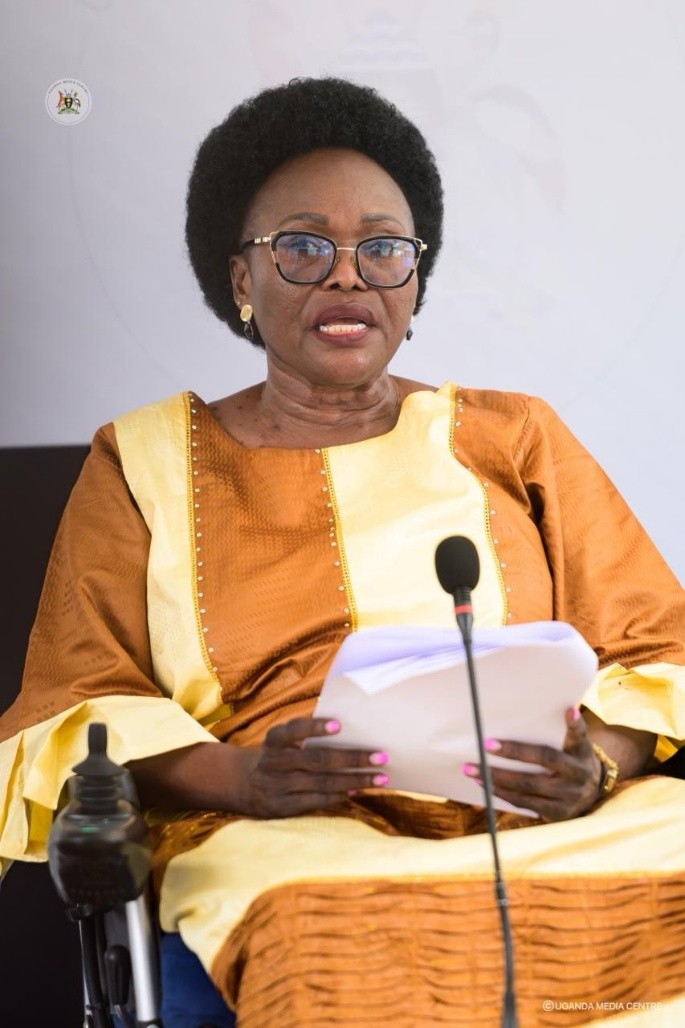
The Minister of State for Disability Affairs, Hon. Achan Joyce Okeny, made the admission while announcing the climax of International Deaf Awareness Week, running from 14 to 18 September 2026, with national celebrations set for Sembabule District Headquarters on 18 September.
“Despite the achievements mentioned above, there are some challenges like low retention of learners in schools, unemployment, inadequate sign language interpretation in accessing some services such as judicial and health, among other services,” Okeny said.
The gap sits directly against a legal framework that already exists on paper. The Persons with Disabilities Act 2020 obliges all stakeholders to ensure the development, training and use of sign language, and the provision of Sign Language Interpreters, in all public institutions and at all government functions. The government has also ratified the UN Convention on the Rights of Persons with Disabilities and enforces accessibility requirements for television under the Communications Act 2013.
The scale of who that gap affects has grown sharply. According to the Uganda National Housing and Population Census 2024, more than 1,979,613 persons aged two and above have difficulty hearing, representing a prevalence rate of 4.7 percent, up from 1,083,649 recorded in the 2014 census.
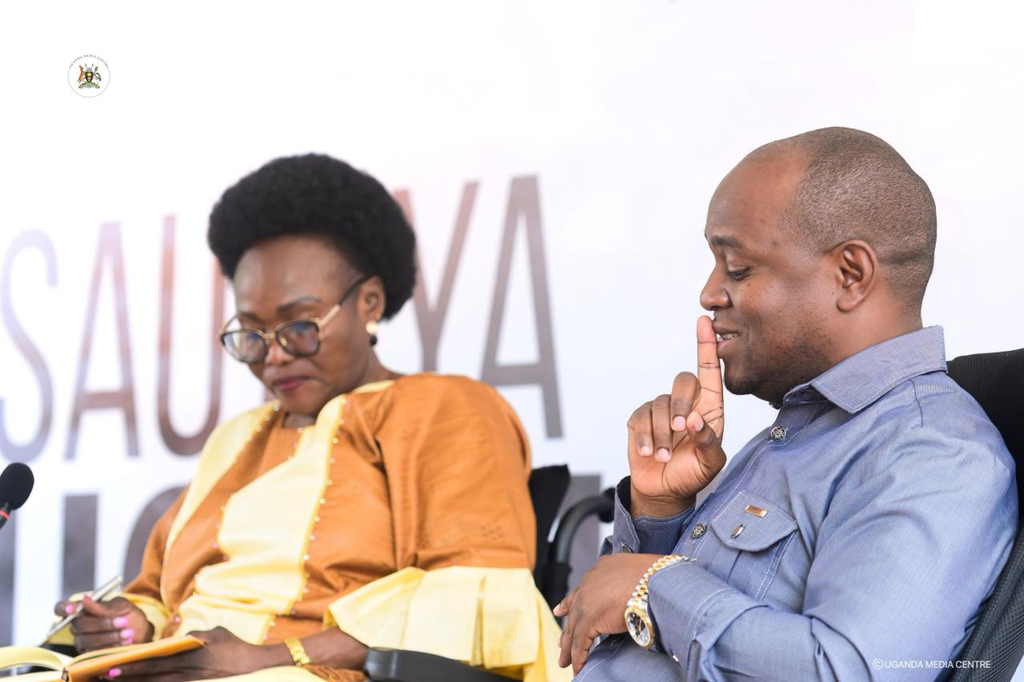
“This is a significant number of the population which cannot be left unattended because they play an important role in the development of this nation,” Okeny said.
Government points to real progress alongside the gap. Two model secondary schools for the Deaf now operate in Mbale and Wakiso districts, while deaf student enrolment in university and tertiary institutions has grown steadily since 2009 under an affirmative action admissions scheme.
Kyambogo University trains sign language interpreters and now offers the course at Master’s level. Under the National Special Grant for Persons with Disabilities, 2,212 people have benefited since its inception, while the Parish Development Model reserves 10 per cent of its allocation for persons with disabilities, including the deaf.
But Okeny’s own Ministry illustrates how thin the interpreter pipeline remains at the institutional level: it has recruited just four Sign Language Interpreters to handle communication with deaf persons and information dissemination from the Ministry itself.
“Government will continue working with partners to increase the number of Sign Language Interpreters within the Public Service structure,” Okeny said.
Standardisation is also still a work in progress. The Ministry, working with the Uganda National Association of the Deaf (UNAD), has carried out nationwide consultations on standardising Ugandan Sign Language, with a Regulatory Impact Assessment now underway to determine whether the country adopts a formal Sign Language Policy or a set of Guidelines.
This year’s theme, “Declaring Deaf People’s Human Rights: Innovations that Guarantee Access to Social Services and Empowerment,” also marks 20 years since the UN Convention on the Rights of Persons with Disabilities, a convention Uganda ratified and which recognises sign language as a human right.
Activities during the week include Ugandan Sign Language training for service providers, including justice and health officials, a cultural gala, school debates, a community health camp, a football match between a deaf team and a hearing team, and a livestream of the main Sembabule ceremony with Uganda Sign Language interpretation and captioning. The Rt. Hon. Oboth Oboth, Speaker of Parliament, is expected as Chief Guest.
Okeny closed by committing the government to keep addressing the gaps she had highlighted.
“Government however, remains committed to closing gaps and enhancing services for the deaf community,” she said.
“Through collective action, we believe that the full and equal participation of Deaf persons is possible.”
For nearly two million Ugandans, that participation depends less on the law already on the books than on how quickly the interpreters needed to make that law meaningful actually show up.
Source: Press Statement by Hon. Achan Joyce Okeny (MP), Minister of State for Disability Affairs, Uganda Media Centre, 16 September 2026.