

By Walimbwa Moses
For years, West Nile’s electricity story was largely about what the region lacked: reliable power, adequate generation capacity and a strong connection to Uganda’s national electricity system.
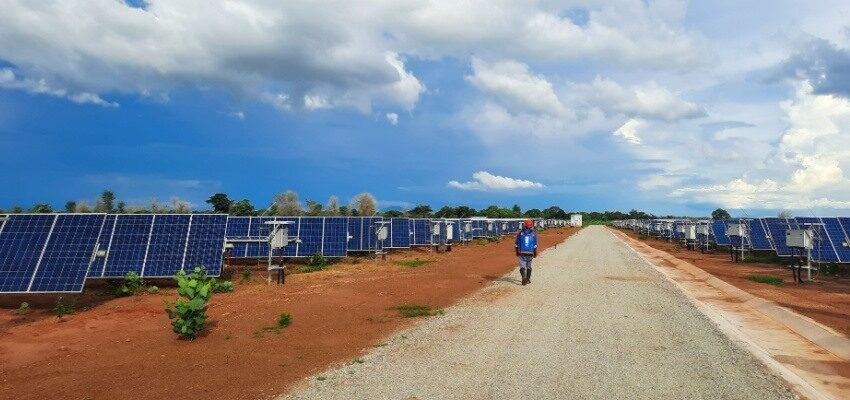
That story is beginning to change. The 24MWp Ituka Solar PV Project, located in Uleppi, Madi Okollo District, officially commenced commercial operations on September 14, 2026, introducing new renewable electricity into Uganda’s national grid.
Developed by Ituka West Nile Uganda Limited, a Uganda-registered company wholly owned by AMEA Power, the project is the first solar Independent Power Producer (IPP) in West Nile and the largest installed-capacity IPP in the sub-region, according to its developer.
But Ituka is more than another power plant. Its arrival comes just two years after West Nile was connected to Uganda’s national grid in 2024, marking a remarkable transition for a region that has historically struggled with electricity access and reliability.
The plant will supply electricity to the national grid through the Uganda Electricity Transmission Company Limited (UETCL), its offtaker. Its commercial operation followed the successful energisation of a 25MVA, 132/33kV substation in July 2026, which enabled reliability and performance testing before commercial generation began.
The plant is expected to generate approximately 53,940 megawatt-hours of clean electricity annually, equivalent, according to AMEA Power, to the electricity needs of more than 192,640 households. It is also expected to avoid approximately 26,600 tonnes of carbon emissions each year.
For West Nile, however, the significance of those numbers lies in what the electricity can make possible. Reliable power can support agro-processing, manufacturing, commerce, digital enterprises and other productive activities capable of transforming electricity infrastructure into jobs, investment and economic opportunity.
The project represents an investment of approximately US$27 million, financed through debt and equity from AMEA Power and the Emerging Africa Infrastructure Fund (EAIF). Agreements supporting the project were signed in September 2023, followed by regulatory approvals and construction.
For AMEA Power, Ituka marks its first operational renewable-energy asset in Uganda, strengthening its growing renewable-energy portfolio across Africa. AMEA Power Chairman Hussain Al Nowais described the development as a significant milestone.
“The successful commercial operation of the 24MWp solar PV plant is an important milestone for AMEA Power and for Uganda’s energy sector,” Al Nowais said.
His statement captures the broader significance of the project: Uganda is not only expanding renewable generation but also attracting private investment into new energy infrastructure.
West Nile’s connection to the national grid in 2024 created the infrastructure for improved electricity supply and investment. Ituka now adds generation capacity to that equation.
Factories, farms, businesses, schools, health facilities and households must increasingly be able to use reliable power to create value. In that sense, the most important story about Ituka may not be the 24MWp it generates today, but the economic possibilities that those megawatts could unlock tomorrow. West Nile has moved from waiting for power to beginning to produce it.