

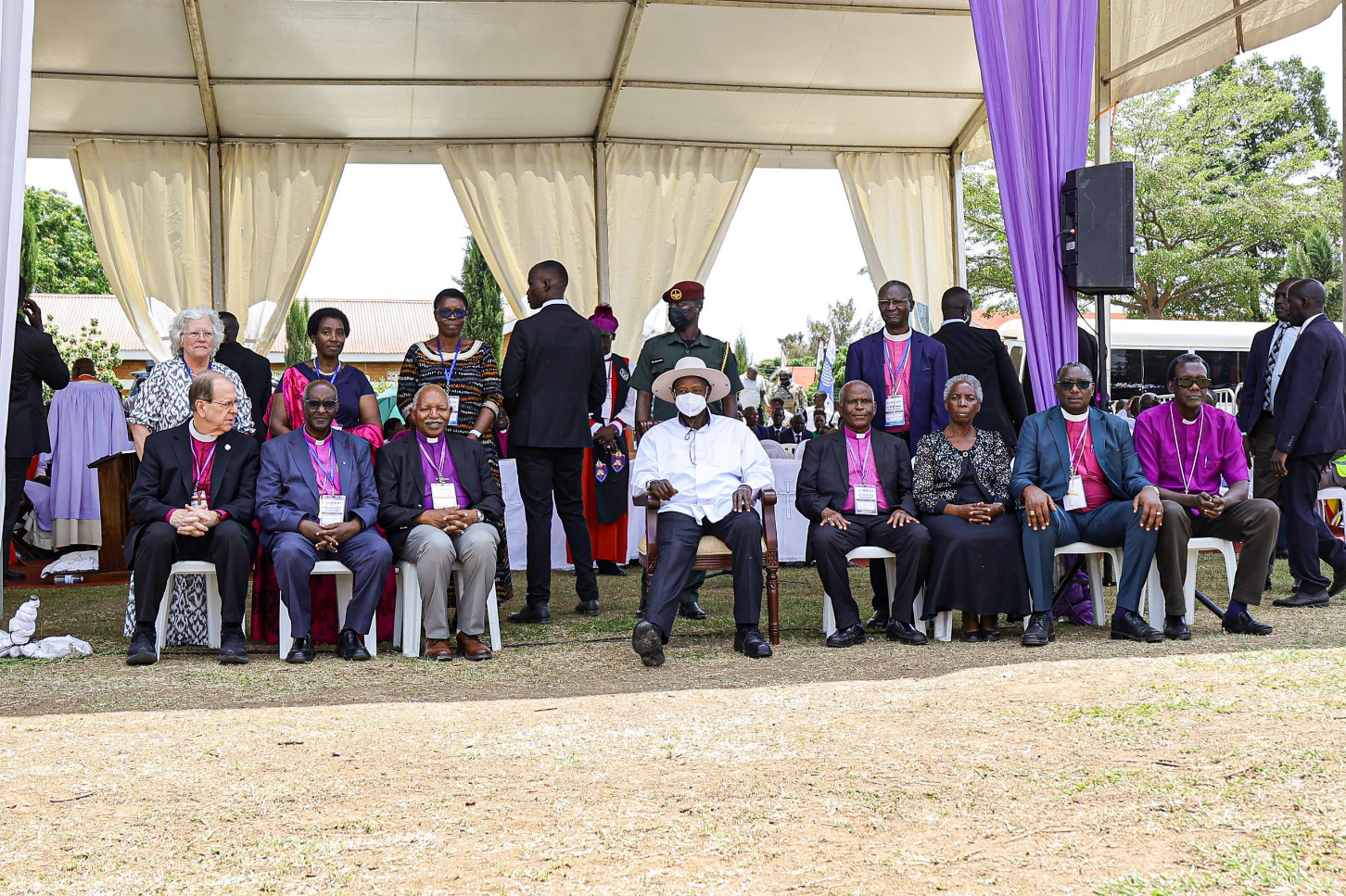
By Caroline Nakire
President Yoweri Kaguta Museveni has credited the East African Revival with transforming Ankole’s moral and social fabric over the past 90 years.
President Museveni was speaking on Saturday at St. John’s Cathedral, Ruharo, during the closing ceremony of the five-day Ankole Revival Convention held to mark 90 years of the movement in Greater Ankole. The convention was held under the theme “Jesus Christ is the same yesterday, today and forever,” drawn from Hebrews 13:8.
The President said the Revival, locally known as the Balokole movement, saved Ankole by confronting alcoholism, adultery, tobacco use, superstition, dishonesty and poor hygiene, while promoting education, discipline and responsible Christian living.
According to President Museveni, the region was once associated with excessive drinking, to the extent that investors who established a brewery in Mbarara had identified it as a major market following research. He said the Balokole also discouraged the sharing of drinking vessels, encouraged communities to boil milk and water before consumption, challenged sexual immorality that weakened families, and urged parents to enrol children in school.
Reflecting on his personal connection to Ruharo, President Museveni said he first visited the cathedral compound 77 years ago in 1949, when his parents took him to celebrations marking 50 years of the Church in Ankole.
“I want to thank the Lord because He has really favoured me. I was first here on this compound of this cathedral 77 years ago,” President Museveni said.
He said his great-grandfather and grandfathers declined to join the Church of Uganda after missionaries arrived in Ankole in 1899, and that only his father, mother and himself joined the Church at Kinoni in 1947.
President Museveni linked faith to livelihoods, welcoming the Church’s growing role in wealth creation. He cited commercial coffee farming in Ntungamo spearheaded by church leaders and said revival should go beyond spirituality to improve household incomes.
He, however, warned against wetland encroachment, saying the degradation of catchment areas was responsible for the drying up of River Rwizi, which sustains Mbarara City.
“You need to do irrigation, and in order to do that, you need water. We must respect the environment. People should get out of wetlands,” he said.
On the proposal to establish a museum dedicated to the Revival, President Museveni pledged Government support, describing it as a symbol of civilisation and Uganda’s contribution to humanity. He said the museum should also preserve stories of enduring Christian values, citing four couples who have been married for 75 years and were presented during the celebrations.
Retired Archbishop Luke Orombi, who commissioned the convention, thanked President Museveni for his continued support to faith institutions.
“Thank you, Your Excellency, for supporting the Church. You have always given to the work of the Church and other religious organisations,” Archbishop Orombi said. He urged leaders to allow righteousness to guide their service, anchoring his message on Matthew 11:25.
The Bishop of Ankole Diocese, the Rt. Rev. Fred Sheldon Mwesigwa, said the anniversary provided an opportunity to reflect on the Revival’s contribution and recommit to its values.
He said Ankole retains a strong Anglican identity, with 44.9% of the population identifying as Anglican, but noted that challenges such as alcohol abuse and HIV/AIDS persist and require renewed spiritual focus.
According to historical accounts presented at the celebrations, the Revival traces its roots to the early 1930s following the meeting between British medical missionary Dr Joe Church and Ugandan church leader Simeoni Nsibambi.
The movement was birthed in Gahini, Rwanda, in 1931 before spreading to Kigezi in 1935 and to Ankole in 1936.
The accounts indicate that Dr Church travelled from Gahini to Mbarara towards Christmas in 1935. After failing to obtain vehicle spare parts, he was hosted at St. James Cathedral, Ruharo, where he was requested to send evangelists.
On 8th January 1936, evangelists Blasio Kigozi, Paulo Gahunde and Yosiya Kinuka arrived and conducted a week of prayer and preaching that ignited the Revival in Ankole. Initially resisted by some clergy and officials, the movement emphasised repentance, restitution and practical holiness and, by the 1950s, had become an accepted part of Church tradition.
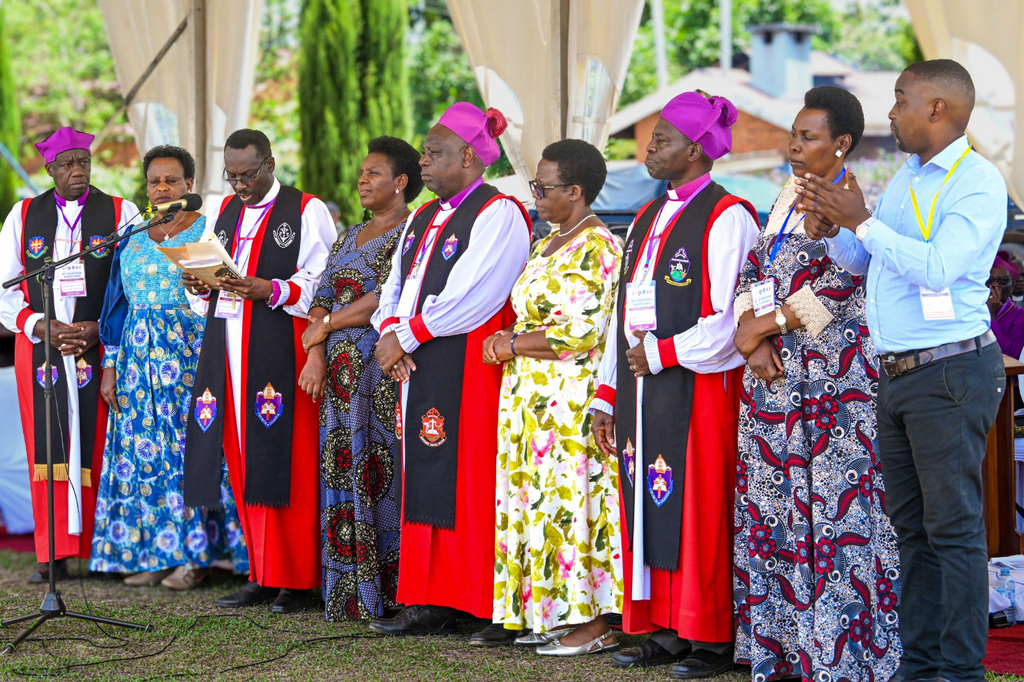
Bishops from the Ankole Dioceses and their spouses during the 90th anniversary celebrations of the East African Revival at St. John’s Cathedral, Ruharo, in Mbarara City.