
By Diana N Kintu
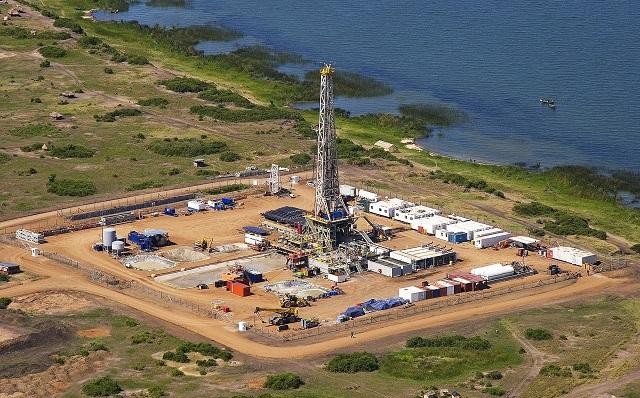
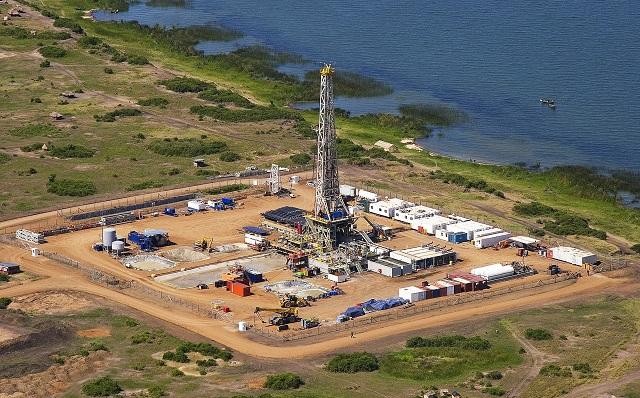
Uganda’s economy is projected to expand by 10.2 per cent in FY 2026/27, marking the country’s first return to double-digit growth since the 1990s. Finance Minister Henry Musasizi announced the forecast while presenting the national budget at Kololo Independence Grounds, attributing the anticipated surge largely to the commencement of commercial oil production later this year.
Musasizi said the economy is expected to grow to USD 69.3 billion, equivalent to UGX 250.4 trillion, by the end of June 2027. Gross Domestic Product (GDP) per capita is projected to rise to USD 1,420 from USD 1,389 recorded last year.
“Most importantly, a larger economy will create more jobs, raise household incomes, expand opportunities for businesses, and generate the resources required to invest in quality education, healthcare, infrastructure, security and other public services,” he said.
Uganda’s economic resilience has remained evident in recent years. Growth for FY 2025/26 is estimated at 6.4 per cent, while inflation remained low at 3.8 per cent. The Uganda Shilling was also cited as one of Africa’s best-performing currencies. Foreign exchange reserves doubled to USD 6 billion, while remittances from Ugandans living abroad increased significantly to USD 2.8 billion.
Exports have emerged as a key driver of growth, rising by 204 per cent over the past five years to reach USD 18 billion. Coffee exports generated USD 2.46 billion, while tourism earnings recovered to USD 1.86 billion in 2025, surpassing pre-pandemic levels.
“Exports are not merely a trade statistic. They are the engine of Uganda’s transformation. They generate foreign exchange, create jobs, support enterprise growth and strengthen economic resilience,” Musasizi emphasised.
The Minister noted that Uganda’s challenge is no longer achieving economic growth alone, but ensuring that growth translates into jobs, higher incomes and improved livelihoods.
Although employment in private formal establishments has increased by 245 per cent over the past decade, he said the creation of more productive jobs remains critical for the country’s rapidly growing population. To address this, Government will continue investing heavily in Agro-Industrialisation, Tourism, Minerals, and Science and Technology (ATMS) as key drivers of economic transformation.
Musasizi reaffirmed Government’s commitment to fiscal self-reliance, noting that domestic revenue collections financed 80.9 per cent of the discretionary budget in FY 2025/26.
“Increasing domestic revenue is not merely a fiscal objective. It is a sovereignty objective,” he said.
Source: Budget Speech FY2026/27, Ministry of Finance