
By James Ongora, Economist and Head of Policy Advocacy, Steel and Tube Industries Ltd
For decades, heavy manufacturing has been viewed as a zero-sum game with the environment. The conventional wisdom was simple: to build a nation’s infrastructure, you had to compromise its climate.
But as we commemorate World Environment Day 2026 under the urgent theme, “Climate Action Begins with You: Act Now,” Steel and Tube Industries Limited (STIL) is proving that heavy industry can actively champion environmental stewardship. Climate action isn’t just a policy on paper it is an operational choice that shapes the future of our nation.
Since our incorporation in 2003, STIL has grown into one of Uganda’s largest steel manufacturers, expanding our workforce to over 1,200 people. As our product portfolio has grown to include everything steel from rebars, wire products, and hollow pipes to Pre-Engineered Buildings (PEBs), nails, and our new trailers line, our environmental responsibility has scaled alongside it.
The core of our sustainability framework rests on a zero-waste philosophy. Traditional manufacturing follows a linear “take-make-dispose” model, which leaves a heavy ecological footprint. At STIL, we have pioneered a circular economic practice where virtually all of our metal waste is reclaimed and recycled back into our production lines.
By melting down and repurposing manufacturing scrap into high-quality steel products, we significantly decrease the need for virgin raw material extraction. This massive reduction in energy consumption directly prevents thousands of tons of carbon emissions, proving that industrial growth can protect, rather than plunder, our green spaces.
True climate action also requires strict operational discipline inside the factory walls. To mitigate the environmental impacts of heavy manufacturing, we have deployed targeted engineering solutions like;
- Air Pollution Control. Our facilities are integrated with advanced air filtration and pollution control systems to capture particulate matter and emissions at the source, ensuring the surrounding air remains clean.
- Effluent Treatment Plant (ETP). Water is a vital shared resource. STIL operates an ETP that processes and purifies industrial wastewater, removing chemical residues before the water is safely discharged back into the ecosystem.
Eco-Innovation: Rethinking the Product Lifecycle
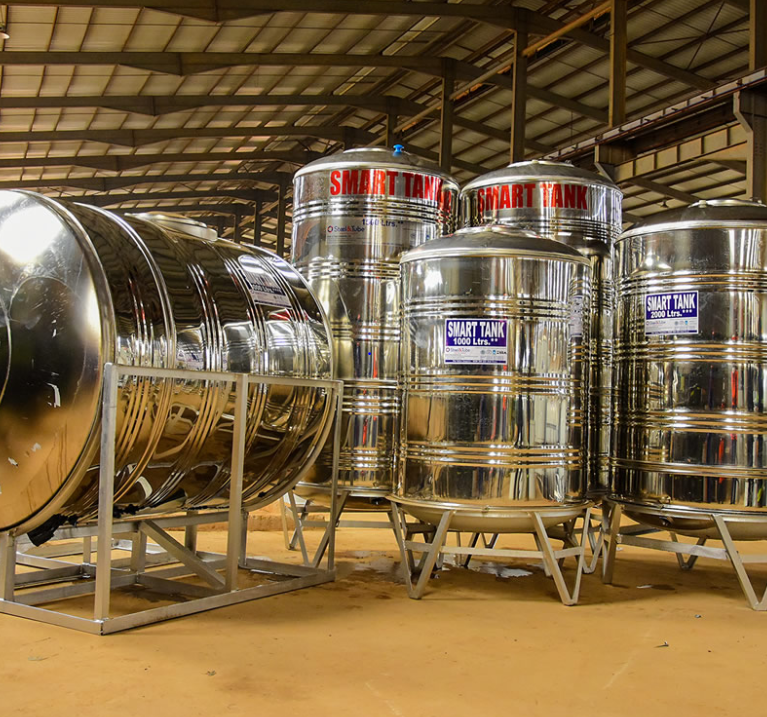
Sustainability also means changing what we make. Plastic pollution remains a major environmental threat across East Africa. In response, STIL introduced Smart Tanks premium stainless steel storage solutions engineered for both water storage and agricultural silos. With an installed capacity of approximately 10,000 units per year, STIL has successfully supplied over 25,000 tanks to the market over the past five years.
Unlike traditional plastic tanks that degrade over time under the harsh equatorial sun, release microplastics, and eventually choke landfills, stainless steel is entirely inert, durable, and infinitely recyclable. By offering a clean, food-safe, and permanent alternative to plastic, we are empowering Ugandan consumers and businesses to make an eco-friendly choice.
While exact weight varies by tank size, if we estimate an average plastic water tank (commonly 5,000 liters) to weigh approximately 80–100 kg, the displacement of over 25,000 plastic units represents a significant environmental achievement. By choosing steel over plastic, this initiative has potentially prevented approximately 2,000 to 2,500 tons of plastic from entering the Ugandan environment, significantly reducing the burden on landfills and minimizing the release of microplastics into our ecosystems.
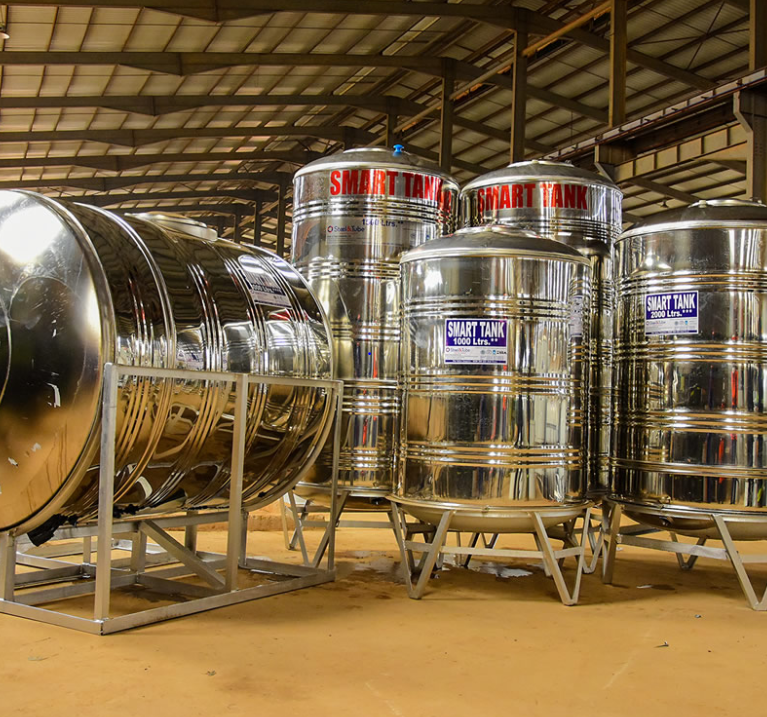
STIL Smart Tanks: A sustainable alternative to single-use plastics.
Climate action also however cannot stop at our factory gates. We actively participate in Corporate Social Responsibility (CSR) programs designed to restore Uganda’s natural carbon sinks.
Our ongoing tree-planting campaigns highlighted by our recent participation in the greening initiative in Mbarara City focus on restoring urban tree cover and educating communities on environmental resilience. We believe that by planting trees today, we are directly investing in the biodiversity and climate stability of tomorrow.
The Ultimate Takeaway here is that, Heavy industry doesn’t have to mean a heavy footprint. By prioritizing circular recycling, clean manufacturing technologies, and plastic-free product innovations, STIL is proving that Uganda’s industrial progress can walk hand-in-hand with climate action.
As the world reflects on the theme “Climate Action Begins with You: Act Now,” STIL stands ready to work alongside fellow manufacturers to build a cleaner, more sustainable future for Uganda. True sustainability is a shared journey built on a foundation of daily operational choices: a collective commitment to treat water, a shared decision to recycle scrap, and a joint investment in cleaner air.
At STIL, we have made our choice. We are building Uganda’s future with steel that protects the soil, the water, and the air we all share. The future of manufacturing is green and the time to act is now.