

By Christine Keehe
Long before satellites tracked weather systems and mobile phones delivered seasonal forecasts, Uganda’s first climate experts lived among the people. They were elders seated beneath sprawling fig trees, farmers who read the language of the skies, and communities whose survival depended on understanding nature’s rhythms. They watched the trees’ flowering, observed the birds’ movements, listened to the insects’ songs, and studied the direction of the winds. The landscape was more than scenery; it was a living textbook. Nature spoke. People listened.
Across generations, communities developed intricate systems for conserving forests, protecting water sources, preparing for drought, and predicting seasons. Certain forests were left untouched because they were considered sacred. Some trees could not be cut without the approval of clan leaders. Wetlands were respected, wildlife was harvested in accordance with traditional norms, and agricultural decisions were guided by knowledge passed down through oral tradition.
Today, as climate change disrupts rainfall patterns, intensifies droughts, and places growing pressure on ecosystems, an intriguing question is emerging among environmentalists, historians, and conservation experts:
Did our ancestors understand something that modern climate science is only beginning to rediscover?
The question is particularly relevant as the world marks World Environment Day under the theme “Climate Action Begins with You: Act Now.”For Uganda, inspiration may not lie solely in future technologies or international climate negotiations. It may also reside in wisdom that has quietly endured for centuries.
The First Conservationists
Long before environmental laws and protected-area regulations, many Ugandan communities had already established systems for safeguarding nature. Across various regions of the country, sacred forests served as more than spiritual sites. They functioned as reservoirs of biodiversity, protecting indigenous tree species, wildlife habitats, and water catchments. Cultural beliefs often prohibited indiscriminate tree cutting, hunting, or cultivation within these areas.
What modern conservationists describe as ecosystem protection was, for many communities, simply a way of life. The remarkable aspect of these traditional practices is that they achieved what many contemporary conservation programs still strive to accomplish: community ownership. People protected natural resources not because they feared penalties from authorities, but because conservation was embedded in cultural values and a sense of social responsibility.
Environmental historians note that many of Uganda’s remaining pockets of indigenous vegetation survived partly because communities attached cultural significance to them. In many cases, reverence became conservation.

Cultural Leader/Historian
“Many sacred forests survived because communities believed they were places of cultural significance. People protected them out of respect. Looking back, we can see that those cultural practices also protected biodiversity and water sources.” Amongin Sophia, a community elder and conservationist at Lake Mburo, said.
Today, scientists increasingly recognise the value of community-led conservation approaches, acknowledging that environmental protection is often most effective when local communities see themselves as custodians rather than spectators. The concept may sound modern. The practice is ancient.
Reading the Language of Nature
For generations, farmers relied on observations that would today be categorized as environmental indicators.
The flowering patterns of particular trees, the behaviour of birds, the emergence of insects, and changes in wind direction often signalled the arrival of rain or dry conditions. Elders passed this knowledge to younger generations through observation and experience rather than textbooks. Many rural communities still retain fragments of this knowledge.
Amos Kalemela, an elderly farmer in Bugiri, says, “When I was growing up, our fathers would know the rains were near when certain trees flowered, and particular birds appeared. Today the seasons are harder to predict, but many of those signs still tell us something. We learned to watch nature because nature was our calendar.”
An elderly farmer’s observations may not appear on weather maps, yet they often reflect decades of intimate interaction with local ecosystems.
Modern meteorological science and indigenous forecasting systems differ in methodology, but both share a common objective: understanding environmental patterns in order to reduce uncertainty and risk.
Climate experts caution that climate change is making weather increasingly unpredictable, affecting both scientific forecasts and traditional indicators. Yet many researchers argue that indigenous knowledge still offers valuable local insights that can complement scientific approaches, particularly in agricultural planning and climate adaptation. Rather than competing systems, they may be partners. One looks to satellites. The other looks to the land.
Surviving Drought Before Climate Adaptation Became a Global Agenda
Long before terms such as “resilience” and “climate adaptation” entered international development vocabulary, Ugandan communities were already developing strategies to cope with environmental shocks.
Food preservation was common. Communities stored grain during periods of abundance. Indigenous crop varieties capable of withstanding harsh conditions were cultivated alongside other crops. Mixed farming systems reduced vulnerability when one harvest failed.
Sorghum, millet, and other traditional crops often proved resilient in challenging climatic conditions. Seeds were preserved from one season to another, ensuring continuity even after difficult years. These practices were not designed in conference halls or policy workshops. They emerged from generations of lived experience.
Ironically, many of the approaches now promoted globally as climate-smart agriculture echo principles that communities have practiced for centuries. The lesson is not that traditional knowledge is superior to modern science. It is that adaptation did not begin in the twenty-first century. Communities have been adapting for generations.
The Environmental Laws That Were Never Written
Modern societies rely heavily on written regulations, policies, and enforcement mechanisms. Traditional societies often relied on something different: shared values.
Certain animals could not be hunted during breeding seasons. Some water sources were protected from contamination. Specific trees were regarded as culturally important and therefore preserved. Taboos and customary norms shaped behaviour in ways that indirectly protected ecosystems. Viewed through a contemporary lens, many of these practices align with principles of sustainable resource management. What makes them particularly fascinating is that they emerged without formal scientific terminology. People may not have spoken about biodiversity conservation or ecosystem services. Yet many of their actions produced those outcomes. The rules were unwritten. The impact was real.
What Happened to the Knowledge?
If indigenous environmental systems offered such value, why are many disappearing?
The answers are complex. Rapid urbanisation has transformed lifestyles and relationships with the natural environment. Formal education systems often prioritize modern knowledge while giving limited attention to indigenous practices. Population growth has increased pressure on land and natural resources. Cultural institutions that once transmitted environmental knowledge across generations have weakened in some communities.
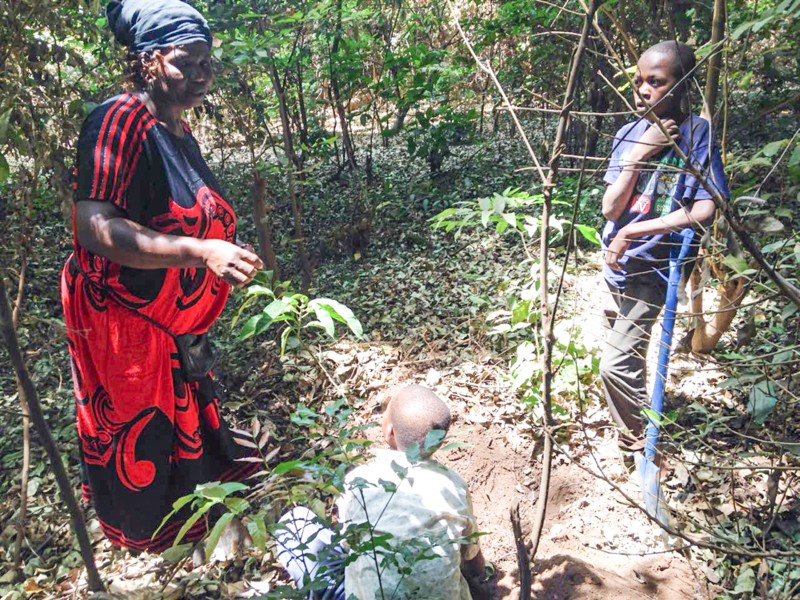
Perhaps most significantly, many knowledge holders are aging. Across rural Uganda, elders carry environmental knowledge accumulated over decades. With each passing year, some of that knowledge risks disappearing before it is documented.
Knowledge at Risk
Many indigenous environmental practices are transmitted orally rather than through written records. As elder custodians of knowledge age, valuable insights into conservation, drought preparedness, traditional agriculture, and environmental stewardship risk disappearing unless they are documented and passed to younger generations. This creates a challenge that extends beyond culture. It becomes an environmental issue. A climate issue. A national heritage issue. Because once knowledge is lost, recovering it may prove impossible.
Not a Return to the Past, But a Bridge to the Future
Environmental experts are careful to emphasize that indigenous knowledge alone cannot solve today’s climate crisis. The scale and complexity of modern climate change demand scientific research, technological innovation, policy action, and international cooperation. Yet increasingly, researchers argue that solutions need not come from a single source. The future may lie in combining the strengths of both worlds.
Scientific forecasting can work alongside local environmental observations. Conservation policies can benefit from community traditions that have protected ecosystems for generations. Climate adaptation programs can learn from indigenous practices that have enabled communities to survive environmental uncertainty.
Climate scientists say, “Indigenous knowledge should not be viewed as an alternative to science but as a valuable complement. Local communities have generations of environmental observations that can strengthen climate adaptation and resilience when combined with scientific research.”
The goal is not to choose between tradition and science. The goal is to allow them to inform one another.
Listening Again
Across Uganda, ancient trees still cast their shadows over village paths. Sacred groves remain hidden in pockets of the countryside. Elderly farmers still study clouds before planting. Cultural memories of living in harmony with nature endure, even as the world around them changes. These practices may never replace climate models, scientific forecasts, or modern conservation strategies. Nor should they. But they offer a reminder that feels increasingly relevant in an era of environmental uncertainty.
For generations, communities understood that human well-being and environmental well-being were inseparable. They lived not above nature, but within it. As the world commemorates World Environment Day under the theme ”Climate Action Begins with You: Act Now,” Uganda’sindigenous climate wisdom invites a powerful reflection.