

By Diana N.Kintu
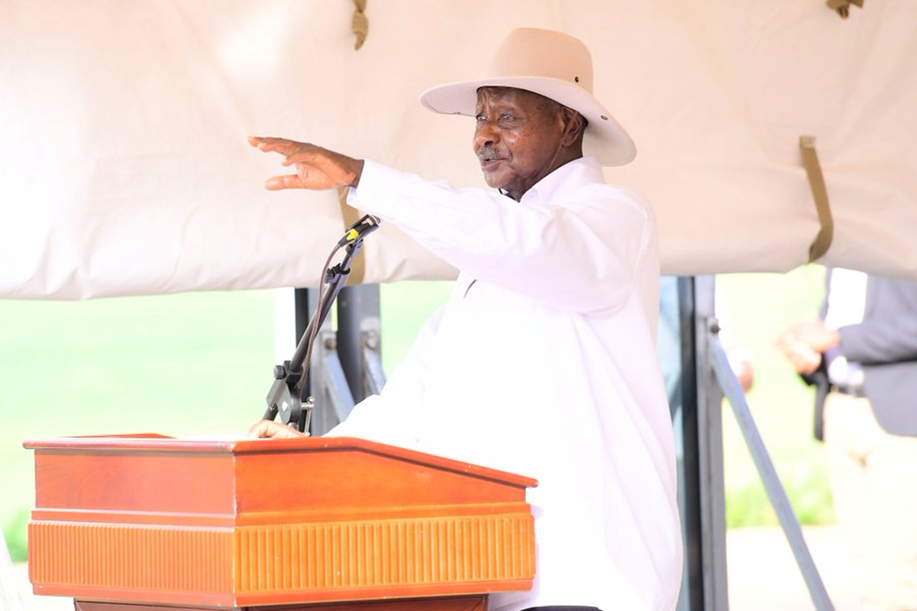
Yoweri Kaguta Museveni has strongly defended Uganda’s industrialisation agenda, dismissing criticism from journalist Andrew Mwenda and reaffirming his commitment to value addition, economic transformation, and national independence.
According to the statement, the President described himself as “the stubborn old man of Uganda”, remaining steadfast in advancing industrialisation despite criticism from detractors.
Museveni challenged Mwenda’s claims by pointing to tangible investments and projects across the country. He urged critics to visit factories established by Ugandan entrepreneurs such as Magoola in Matugga and Kamuli, Tugume in Ntungamo, and Professor Muranga’s banana project in Bushenyi, as well as recognising innovations such as Kiira Motors.
“You are supposed to be a journalist. Why do you not interview these conmen such as Magoola, Senfuka, etc.? They are here in Uganda, with assets on the ground,” Museveni said.
The President emphasised the importance of value addition, citing examples from the gold and coffee sectors. He noted that while raw gold at 84 per cent purity sells for USD 60,000 per kilogramme, refined gold at 99.9 per cent purity fetches USD 168,000. Similarly, processed coffee earns between USD 25 and USD 40 per kilogramme, compared to USD 2.5 per kilogramme for raw beans.
“We banned the export of unprocessed minerals. There are now 10 gold refineries in Uganda, and gold exports have reached USD 7.48 billion,” he stated.
Museveni also highlighted Uganda’s agricultural transformation, pointing to the rise in coffee production from 3 million to 8.8 million bags, generating USD 2.4 billion in revenue, as well as the growth of the dairy industry from 200 million litres to 5.3 billion litres. He cited progress in the banana, fruit, palm oil, and steel industries as evidence of successful industrialisation.
Responding to Mwenda’s criticism of government financing, Museveni referenced initiatives such as the Parish Development Model (PDM) and industrial hubs designed to equip young people with practical skills and capital. He argued that these interventions are already yielding results within communities.
The President accused Mwenda of attempting to undermine Uganda’s progress by externalising internal discussions on social media, warning that such actions risk frightening away development partners. He recalled Mwenda’s role in past controversies, including the Bujagali electricity project, but insisted Uganda had overcome such challenges.
“Ebikokorimo by’ankoko, tebitta Kamunye — the curses of the chicken do not kill the kite,” Museveni remarked.
Museveni concluded by reaffirming his commitment to patriotism, Pan-Africanism, socio-economic transformation, and democracy.
“Even if we were to make a mistake in the effort to industrialise Uganda, it would be better than careening on in the neo-colonial doldrums. Failure, from which we learn lessons, is success. Aluta continua, victory is certain,” he declared.