
By Diana N. Kintu
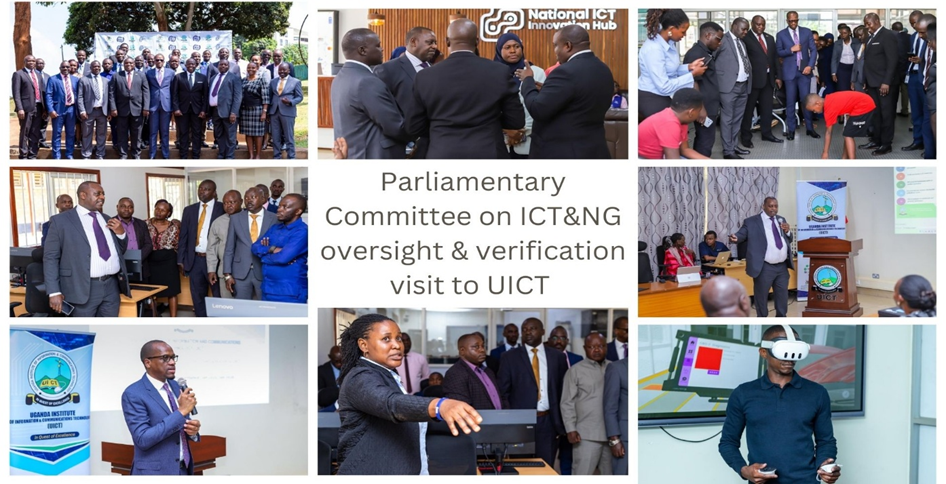
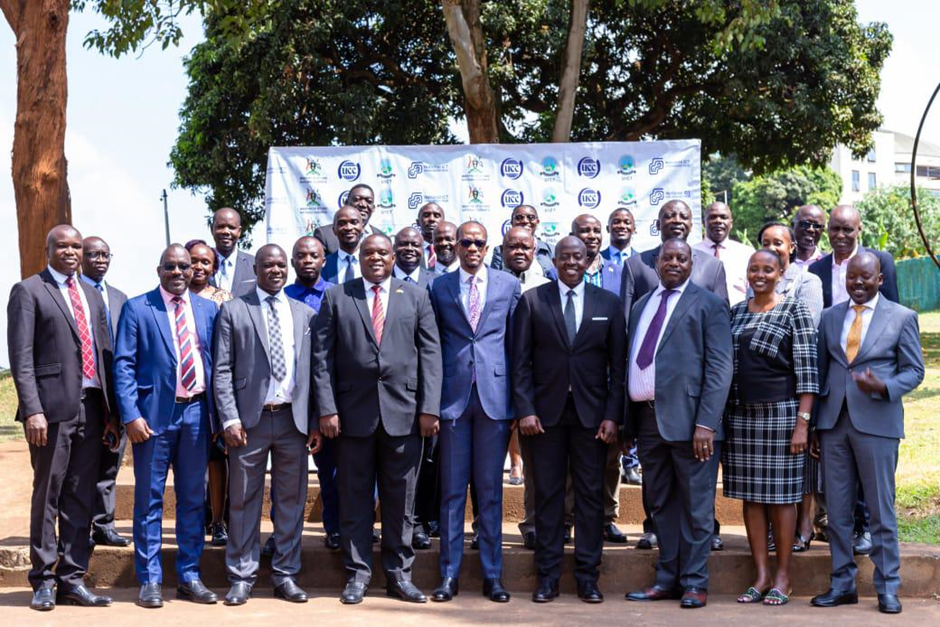
The Uganda Institute of Information and Communications Technology (UICT) has hosted the Parliamentary Committee on ICT and National Guidance for an oversight and verification visit, highlighting the Government’s growing investment in digital transformation, innovation, and skills development. The visit was led by the Committee Chairperson, Hon. Tonny Ayoo, and formed part of Parliament’s mandate to monitor public institutions and assess the impact of investments in the ICT sector.
The engagement provided Members of Parliament with first-hand exposure to UICT’s training infrastructure, emerging technologies, and innovation programmes aimed at equipping Ugandans with relevant digital skills to support national development priorities. Officials from UICT briefed the Committee on the institute’s mandate, progress made, and challenges affecting the delivery of ICT training and innovation services.
One of the key highlights of the visit was a live Augmented Virtual Reality (AVR) demonstration, which showcased how the technology is being used to deliver immersive and practical training across different locations simultaneously. Through the demonstration, UICT conducted real-time training sessions for Technical and Vocational Education and Training (TVET) instructors at Ntinda Vocational Training Institute, farmers in Mayuge District, and secondary school teachers, illustrating the scalability and flexibility of the platform.
UICT officials explained that AVR technology enables the institute to provide hands-on learning experiences, standardise training quality across institutions, and expand skills development without incurring proportional increases in operational costs. Technology allows learners to interact with simulated environments, making it particularly effective for technical training, agriculture extension services, and teacher capacity building.
Members of Parliament also inspected newly established smart classrooms at the institute. The facilities are equipped with smart screens, audio-visual conferencing tools, and Pan-Tilt-Zoom (PTZ) cameras, designed to support hybrid learning and remote instruction. According to UICT management, the smart classrooms are intended to enhance access to quality ICT training, especially for learners in remote and underserved areas.
The Committee further toured the National ICT Innovation Hub, where students and young innovators are incubated and supported to develop technology-based solutions. MPs interacted with innovators working on various projects and observed an ongoing children’s robotics workshop, which aims to introduce learners to science, technology, engineering, and mathematics (STEM) concepts at an early age. The initiative was presented as part of UICT’s broader strategy to nurture innovation from foundational education through to advanced technical training.
Speaking during the visit, Hon. Tonny Ayoo commended UICT for integrating emerging technologies into Uganda’s education and training systems. He noted that the institute’s initiatives are aligned with the Government’s digital transformation agenda and the objectives of the Fourth National Development Plan (NDP IV), which prioritises human capital development, innovation, and the use of digital solutions to drive economic growth.
Hon. Ayoo emphasised the importance of sustained investment in ICT infrastructure and skills development to ensure that Uganda remains competitive in the digital economy. He also underscored Parliament’s role in ensuring that public funds allocated to the ICT sector deliver measurable outcomes and tangible benefits to citizens.
The oversight visit reaffirmed Parliament’s commitment to accountability, transparency, and value for money in public investments. It also highlighted the growing role of digital technologies in transforming education, agriculture, and service delivery.
UICT officials expressed appreciation for the Committee’s support and pledged to continue working closely with Parliament and relevant ministries to advance Uganda’s digital skills’ agenda. They noted that continued policy backing and adequate funding would be critical in scaling up innovative training models and strengthening the country’s digital ecosystem.
The visit concluded with a call for stronger collaboration between Government, training institutions, and the private sector to maximise the impact of ICT investments and support Uganda’s long-term development goals.