
By Diana. N. Kintu.
The 6th Annual National Content Conference convened this week at Mestil Hotel in Kampala, bringing together government agencies, private-sector leaders, and industry experts to discuss how Ugandans can fully benefit from the country’s growing oil and gas sector. Organised by the Petroleum Authority of Uganda (PAU), this year’s conference ran under the theme “Beyond the Drill: Cultivating a Legacy of Empowered Nationals and Enterprises in Uganda’s Oil Age.”
The theme reflected a collective push to ensure that Uganda’s transition from exploration to oil production translates into meaningful and long-term gains for citizens and local businesses. Discussions centred on how national participation can be strengthened across the petroleum value chain, especially as the country prepares for the first oil summit.
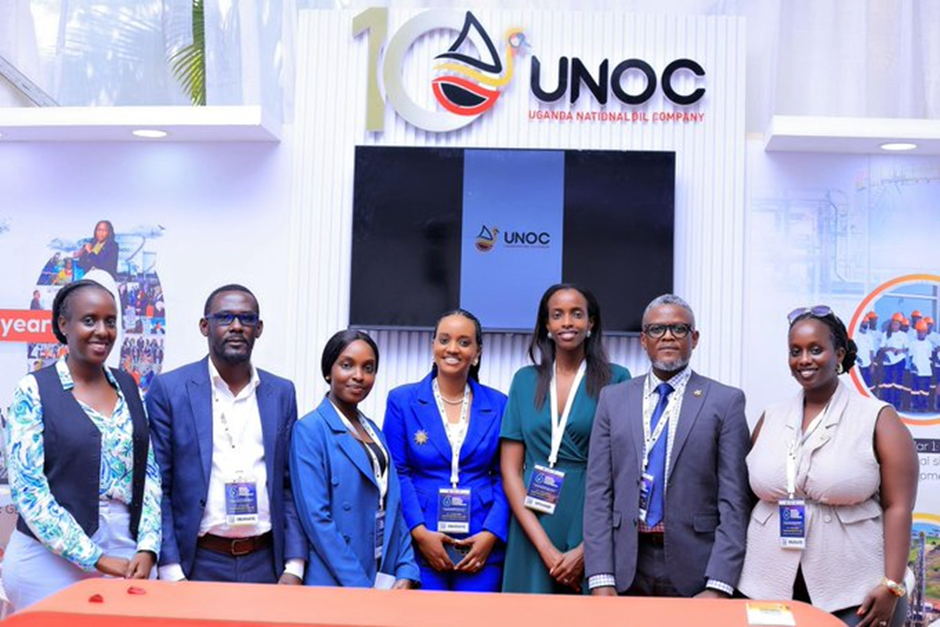
A key participant at the forum was the Uganda National Oil Company (UNOC), which used the gathering to highlight its efforts toward promoting national content. In messages shared during the event, UNOC emphasised its commitment to ensuring that the sector delivers “meaningful and lasting benefits for the country,” noting that the conference reinforced the urgency of empowering Ugandan professionals and businesses.
UNOC was represented by its Chief Commercial Officer, Mr. Gilbert Kamuntu, who attended on behalf of the company’s Chief Executive Officer, Ms. Proscovia Nabbanja. In his address, Kamuntu outlined a range of emerging business and employment opportunities that Ugandan firms can tap into, particularly within the Kasurubani Contract Area—one of the country’s key exploration zones.
He underscored that the area presents significant prospects for domestic enterprises, especially in technical studies, seismic logistics, Quality, Health, Safety and Environment (QHSE) services, transportation, catering, camp management, and waste handling. Many of these services, he noted, are “ring-fenced for Ugandans under national content rules,” a deliberate strategy designed to guarantee local involvement at the early stages of Uganda’s oil development.
Beyond Kasurubani, UNOC also shed light on wider opportunities across the sector. These include engagements in construction, industrial supply, logistics, hospitality, and environmental management—areas where Ugandan companies are increasingly expected to take on substantial roles as the country’s oil projects advance.
One of the strongest messages from UNOC’s representatives was the need for suppliers and service providers to formally register on the National Supplier Database (NSD), a government-operated platform that certifies companies seeking to work in the oil and gas sector. Kamuntu stressed that registration on the NSD is “a primary requirement” for any enterprise aiming to participate meaningfully.
UNOC further encouraged businesses to attend its quarterly supplier workshops, which provide guidance on upcoming opportunities, compliance requirements, and capacity-building initiatives. According to Kamuntu, these workshops help ensure that “every available opportunity for Ugandans to benefit from the oil and gas sector can be duly supported and advised accordingly.”
As the first day of the conference came to an end, UNOC expressed renewed commitment to the national content agenda. The company noted that discussions on skills’ development, financing, compliance, and partnerships all pointed to one central objective: ensuring that Uganda’s oil age creates genuine opportunities for Ugandans.
In a closing message, UNOC reaffirmed that it remains dedicated to translating the insights from the conference into “concrete action across the petroleum value chain.” With production milestones approaching, the company emphasised that the focus is now shifting from dialogue to implementation—ensuring that the oil sector becomes a catalyst for broad-based national development.
The National Content Conference continues to serve as a major platform for stakeholders to align strategies for maximising local participation. As Uganda moves closer to becoming an oil-producing nation, events like these highlight the importance of coordination and collaboration to secure a sustainable, inclusive oil economy for future generations.