

By Caroline. N.
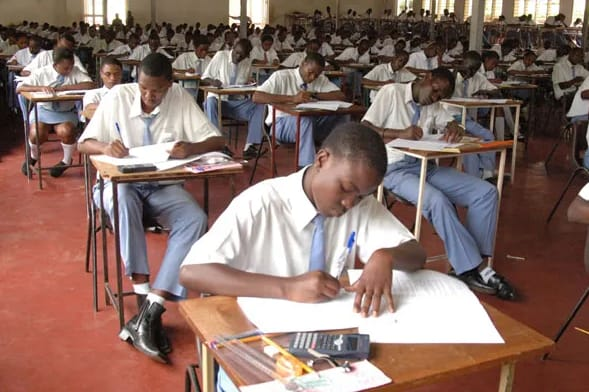
More than 160,000 Senior Six candidates across the country have officially begun their Uganda Advanced Certificate of Education (UACE) examinations, marking the final phase of Uganda’s 2025 national examination calendar. The exams, administered by the Uganda National Examinations Board (UNEB), commenced this week under tight supervision and are expected to run for the next three weeks.
According to UNEB Executive Director, Mr. Dan Odongo, a total of 160,768 candidates registered to sit for the 2025 UACE exams. Of these, 86,237 are male and 74,531 are female, representing a slight increase compared to the 2024 candidature. The examinations are being conducted in 2,150 examination centres nationwide, covering both government and private schools.
Mr. Odongo noted that UNEB has put in place stringent measures to ensure the integrity, security, and smooth conduct of the examinations. “We have enhanced collaboration with the Uganda Police and other security agencies to curb any form of malpractice, including the circulation of fake examination papers,” he said. “Our teams are closely monitoring all centres to guarantee fairness and credibility in this year’s assessment.”
The UACE exams, which mark the end of secondary education, play a critical role in determining candidates’ eligibility for university and tertiary education. Candidates are examined in various subjects, including sciences, arts, and vocational disciplines. The first papers began with Mathematics and History, while subsequent weeks will feature Biology, Economics, Literature, and other electives.
Reports from around the country indicate that examinations started smoothly, with only minor delays reported in a few remote areas due to weather-related transport challenges. District Education Officers and school administrators commended UNEB’s improved logistical coordination, noting that examination materials were delivered on time and under proper security escort.
In Kampala, students at major centres such as Nabisunsa Girls School, Makerere College School, and St. Mary’s College Kisubi expressed mixed emotions of anxiety and excitement as they entered the final stretch of their secondary education. “It has been a long journey, but we’re ready,” said Sarah Namulondo, a candidate from Gayaza High School. “Our teachers have prepared us well, and we’re confident we will perform our best.”
Ahead of the exams, UNEB issued stern warnings to both candidates and school administrators against any attempts to engage in malpractice. The Board emphasised that anyone caught leaking, sharing, or impersonating during exams would face severe penalties, including cancellation of results and possible prosecution.
Mr. Odongo reiterated UNEB’s commitment to maintaining integrity, stating, “We want to assure the public that our examination process is secure. We have adopted advanced technologies for monitoring and reporting any irregularities in real time.”
UNEB also reaffirmed its inclusivity policy by providing special examination materials and arrangements for learners with disabilities. This includes extended time, Braille question papers, and large print versions for visually impaired students. Ms. Jennifer Kalule Musamba, UNEB’s spokesperson, said that the board remains dedicated to ensuring equal opportunity for all learners to demonstrate their abilities under fair conditions.
The Ministry of Education and Sports commended UNEB for its organisation and urged parents and guardians to provide moral and emotional support to candidates throughout the examination period. “This is a crucial milestone in the lives of our young people,” said the State Minister for Higher Education, Dr. John Chrysestom Muyingo. “We call upon all stakeholders—parents, teachers, and local leaders—to ensure that learners are encouraged, well-fed, and protected from unnecessary distractions.”
As the examinations progress, UNEB has urged the public to rely on verified communication channels for updates to avoid falling victim to misinformation circulating on social media.
The 2025 UACE results are expected to be released early next year, paving the way for successful candidates to join universities and tertiary institutions in the 2026 academic year.