

By Diana N.Kintu
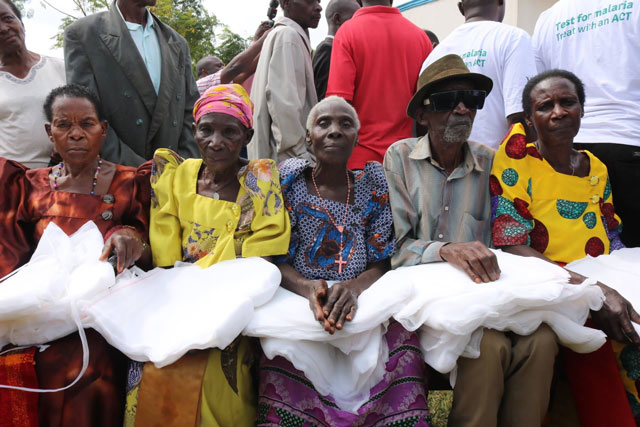
The Ministry of Health has launched a nationwide mosquito net distribution campaign as part of Uganda’s Malaria Elimination Strategic Plan, in a renewed effort to reduce the country’s malaria burden.
The campaign will see the distribution of 25.8 million long-lasting insecticide-treated nets (LLINs) across 130 districts, with the aim of protecting millions of Ugandans from malaria.
Malaria remains one of Uganda’s leading public health challenges. According to the 2024 World Malaria Report, Uganda ranks third globally in malaria cases, accounting for 4.7 per cent of global infections and 2.7 per cent of related deaths. In 2025 alone, the country recorded approximately 11.7 million cases and 2,342 deaths, with more than half occurring among children under five.
In response to this burden, the Ministry emphasised that the current campaign is a critical step towards achieving a malaria-free Uganda by 2030.
“Malaria is preventable and treatable, yet it continues to place a heavy burden on our population. This campaign reaffirms our commitment to eliminating malaria,” the Ministry noted.
The nets, valued at USD 100 million (UGX 365 billion), are funded by the Government of Uganda, the Global Fund, and the United States Government. Distribution is being conducted in five phases to enhance efficiency and ensure nationwide coverage:
- Phase One (January 2026): 3.4 million nets distributed across 20 districts, protecting approximately 6.5 million people.
- Phase Two (April 2026): 4.8 million nets distributed in 32 districts, targeting 8.1 million people.
- Phase Three (May 2026): Distribution scheduled to commence.
- Phase Four (July 2026): Nets already procured, pending clearance for rollout in Kigezi, Tooro, and Central regions.
- Phase Five (September 2026): Kampala and Wakiso districts to be covered under the urbanisation strategy.
Health officials note that consistent use of LLINs can reduce malaria transmission by up to 50 per cent, as well as lower morbidity and mortality rates by about 25 per cent. Childhood mortality may also decline by up to 25 per cent with sustained use.
Particular emphasis is being placed on vulnerable groups, including children under five, pregnant women, and people living with sickle cell disease.
The Ministry also highlighted community engagement as a critical component of the campaign. Local governments, civil society organisations, and community health workers will carry out household visits, demonstrations, and follow-ups to promote the correct and consistent use of the nets.
The public has been urged to use the nets strictly for their intended purpose. “The nets should not be repurposed for activities such as fishing, fencing, or gardening. Every household member is encouraged to sleep under a mosquito net every night,” the Ministry advised.
The current initiative builds on previous successes, including the distribution of 28 million nets in 2020 and 28.5 million in 2023, which achieved approximately 98 per cent nationwide coverage.
In addition to prevention efforts, the Ministry of Health is intensifying surveillance, epidemic preparedness, and curative services, with the goal of reducing malaria-related deaths to zero by 2030.