

By Diana.N.Kintu
Uganda has officially opened the 44th Ordinary Session of the Administrative Council of the Pan African Postal Union (PAPU), bringing together delegates from across the continent to deliberate on the future of Africa’s postal and logistics sector. The high-level meeting is being held at the Lake Victoria Serena Golf Resort & Spa, underscoring the country’s growing role as a regional hub for policy dialogue and innovation.
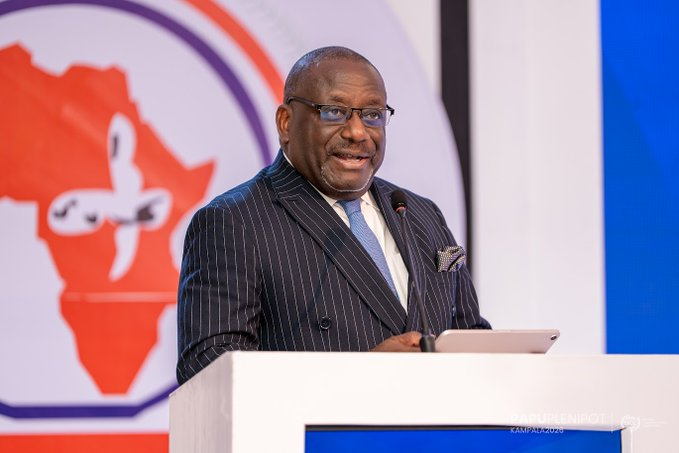
The session comes at a time when the global postal industry is undergoing rapid transformation, driven largely by the expansion of e-commerce and digital technologies. Speaking at the opening, Nyombi Thembo, Executive Director of the Uganda Communications Commission (UCC), described the gathering as a significant milestone for the sector.
In a statement shared on his official X account, Thembo emphasised that the postal industry remains highly relevant despite technological disruption. He noted that the sector continues to play a critical role in facilitating global trade and economic activity, with an estimated value exceeding 400 billion US dollars.
“We are at a defining moment for the postal industry,” he said. “Far from being obsolete, the sector remains a vital pillar of global commerce, adapting to meet the evolving demands of modern economies.”
Thembo highlighted the shift in the role of postal services, explaining that traditional mail delivery systems are increasingly being integrated into broader logistics and digital service platforms. He pointed out that postal networks are now central to advancing financial inclusion and enabling last-mile connectivity, particularly in rural and underserved communities.
The event was officiated by Dr Aminah Zawedde, Permanent Secretary at the Ministry of ICT and National Guidance, who represented the government as Chief Guest. In her remarks, she expressed Uganda’s pride in hosting key stakeholders shaping the continent’s postal agenda.
Dr Zawedde described the Administrative Council as a crucial organ within PAPU, responsible for guiding the Union’s activities between plenipotentiary conferences and ensuring continuity in policy implementation. She stressed that the council plays a central role in aligning member states on strategies aimed at modernising and strengthening postal services across Africa.
She further noted that postal systems have evolved significantly in recent years, becoming integral to emerging sectors such as digital trade, e-commerce, and logistics. According to her, modern postal networks are no longer limited to mail delivery but are now essential infrastructure supporting economic growth at both national and continental levels.
“Postal services today are key enablers of digital transformation,” Dr Zawedde said. “They support e-commerce, facilitate trade, and ensure efficient delivery systems that connect businesses and communities.”
Uganda’s active participation in PAPU’s leadership structures was also highlighted during the session. Jessica Hope Ssengooba, the Assistant Secretary General of PAPU, was recognised for her contribution to advancing the Union’s strategic objectives. Uganda has formally endorsed her candidature for re-election for the 2026–2029 term, citing her leadership in promoting digital innovation and fostering unity among member states.
Delegates attending the session are expected to engage in extensive discussions on the future of the postal sector, with a particular focus on leveraging digital innovation. Key areas of deliberation include the adoption of track-and-trace technologies, digital addressing systems, and the integration of smart logistics solutions to enhance efficiency and reliability. The meeting is also set to explore ways of building a resilient and inclusive postal ecosystem capable of meeting the demands of a rapidly changing global economy. Emphasis will be placed on ensuring that technological advancements benefit all regions, especially those that remain under served.