

By Keehe Christine
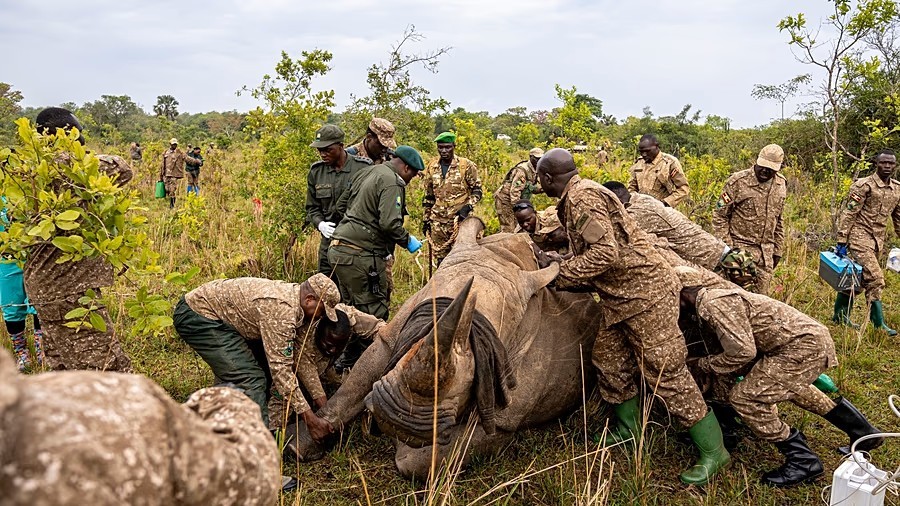
In the early morning light of Kidepo Valley National Park, a silent procession of trucks carried a symbol of hope, rhinos, long absent from this rugged landscape. After more than four decades, Uganda has taken a decisive step to restore its ecological heritage, demonstrating resilience, commitment, and a deep reverence for its natural treasures. This moment marks not just the return of a species, but a renaissance for conservation and national pride.
Nestled in Uganda’s remote northeastern corner, near the borders with South Sudan and Kenya, Kidepo Valley National Park stands as one of Uganda’s most breathtaking and untouched wilderness areas.
Covering approximately 1,442 square kilometres, it features dramatic landscapes of savannah plains, rugged mountains, and deep valleys. Known for its diverse wildlife and exceptional scenery, Kidepo is a sanctuary for over 80 large mammal species and more than 470 bird species, offering an authentic safari experience away from crowds. Its pristine environment makes it a vital conservation area.
The re-introduction of rhinos here marks a significant milestone in Uganda’s efforts to restore its natural heritage. For many years, rhinos had disappeared from Uganda due to poaching and habitat loss, driven by the demand for rhino horns and the destructive impact of human encroachment.
Their return symbolises hope and renewed commitment to safeguarding Uganda’s rich biodiversity.
A dawn of remembrance
Before the dawn of 17th March 2026, trucks silently sliced through the stillness of Kidepo Valley National Park, carrying creatures long absent from its plains. These were the rhinos: living symbols of resilience and hope, making their way back after 43 years of ecological absence since their local extinction in 1983 due to poaching. Inside, they bore the weight of history, their heavy bodies and cautious steps marking the rebirth of a lost chapter.
“This is a historic restoration of a species that once defined Uganda’s wildlife landscape,” said James Musinguzi, Executive Director of Uganda Wildlife Authority.
Addede “It reflects years of planning, partnership, and commitment to rebuild what was lost.”
Restoring balance and ecological significance of the reintroduction
Rhinos are more than majestic icons; they are vital ecosystem engineers. Their grazing shapes vegetation, creates pathways, and influences the entire ecological web. Their disappearance left Kidepo ecologically incomplete. Their return signals not just the revival of a species but the beginning of ecological repair. Uganda’s rhino population, now over 60 individuals, all bred from a small founding group at Ziwa Rhino Sanctuary which forms the backbone of this restoration effort.
“Reintroducing rhinos is about restoring ecological processes, not just numbers,” Musinguzi emphasised. “We are rebuilding a system.”
Political and Cultural Impact
The re-introduction of rhinos is a powerful political statement. In the 1980s, their disappearance reflected insecurity and institutional breakdown. Their return today signals something different, Uganda’s regained ability to secure, manage, and invest in its natural heritage.
One should not forget to note the fact that, for government and conservation stakeholders, this is also about international credibility. It positions Uganda as a serious conservation actor within Africa, capable of handling high-value species reintroduction and protection.
The cost and complexity of conservation efforts
Behind the scenes, bringing rhinos back has been a costly and highly coordinated operation. Before translocation, secure holding bomas were constructed, ranger units deployed and trained, veterinary teams prepared for long-distance 0movement, and surveillance and monitoring systems installed.
Each rhino is now under 24-hour armed protection, reflecting the high risk associated with poaching driven by global illegal horn markets.
“This is one of the most resource-intensive conservation projects we have undertaken,” noted a senior UWA ranger involved in the operation. “Protection does not stop, it is continuous.”
. From education to habitat restoration
Previously, rhinos at Uganda Wildlife Education Centre served primarily as educational ambassadors. Today, Uganda is shifting strategy, from display to distribution.
Rhinos are now being reintroduced into Kidepo Valley, established in Ajai Wildlife Reserve, and retained in breeding populations at Ziwa. This multi-site strategy reduces risk, improves genetic diversity, and supports long-term population growth toward a self-sustaining national herd.
Economic and tourism benefits, a double-edged sword
Rhinos are among the most sought-after species in global wildlife tourism. Their return strengthens Uganda’s position as a “Big Five” destination, increasing its competitiveness in the African safari market.
Tourism linked to wildlife contributes significantly to Uganda’s GDP and supports thousands of jobs in hospitality, guiding, and conservation.
However, the same animal that attracts tourists also attracts poachers. A single rhino horn can fetch tens of thousands of dollars on illegal international markets—making protection both an economic necessity and a security challenge.
Community involvement: conservation at the grassroots
Local communities around conservation areas are increasingly central to success. Through community-based programs, residents are engaged as wildlife stewards, alternative livelihoods such as eco-tourism are promoted, and conservation education is expanded.
“Wildlife must benefit the people who live closest to it,” a UWA community officer who prefers anonymity noted. “Otherwise, conservation cannot succeed.” This shift reflects a broader understanding: conservation is not just about animals—it is about people.
Challenges and Risks
Despite progress, risks remain significant. Poaching and illegal wildlife trade persist, pressure on habitats from human activity is increasing, and climate variability is affecting ecosystems. These challenges require sustained funding, enforcement, and adaptive management strategies.
International support
The re-introduction has been supported by international conservation partners, including NGOs and donors who contributed funding, technical expertise, and logistical support.
This collaboration highlights Uganda’s role within a global conservation network, where protecting biodiversity is a shared responsibility. Uganda’s long-term vision includes expanding rhino populations across multiple protected areas, strengthening breeding programs, increasing genetic diversity, and enhancing monitoring and protection systems.
The goal is clear: a resilient, growing, and secure rhino population in the wild.
A Nation’s hope and resilience
For Uganda, the stakes are high. Success would reinforce its reputation as a conservation leader. Failure would risk undoing decades of recovery efforts.
“This is just the beginning,” Musinguzi said. “The real work is ensuring these animals thrive.”
How about the quiet return
As a rhino lowers its head to graze, it remains unaware of the history and expectations surrounding its presence. But its survival carries the weight of a nation’s effort. Uganda has brought the giants back. Now, it must prove it can protect them.
Just as the sun settles over Kidepo Valley National Park, a rhino moves slowly through the grass, unaware that its presence carries the weight of a nation’s past and the promise of its future.
This is more than a return; it is a reckoning. For the Uganda Wildlife Authority and for Uganda itself, the task is no longer to celebrate, but to sustain, to prove that what was once lost can now be protected.
The giants are back, but their survival will depend not on history. but on the choices made from this moment forward.