

By Diana N.Kintu
President Yoweri Kaguta Museveni has commended former Chief Justice Alfonse ChigamoyOwiny-Dollo for his integrity and leadership in strengthening Uganda’s judicial system, describing his tenure as one marked by decisive reforms and a strong stance against corruption.
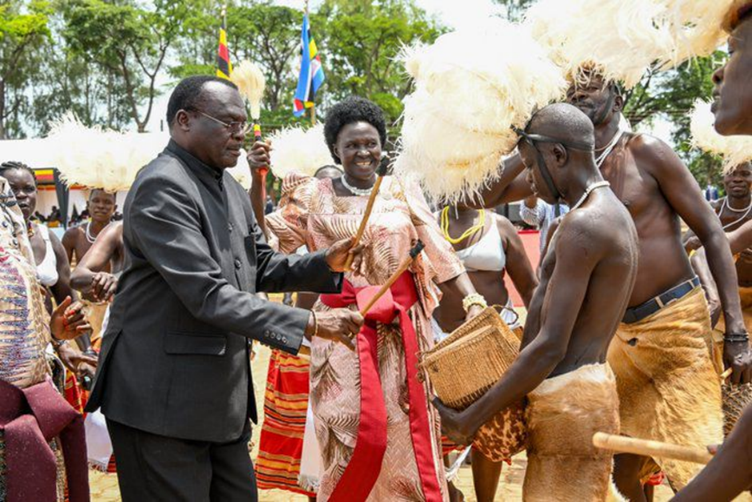
The President made the remarks during a colourful homecoming celebration held at KaundaGrounds in Gulu, where thousands of residents from across the Acholi sub-region joined government leaders and senior judicial officials to honour Owiny-Dollo’s service to the nation.
Justice Owiny-Dollo retired on 18 January after attaining the mandatory retirement age of 70, concluding a five-year tenure as head of Judiciary of Uganda. During the ceremony, President Museveni praised the former Chief Justice for maintaining a reputation for personal integrity despite longstanding public concerns about corruption within some parts of the justice system.
“During the time I have worked with him, I can testify to three qualities. The first is that I have never heard any story of personal corruption involving him in the Judiciary,” President Museveni said.
“I normally receive reports suggesting that there is still corruption in the Judiciary, but I have never heard his name associated with any of those allegations,” he added.
The President further applauded Owiny-Dollo for championing reforms aimed at making justice more accessible and efficient, particularly through the expansion of Alternative Dispute Resolution (ADR). Museveni noted that ADR provides communities with faster and more affordable avenues for resolving disputes while easing the burden on formal court processes.
“I have been talking about Alternative Dispute Resolution for a long time, but no one in the Judiciary was picking it up until his Lordship Owiny-Dollo came and embraced it,” the President said.
During his tenure, Owiny-Dollo prioritised the expansion and institutionalisation of ADR mechanisms across the country. Recognising that many Ugandans face financial and logistical barriers when pursuing lengthy court proceedings, he promoted the establishment of community-based mediation centres. These centres empower trained mediators and local leaders to settle disputes amicably, thereby reducing court backlogs and improving access to justice.
In northern Uganda, particularly within the Acholi sub-region, such mediation initiatives have played a significant role in addressing land conflicts, family disputes, and commercial disagreements. By encouraging dialogue and compromise, the programme has helped restore social harmony in communities where tensions over land ownership and inheritance have historically been common.
Beyond dispute resolution, Owiny-Dollo also spearheaded measures aimed at strengthening judicial independence and accountability. His reforms included the promotion of clear ethical standards for judicial officers, the reinforcement of merit-based appointments, and mechanisms to enhance transparency in the administration of justice. These initiatives were designed to ensure that judges and magistrates operate without undue influence while maintaining the highest standards of professional conduct.
Another major achievement of his leadership was the modernisation of court systems through digital technology. Under his guidance, the Judiciary introduced online case management platforms, digitised court records, and expanded the use of virtual hearings. These innovations have improved efficiency in case handling, reduced administrative delays, and expanded access to justice for citizens in remote parts of the country.
Owiny-Dollo’s leadership also extended beyond judicial reforms into community development and economic empowerment. President Museveni welcomed the former Chief Justice’s intention to dedicate his retirement to mobilising communities to embrace commercial agriculture, an initiative aligned with the government’s Parish Development Model, which aims to increase household incomes through improved agricultural productivity and local enterprise development.
According to Museveni, Owiny-Dollo’s support for such programmes reflects a shared vision of strengthening grassroots economic transformation.
“I am very glad that Hon. Owiny-Dollo agrees with what we have been advocating for a long time,” the President said, referring to government efforts to encourage communities to engage in wealth-creation activities.
In the Acholi sub-region, Owiny-Dollo has already been active in mobilising farmers to adopt commercial farming practices, linking them to training opportunities, credit facilities, and market access. These initiatives have contributed to increased agricultural productivity and the growth of small-scale enterprises in rural communities.
Observers note that his emphasis on mediation and community dialogue has also helped maintain stability in areas previously affected by conflict. By encouraging peaceful resolution of land and community disputes, he has supported efforts to foster long-term social cohesion and economic growth.
The celebration in Gulu served as a powerful reminder of Owiny-Dollo’s legacy as a reform-minded jurist and community leader. His tenure at the helm of the Judiciary has been widely credited with laying the foundation for a justice system that is more transparent, efficient, and responsive to the needs of ordinary citizens.
As Uganda continues to pursue institutional reforms and economic transformation, Owiny-Dollo’s contributions to judicial integrity, dispute resolution, and community empowerment are expected to remain a lasting reference point for future leadership within the country’s justice sector.