

By Diana N.Kintu
The Government has set March and April this year as the months for conducting Local Council One (LC1), Local Council Two (LC2), and Women Council elections across the country, marking the resumption of grassroots polls that had been postponed several times.
The decision was reached during a Cabinet meeting held at State House, Entebbe, chaired by President Yoweri Museveni. The elections will cover more than 71,000 villages and over 10,000 parishes nationwide, forming a critical part of Uganda’s local governance structure.
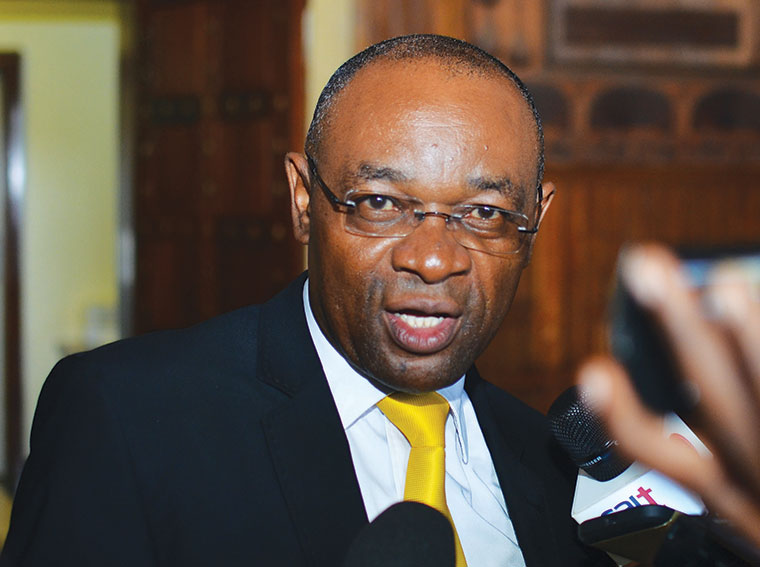
Addressing journalists at the Uganda Media Centre, the Minister of Information and National Guidance, Dr Chris Baryomunsi, confirmed that Cabinet had considered a paper presented by the Ministry of Local Government and agreed on the election timeframe.
“Cabinet considered the paper by the Minister of Local Government and agreed that the Local Council and Women Council elections shall be held in March and April this year,” Dr. Baryomunsi said.
He noted that the term of the current local council leaders expired in July 2023. Since then, Cabinet and Parliament have extended their mandate on several occasions to allow for proper alignment of the electoral cycle and to address funding and logistical constraints.
The Minister explained that the Electoral Commission has been directed to develop and publish a comprehensive roadmap, including the specific polling dates. He urged prospective candidates and political parties to begin preparations in anticipation of the official announcement.
According to the Minister of Local Government, Raphael Magyezi, the elections will be conducted in 71,230 villages and 10,717 parishes across the country. He added that voting will be conducted by lining up behind candidates, in accordance with existing electoral laws.
Mr Magyezi said the Electoral Commission is expected to gazette all polling stations and make the village-level voters’ registers available ahead of the polls.
He acknowledged concerns that in some areas, LC1 officials had abandoned their offices, leading to complaints from residents about leadership gaps. “These elections are important because those leaders are government administrators at the village level who ensure that government programmes are implemented,” he said.
LC1 elections relate to the selection of leaders for the lowest administrative unit within Uganda’s local government system. The LC1 represents the village and serves as the closest level of government to citizens. These councils are responsible for community mobilisation, resolving minor disputes, maintaining local security, and linking residents to higher administrative authorities.
The postponement of the LC1 elections began in 2023 after the five-year term of leaders elected in July 2018 came to an end. The Electoral Commission cited inadequate funding, logistical challenges, and the need to update village registers as reasons for failing to organise elections within the expected timeframe.
The Cabinet subsequently approved extensions of the leaders’ tenure to allow more time for preparations. Additional extensions were granted in 2024, with authorities pointing to budgetary constraints and the need to harmonise the electoral calendar with other national polls.
At one stage, the elections were pushed towards 2026 as part of broader efforts to align them with the national electoral cycle, including presidential and parliamentary elections. However, the latest Cabinet decision signals a shift towards conducting the grassroots elections ahead of the next general polls.
Government officials maintain that the postponements were intended to ensure a credible and well-organised electoral process. However, critics have argued that repeated delays risk undermining democratic participation and accountability at the grassroots level, where local councils play a pivotal role in day-to-day governance.
With the announcement of the March and April timeframe, attention now turns to the Electoral Commission to provide a clear roadmap and restore full operational legitimacy to village-level leadership structures across the country.