

By Diana N. Kintu
Uganda and the Kingdom of Saudi Arabia have taken a major step towards deepening bilateral economic cooperation, with renewed focus on value addition and coffee industrialisation as key drivers of growth.
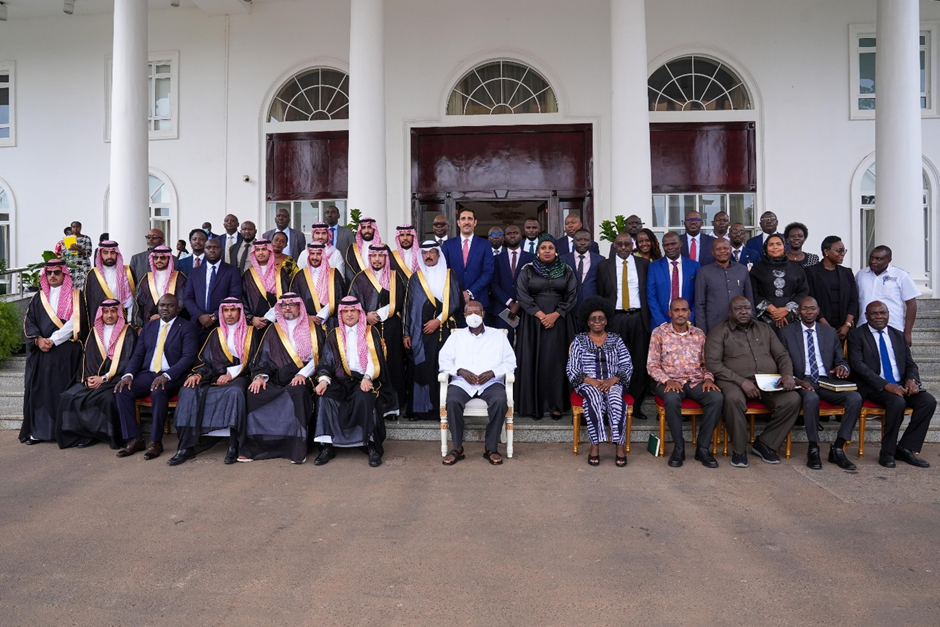
According to a press release from State House Uganda, President Yoweri Kaguta Museveni on Tuesday hosted a high-level delegation from the Saudi Arabia at State House Entebbe to explore new investment opportunities and strengthen trade relations between the two countries.
The delegation, led by Mr Ali O. Alswayeh, reaffirmed Saudi Arabia’s commitment to expanding its investment footprint in Uganda. Agriculture, particularly coffee value addition, was identified as a priority sector with significant potential for mutual benefit.
Welcoming the delegation, President Museveni commended Saudi investors for recognising Uganda’s untapped economic opportunities and emphasised the need for deeper engagement to maximise returns.
“We have been working together for a long time, but we have not fully engaged to maximise our investment opportunities,” the President observed, underscoring the importance of moving beyond traditional trade towards more transformative partnerships.
Central to the discussions was the Value at Source Coffee Project (VASP), spearheaded by Nonda Coffee. The initiative seeks to transition Uganda from primarily exporting raw coffee beans to producing and exporting branded, high-value finished coffee products. The move is expected to significantly increase export earnings while positioning Uganda more competitively in the global coffee market.
At the heart of the project is the proposed Luwero Coffee Park, an integrated industrial complex projected to process 42,000 metric tonnes of coffee annually. The facility is expected to generate approximately USD 850 million in annual revenue once fully operational.
The planned coffee park will oversee the entire value chain, including cleaning, grading, roasting, grinding, and the production of soluble and speciality coffee. It will also handle packaging, branding and export, ensuring that Ugandan coffee reaches international markets as a finished product rather than a raw commodity.
Officials indicated that the project is expected to create around 1,500 direct jobs and an estimated 3,000 indirect jobs. In addition, more than 100,000 coffee farming households are projected to be integrated into a structured supply chain, providing farmers with stable markets and improved incomes.
The Saudi market is viewed as a strategic gateway to the wider Middle East, one of the world’s fastest-growing regions for coffee consumption. Expansion into this market is expected to increase demand for premium Ugandan coffee and strengthen bilateral trade relations. It is also anticipated to create sustainable downstream markets for local farmers, further anchoring rural economic growth.
The meeting highlighted a shared commitment to investment-led growth, private sector development and value addition as pillars of economic transformation. Both sides underscored the importance of agro-processing and industrial development in driving long-term prosperity.
President Museveni reiterated that value addition remains central to Uganda’s development strategy. He stressed that exporting finished goods instead of raw materials is critical to increasing export revenues, creating employment opportunities and accelerating industrialisation.
The engagement concluded with renewed commitments from both Uganda and Saudi Arabia to deepen cooperation in trade and investment, particularly in agro-processing, industrial expansion and market access. Observers note that the strengthened partnership could mark a turning point in Uganda’s efforts to move up the value chain and secure a stronger foothold in high-value international markets.
If successfully implemented, the coffee industrialisation initiative is expected not only to boost Uganda’s export earnings but also to transform the livelihoods of thousands of farming households, reinforcing agriculture as a cornerstone of the country’s economic growth.