

By Diana N. Kintu
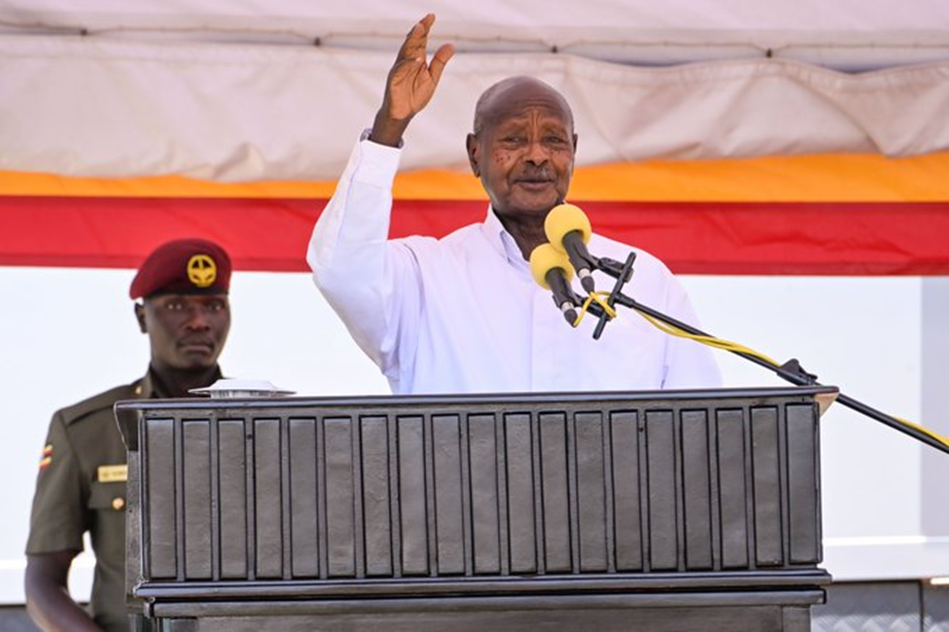
President Yoweri Kaguta Museveni and the First Lady, Janet Kataaha Museveni, joined thousands of Christians in Wii-Gweng, Mucwini Sub-County in Kitgum District to commemorate 49 years since the martyrdom of Janani Luwum. The annual observance, held on 16 February, honours the life, faith and courage of the former Archbishop of the Church of Uganda, who was killed in 1977 during the regime of Idi Amin.
St Janani Luwum Day is marked each year as a national remembrance of the Archbishop’s outspoken condemnation of human rights abuses, arbitrary arrests and extrajudicial killings under Amin’s government. Nearly five decades after his death, the commemoration continues to draw pilgrims from across the country, reflecting the enduring significance of his sacrifice in Uganda’s political and spiritual history.
In his address, President Museveni underscored the importance of principled leadership, stating that authority must be exercised through persuasion and service rather than fear and violence. He described Amin’s central failing as ruling by force and intimidation. According to the President, sustainable leadership depends on delivering good services and earning public trust, not coercion.
Reflecting on the events of 1971, President Museveni recalled learning of Amin’s military coup while serving as a research assistant in the President’s Office. Within days, he left for Tanzania to begin organising resistance. He characterised Amin’s seizure of power as illegitimate, arguing that imposing oneself on a nation through military force undermines both stability and accountability.
The President also condemned the use of assassinations and extrajudicial killings as political tools. He noted that even during Uganda’s armed struggle, he rejected proposals to target individuals outside the battlefield. In his view, both the cause pursued and the methods employed must be justifiable. He praised Archbishop Luwum, as well as former Chief Justice Ben Kiwanuka, for their courage in standing up to injustice, stating that their moral conviction ultimately exposed the brutality of the regime.
Beyond reflecting on history, President Museveni addressed contemporary development issues. He thanked the people of Northern Uganda for their continued electoral support, attributing it to sustained government investment in infrastructure, schools, health centres, clean water systems and wealth-creation initiatives such as the Parish Development Model. He pledged to personally follow up on concerns related to cattle rustling in East Acholi and fulfilled a pledge of Shs60 million to priests of Kitgum Diocese.
Religious leaders used the occasion to highlight the spiritual and moral dimensions of the commemoration. Stephen Samuel Kaziimba Mugalu welcomed pilgrims from across Uganda, emphasising that the day represents more than remembrance of an individual. He described it as a celebration of faith, justice and the enduring Christian values Archbishop Luwum embodied.
Alfred Olwa commended the organising committee and called for renewed courage and unity as Uganda approaches the golden jubilee of Luwum’s martyrdom. He encouraged believers to draw inspiration from the Archbishop’s steadfast faith and moral clarity during a turbulent period in the nation’s history.
Government officials also reiterated plans to preserve and elevate the historical site. Hon. Rose Lilly Akello highlighted proposals to develop Luwum’s birthplace into an international pilgrimage centre, while Hon. Lillian Aber praised the Archbishop’s lasting moral influence among the Acholi people and the wider Ugandan community.
The commemoration, attended by ministers, Members of Parliament, religious and cultural leaders, served as both a memorial and a call to reflection. Archbishop Luwum’s legacy of faith, justice and reconciliation remains deeply woven into Uganda’s national consciousness. As the country looks ahead, his example continues to inspire citizens to pursue unity, stability and peace anchored in moral conviction and service to others.