
By Ssenkayi Ezra Marvin
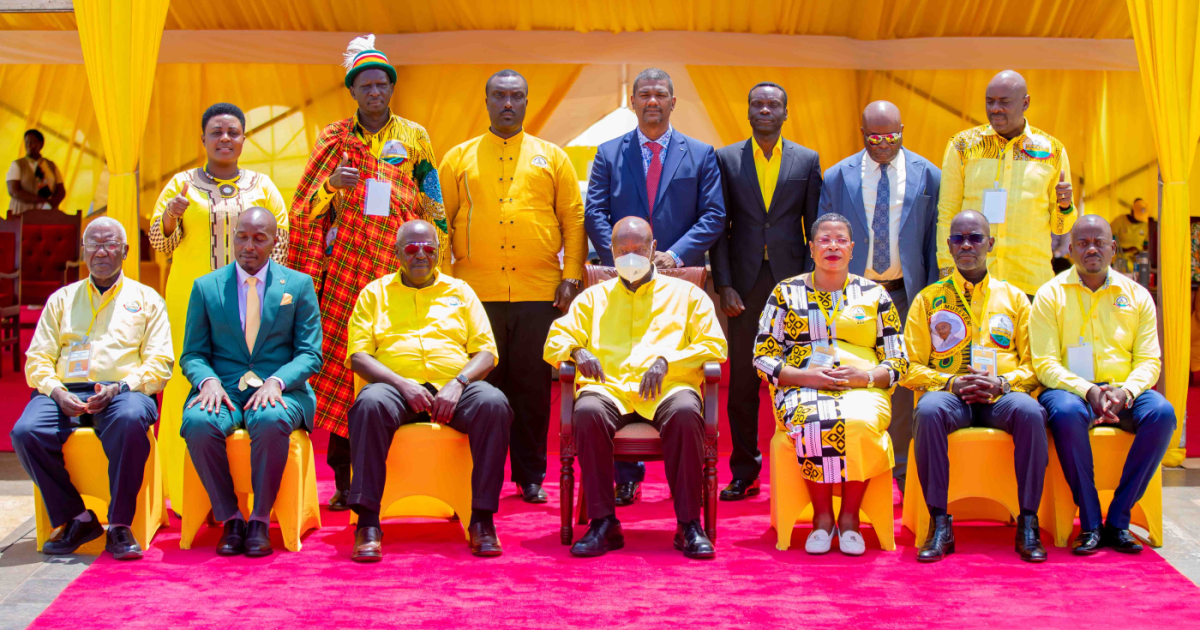
Following the conclusion of the recent general elections, the National Resistance Movement (NRM) has initiated a post-election consolidation process by convening district, city, municipal and division chairpersons for a strategic meeting with the Party’s National Chairperson at State House, Entebbe.
In a formal communication issued by the Office of the Secretary General, Rt Hon. Richard Todwong invited all NRM district and city chairpersons, as well as municipal and city division leaders, to attend the high-level engagement scheduled for 13 February 2026.
The meeting comes shortly after what the party described as a “resounding victory” in the general elections and signals a transition from campaign mobilisation to institutional alignment and governance coordination.
Although communication primarily serves as an invitation, the broader context points to a deliberate effort to strengthen internal structures, harmonise priorities and position party leadership at all levels for the next phase of implementation.
Post-election periods typically mark a shift from political contestation to structured governance planning. Such engagements provide a platform for leadership reflection, policy alignment and operational clarity.
Political analysts note that structured meetings between national leadership and sub-national officials are often intended to clarify post-election priorities, align district-level leadership with national policy direction, strengthen coordination mechanisms, and reinforce institutional discipline.
The move also reflects recognition that electoral victory alone does not guarantee effective governance delivery; structured follow-up and coordinated leadership remain essential.
Beyond internal consolidation, the meeting underscores the critical role district and city leaders play in translating national policy into tangible outcomes.
Uganda’s decentralised governance framework places district and city structures at the front line of implementation, serving as the interface between national policy and local communities. Whether in infrastructure development, agricultural transformation, social service delivery or youth empowerment programmes, effective implementation often depends on strong coordination at sub-national level.
District and city chairpersons play several key roles, including mobilising communities around government programmes, facilitating the flow of information between central government and local populations, monitoring implementation of national initiatives, and providing feedback on emerging local challenges.
In this context, alignment meetings become more than symbolic gatherings; they function as operational checkpoints within the governance cycle.
Large-scale national priorities such as agro-industrialisation, digital transformation, infrastructure expansion and poverty reduction strategies require synchronised execution across districts. Without structured coordination between national leadership and grassroots political structures, policy momentum can weaken.
By bringing district and municipal leaders together, the NRM leadership appears to be reinforcing the importance of cohesion, accountability and disciplined implementation in policy rollout.
Observers note that high-level engagements of this nature often focus on strengthening institutional cohesion following election cycles, when structures may require recalibration after months of campaign activity.
Such meetings typically provide an opportunity to reaffirm strategic priorities, address emerging organisational challenges, clarify roles and expectations, and strengthen discipline and communication channels.
As Uganda advances its socio-economic transformation agenda, governance effectiveness will increasingly depend on the strength of coordination between national leadership and district-level actors.
The upcoming meeting at State House therefore represents more than a ceremonial engagement. It signals a deliberate effort to consolidate structures, reinforce alignment and ensure that post-election momentum translates into sustained policy implementation at every level of governance.
For district and city leaders, the message is clear: electoral victory marks the beginning of a new phase — one centred on delivery, accountability and coordinated action.