

By Diana. N. Kintu
Uganda’s long-anticipated entry into the global oil market has taken a significant step forward with the near completion of the East African Crude Oil Pipeline (EACOP), a landmark regional infrastructure project expected to transform the country’s energy and economic landscape. The development was highlighted during the third day of an official pipeline tour led by the Minister of Energy and Mineral Development, Hon. Ruth Nankabirwa Ssentamu.
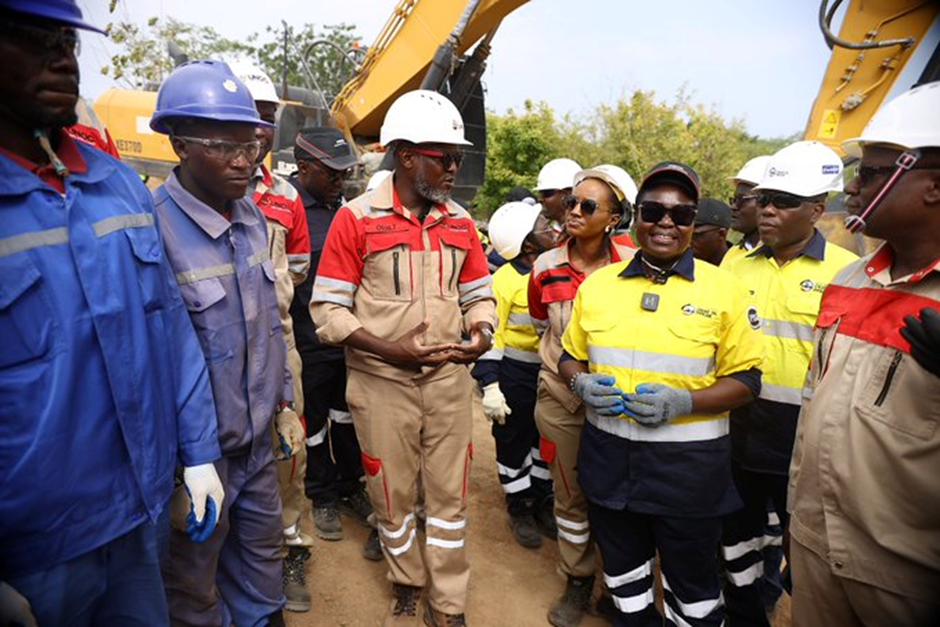
During the tour, the minister visited one of the final construction sites where welding works are ongoing on the last 100 kilometres of the 1,443-kilometre pipeline. The visit underscored the advanced stage of construction and signalled that the project is steadily moving towards commissioning.
EACOP begins at Pump Station One located within the Kabalega Industrial Park in Hoima District, Uganda’s emerging oil hub. From there, the pipeline runs underground across Uganda and northern Tanzania before terminating at the Tanga Storage Terminal and Jetty at Chongoleani on the Indian Ocean coast. At this final point, Uganda’s crude oil will be loaded onto marine tankers for export to international markets.
Speaking at the site, Hon. Nankabirwa described the progress as a critical milestone in Uganda’s oil development journey. She noted that the quality assurance measures and safety standards observed at the construction site were of a high standard, reflecting the commitment of engineers and contractors involved in the project.
“This milestone marks the near completion of the physical pipeline that will connect Uganda’s oil resources to global markets,” the minister said. She added that the progress achieved so far points to a smooth transition from construction to the start-up and commissioning phase, a crucial step before commercial operations can begin.
The minister further praised the technical teams for maintaining strict environmental, safety and engineering standards, emphasising that these safeguards are essential for the long-term sustainability of the project. She reiterated government’s commitment to ensuring that Uganda’s oil resources are developed responsibly and in a manner that benefits both current and future generations.
The Uganda National Oil Company (UNOC) also highlighted the broader significance of the pipeline beyond oil transportation. UNOC Board Chairman Mathias Katamba described EACOP as a catalyst for economic transformation across East Africa, noting that the project has already stimulated development in host communities through employment opportunities, infrastructure upgrades and skills transfer.
“EACOP represents more than just a pipeline,” Katamba said. “It marks the beginning of a new era for Uganda as an oil-producing nation and a strategic player in the regional and global energy sector.”
Once operational, Uganda’s crude oil will follow a dual utilisation strategy. Part of the production will be directed to the planned domestic refinery to meet local fuel demand and support industrialisation, while export volumes will be transported via the pipeline to the Tanzanian coast for shipment to international markets. This approach is expected to enhance energy security, reduce fuel imports and generate foreign exchange earnings.
The completion of EACOP is widely viewed as a turning point in Uganda’s economic journey. Beyond oil revenues, the project is expected to unlock new opportunities for trade, investment and regional cooperation between Uganda and Tanzania. As the country edges closer to first oil, the near-finished pipeline stands as a symbol of Uganda’s ambitions to harness its natural resources as a driver of sustainable development.