
By Diana N. Kintu
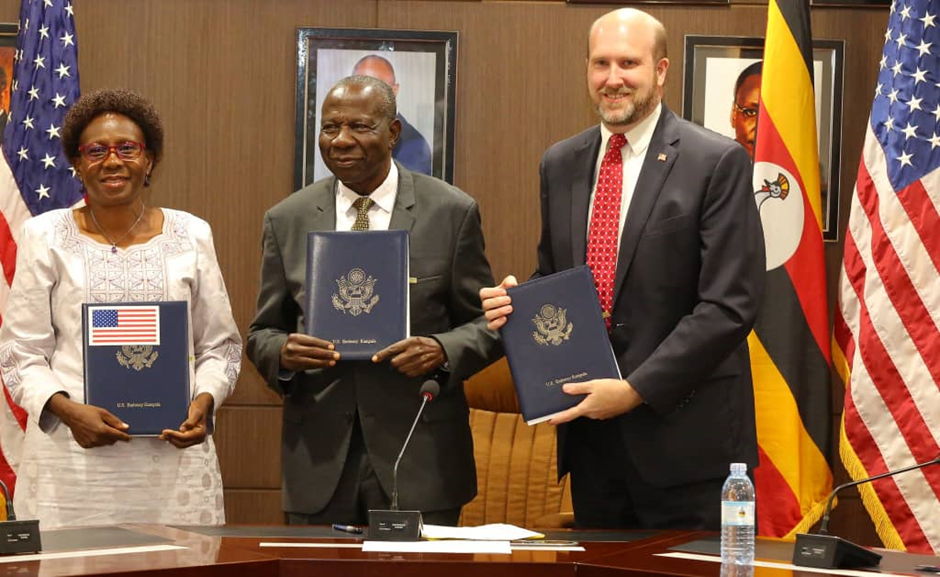
Uganda and the United States have entered a new phase of bilateral cooperation with the signing of a landmark five-year health partnership worth $2.3 billion. The Memorandum of Understanding (MoU), signed on 10 December 2025, outlines a shared commitment to reinforce Uganda’s health sector, enhance disease prevention, and build a sustainable system capable of managing current and future public health threats.
The agreement marks one of the most significant joint health investments between the two countries and reaffirms their long-standing collaboration spanning more than sixty years. It reflects a shift towards greater Ugandan ownership of health programmes, as both governments work to expand capacity, improve service delivery, and safeguard health gains achieved over the past decades.
Under the MoU, the United States will contribute up to $1.7 billion over the next five years to priority areas including HIV/AIDS, tuberculosis, malaria, maternal and child health, polio eradication, global health security, emergency preparedness, and strengthening the health workforce. These investments are expected to accelerate disease control efforts while building systems that can prevent outbreaks from becoming regional or global threats.
In turn, the Government of Uganda has committed to increasing domestic health financing by more than $500 million over the same period. This increased funding is intended to support the gradual transfer of responsibility for major health commodities and programmes from U.S. support to national systems, ultimately promoting long-term sustainability and local leadership.
Speaking at the signing ceremony, U.S. Ambassador William W. Popp described the agreement as a “renewed commitment to shared global health priorities”. He emphasised the focus on performance-driven approaches, robust data systems, and strong community-level health structures, noting that the partnership builds on past achievements while strengthening Uganda’s resilience and self-reliance. Ambassador Popp added that the new framework is designed to enhance surveillance and outbreak-response capabilities, helping to prevent disease transmission across borders.
Uganda’s Minister of Finance, Hon. Matia Kasaija, welcomed the agreement, highlighting its potential to transform the health sector. He stressed that Uganda is committed to honouring its increased investment obligations, recognising the importance of domestic funding in sustaining national health programmes. He noted that the partnership goes beyond disease-specific interventions, offering broader support to institutions, health workers, and national systems essential for long-term progress. Kasaija described the cooperation as “highly commendable” and fundamental to protecting public health.
A central provision of the MoU is the gradual transition of medical commodity procurement from U.S. agencies to the Ugandan government. This shift aims to strengthen national supply-chain systems, improve efficiency, and reduce dependency on external support. In parallel, health worker cadres currently funded by the U.S. Government will be harmonised with Uganda’s staffing structures and progressively absorbed onto the national payroll to maintain continuity of services.
Five-year investments will also target significant upgrades in Uganda’s disease surveillance and health data systems. The United States plans to support the country’s digital health roadmap through enhanced electronic medical records, improved data integration, and expansion of the national data warehouse. These changes are expected to bolster timely reporting, strengthen public health intelligence, and support Uganda’s wider digital transformation agenda.
Faith-based health facilities—which provide a substantial share of services, particularly in remote and underserved regions—will receive targeted assistance through performance-based agreements, increased Primary Health Care grants, and support for digitisation and community health insurance schemes.
The signing of the agreement reinforces decades of cooperation that have contributed to significant advances in HIV treatment, immunisation coverage, maternal health, and the expansion of the health workforce. Both Uganda and the United States affirmed that the new MoU represents a forward-looking commitment to protecting these gains, improving resilience, and ensuring that Uganda’s health sector evolves into a robust, self-sustaining system capable of serving future generations.
For further information, stakeholders may contact the U.S. Embassy in Kampala or the Ministry of Finance through their official channels of communication.