
By Caroline.N
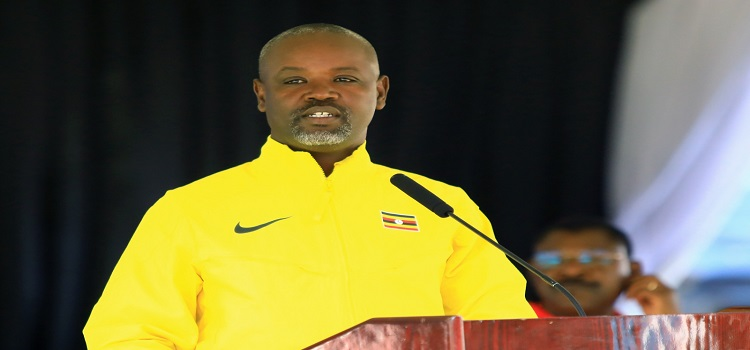
At the grand opening of the 15th EAC Inter-Parliamentary Games in Kampala, the Deputy Speaker of Parliament, Thomas Tayebwa, delivered remarks on behalf of President Yoweri Museveni that resonated far beyond sport. As athletes and lawmakers from across the region gathered at Kololo Ceremonial Grounds, Tayebwa used the occasion to highlight what he termed one of the clearest signs of real integration within the East African Community (EAC): the construction of a joint oil refinery by Uganda, Kenya, and Tanzania.
He argued that the refinery is not merely a policy ambition or a statement of intent — but a “concrete investment” that promises to yield shared value, prosperity, and true regional integration. Instead of exporting crude oil from places such as Hoima only to see it refined abroad and then re imported at higher costs, the EAC partners will soon be able to process their own oil locally.
The proposed refinery has been designed to handle 60,000 barrels of crude oil per day. Once operational, it is expected to significantly reduce the region’s dependence on imported fuel and help stabilise energy supply for millions of East Africans.
Tayebwa used the occasion — a sporting event meant to foster regional unity — to underscore a far broader ambition: leveraging the EAC’s combined market of over 500 million people to drive industrial growth, attract large investments, and spur technological innovation. According to him, this is precisely what regional integration should look like: pooling resources, sharing value addition, and creating shared prosperity.
Beyond the refinery project, Tayebwa drew attention to other examples of regional cooperation. He pointed to Uganda’s investments in road infrastructure in neighbouring countries, as well as a recently approved loan for a hydro power dam in South Sudan. He also noted collaboration between Uganda and Kenya in establishing a US$500 million steel plant in Tororo to process Uganda’s iron ore locally. Such efforts, he argued, show the growing ambition of EAC members to undertake joint investments for mutual benefit.
In response, the Speaker of the Kenya National Assembly, Moses Wetang’ula, echoed Tayebwa’s sentiments. He affirmed that the refinery project stands as a tangible demonstration of the founding vision of the EAC — a vision that is being realised day by day. Wetang’ula described integration not as optional but as the path forward for the region, stressing that unity offers greater benefits than isolation.
Meanwhile, the Speaker of the East African Legislative Assembly (EALA), Joseph Ntakirutimana, highlighted the value of the EAC Games themselves: not just as a competition, but as a platform to build friendships, promote reconciliation, and deepen regional unity. The games, according to him, foster people to people bonds that reinforce political and economic cooperation.
The 15th EAC Inter Parliamentary Games, held under the theme “Advancing Integration through EAC Parliamentary Sports”, began with a football match between Uganda and Burundi, where the hosts emerged victorious with a 4–1 win. The games feature multiple sporting disciplines — from netball and basketball to volleyball, golf, tug of war and more — and draw participation from several EAC member states.
But for many observers, the spotlight may shift from the sports arenas to the oil refinery project. For long, critics have argued that exporting raw crude only to re import refined fuel adds unnecessary costs and leaves the region dependent on external refineries. The joint refinery represents a strategic flip — a decision to add value at home, retain more benefits locally, and build industries within East Africa rather than relying on foreign processing.
If all goes according to plan, the refinery — together with allied infrastructure such as pipelines and industrial parks — could reduce import bills, create thousands of jobs, and improve trade balances for the partner states. The plan forms part of broader efforts to transform the EAC from a loose trade agreement into an integrated economic bloc with industrial capacity and shared prosperity.
In this light, the statement by Tayebwa during the EAC Games is more than political rhetoric. It reflects a renewed commitment to a long term vision: where East Africa not only unites for sport and diplomacy but also builds the industries and infrastructure that will secure its economic independence and buoy its future.