
By Diana. N. Kintu
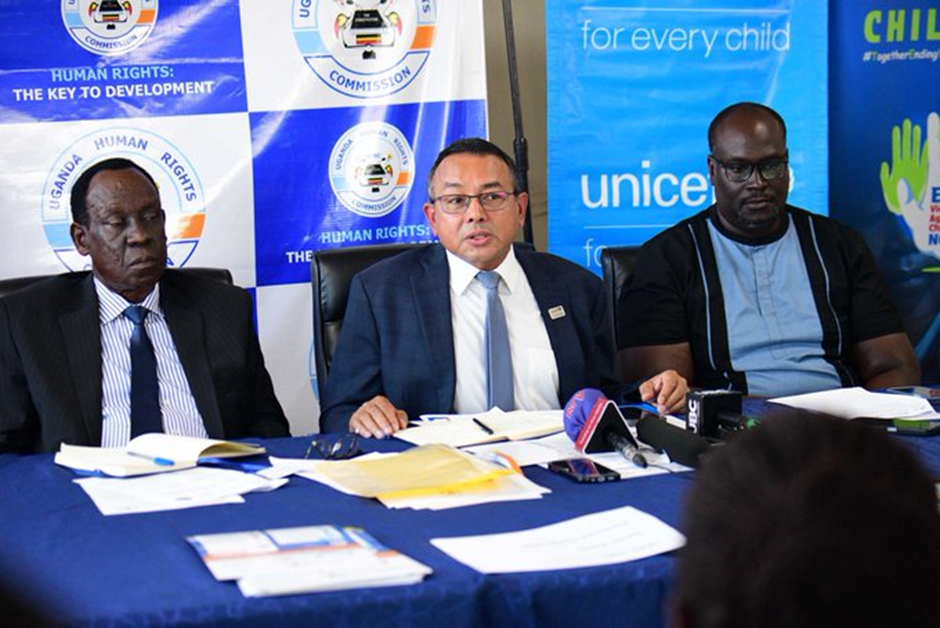
A coalition of national and international human rights organisations has issued a firm appeal to safeguard children throughout Uganda’s ongoing electoral process, warning that political activities should never compromise the wellbeing or rights of minors. The call was delivered during a joint press briefing held by the Uganda Human Rights Commission (UHRC) in partnership with the Uganda Child Rights NGO Network (UCRNN), UNICEF Uganda, and the National Initiative for Civic Education in Uganda (NICE-UG).
The statement, read by Hon. Lamex Apitta Omara on behalf of the UHRC Chairperson, highlighted growing concerns over the exposure of children to potentially harmful environments as campaigns intensify ahead of the forthcoming elections. He was accompanied by senior representatives including Mr Damon Wamara, Executive Director of UCRNN; Dr Robin Nandy, UNICEF Uganda’s Country Representative; and Mr Andrew Lubega, Team Lead at NICE-UG. Several commissioners from UHRC were also in attendance.
According to the coalition, political campaigns—by their fast-paced and emotionally charged nature—often place children in situations that infringe upon their fundamental rights. These include the right to safety, the right to education, the right to privacy, and the right to engage freely in play and leisure. The organisations noted that children can unintentionally become part of campaign crowds, political advertising, or rallies, all of which can expose them to physical, psychological, or emotional risks.
UNICEF Uganda delivered a particularly clear message, stating: “Elections are an important part of democracy, but they should never compromise a child’s safety, dignity or wellbeing.” This sentiment was echoed by all partner organisations, who urged political parties, candidates, parents, caregivers, and the wider public to act responsibly by ensuring that children are kept away from political gatherings and campaign activities. The coalition stressed that involving minors in political advertising, mobilisation efforts, or campaign messaging is inappropriate and potentially harmful.

In response to these concerns, the collaborating organisations announced the development of a comprehensive set of child-protection guidelines tailored specifically for the electoral period. These practical recommendations take the form of “Dos and Don’ts” directed at four key groups: the media, parents and caregivers, children, and political actors. The guidelines aim to offer clear steps that each stakeholder can follow to minimise risks faced by children and promote safe environments throughout the electoral cycle.
The media, for instance, are encouraged to refrain from using images of children in political reporting without proper safeguards and consent. Parents and caregivers are advised to discourage children from attending rallies or campaign events, while politicians are reminded that children should not be used for political gain. The guidelines also empower children to recognise unsafe situations and report concerns to trusted adults.
The central message of the initiative is the need for a child-centred approach to all electoral activities. The UHRC emphasised that the best interests of the child must prevail—both in decision-making and in practice. “The aim of this initiative is to call on all stakeholders to commit to child-friendly approaches throughout the electoral period and to do everything in the best interest of the children,” the Commission stated.
The coalition underscored that protecting children during elections is a shared responsibility that contributes to a healthy, rights-respecting democratic environment. As the country moves deeper into campaign season, the organisations expressed hope that their joint appeal will foster heightened vigilance and responsible conduct across all sections of society.
This article is based on official communications from the Uganda Human Rights Commission, UNICEF Uganda, the Uganda Child Rights NGO Network, and the National Initiative for Civic Education in Uganda.