

By Diana N. Kintu
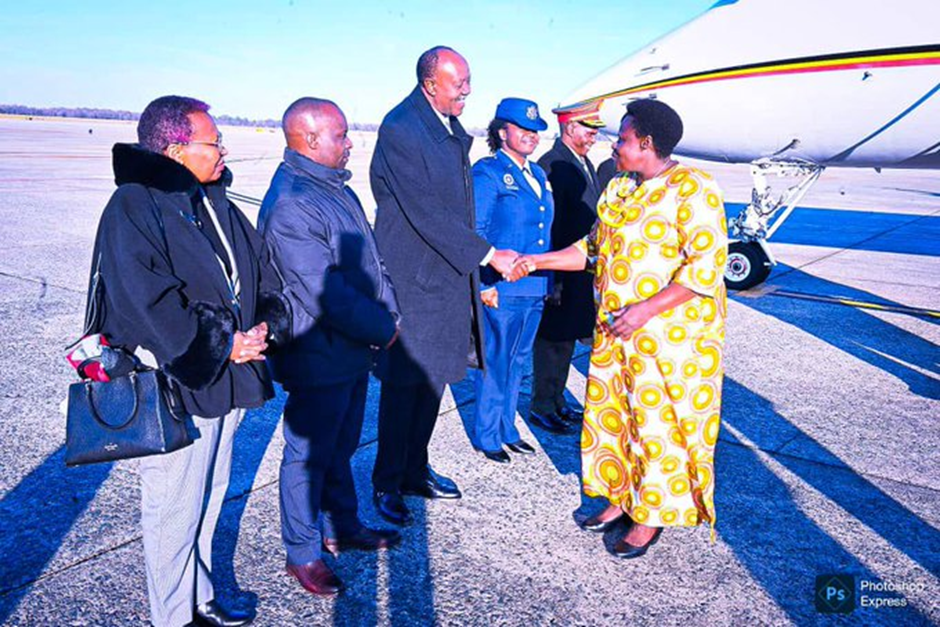
Uganda has reaffirmed its commitment to regional peace and stability through its high-level participation in the signing of the Washington Accords for Peace and Prosperity, a landmark agreement between the Democratic Republic of Congo (DRC) and Rwanda. The ceremony, held in Washington D.C., was attended by Uganda’s Vice President, Jessica Alupo, who represented President Yoweri Kaguta Museveni. Her presence signalled Kampala’s sustained diplomatic investment in ending a conflict that has shaped political, economic, and security dynamics across the Great Lakes region for decades.
The signing of the accord marks a pivotal turning point in efforts to deescalate long-standing hostilities in eastern DRC. Uganda, sharing a border with the conflict-affected provinces, has long been impacted by spillover effects of instability, including refugee inflows, disruption of regional trade routes, and security challenges related to armed groups. The country’s top-level attendance at the ceremony therefore underscored not only regional solidarity but also Uganda’s direct national interest in a lasting peace settlement.
Kenya’s President, William Samoei Ruto, captured the significance of the moment in a compelling address delivered during the ceremony. He described the Washington Accords as “not merely a monumental diplomatic milestone; [but] a decisive act to end a devastating conflict that has scarred the region for decades.” Citing the human and economic toll of the prolonged crisis, he emphasised that the instability had “destroyed livelihoods, destabilised our region, and threatened the future of the entire Great Lakes Region and the entire African continent.”
President Ruto also highlighted the extensive diplomatic engagements that paved the way for the signing. He praised the leadership of the DRC and Rwanda for their commitment to the various peace tracks—including the Nairobi, Luanda, and Washington Processes—which have been instrumental in sustaining dialogue despite deep-seated mistrust and intermittent escalations. Uganda has played a crucial role in these diplomatic efforts, and Vice President Alupo’s participation in Washington reaffirmed Kampala’s continued alignment with regional and continental initiatives to secure durable peace.
Beyond matters of security, the economic rationale behind the peace agreement was strongly emphasised. President Ruto noted that a stable eastern Congo holds immense potential for unlocking economic prosperity across the African continent. He argued that Africa’s current marginal share of global trade could be significantly improved through peace, enhanced connectivity, and the effective implementation of the African Continental Free Trade Area (AfCFTA). A peaceful and economically active DRC, he said, could “ignite an unprecedented transformation” by enabling trade corridors, boosting intra-African commerce, and facilitating large-scale infrastructure development.
For Uganda, which is landlocked and heavily reliant on regional trade routes, the economic dimension is particularly critical. Instability in eastern DRC has repeatedly disrupted commerce, increased transport costs, and limited the expansion of cross-border business opportunities. The Washington Accords therefore open new possibilities for collaborative infrastructure ventures, expanded trade networks, and stronger economic interdependence with neighbouring states. Improved stability would also enhance regional security cooperation, allowing states such as Uganda to shift more resources from security responses to productive development programmes.
Vice President Alupo’s presence at the signing ceremony thus carried multi-layered significance. It represented a gesture of solidarity with neighbouring countries, acknowledged the efforts of international partners who supported the peace process, and underlined Uganda’s strategic interest in fostering a secure and economically integrated region. The Washington Accords stand as a critical milestone, and Uganda’s engagement reflects a broader aspiration shared across the Great Lakes: to replace tensions and conflict with cooperation, stability, and shared prosperity.
As the region looks ahead, the successful implementation of the agreement will require sustained political will, confidence-building measures, and continued diplomatic coordination. Uganda’s participation signals that it is prepared to remain an active partner in these efforts, supporting a future where peace in the Congo Basin becomes the foundation for long-term economic transformation across Central and East Africa.