
By Diana. N. Kintu.
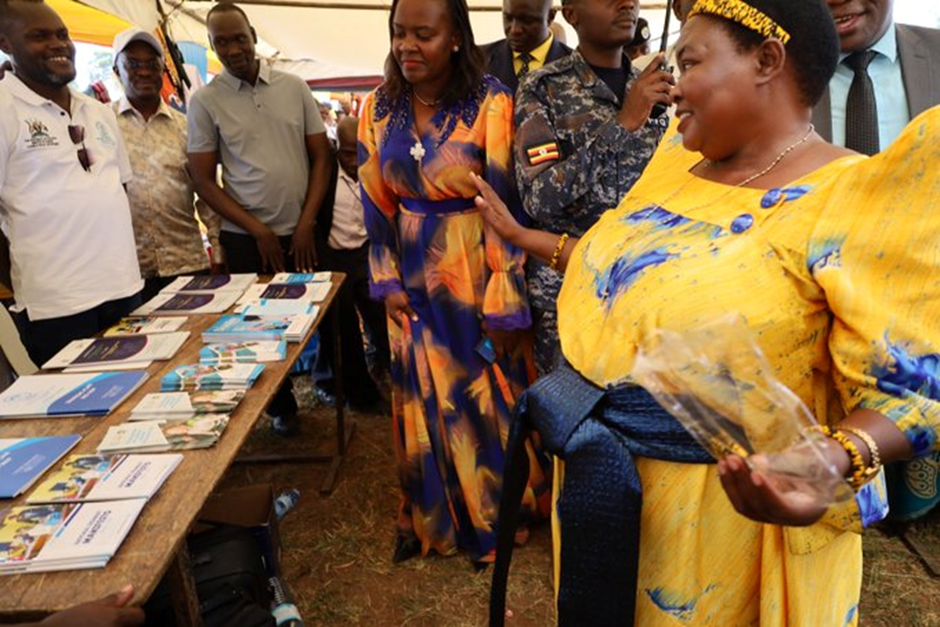
Mubende District served as Uganda’s national focal point for the 2025 observance of the International Day of Persons with Disabilities (IDPD) on December 3rd, bringing together disability rights advocates, community leaders, and government officials in a landmark celebration. The event was presided over by Prime Minister Robinah Nabbanja, who attended in a representative capacity on behalf of President Yoweri Kaguta Museveni.
In a message shared on her official X (formerly Twitter) account on December 4th, Prime Minister Nabbanja stated, “Today, I represented H.E. President Kaguta Museveni at the International Day of Persons with Disabilities (PWDs) celebrations in Mubende District.” Her presence underscored the day’s national significance, which was coordinated by the National Union of Disabled Persons of Uganda (NUDIPU), the leading body advocating for disability inclusion in the country.
The Prime Minister delivered the government’s message, focusing on appreciation, empowerment, and economic inclusion. She conveyed the President’s gratitude to persons with disabilities for their contributions to national development and highlighted the importance of integrating them into mainstream economic initiatives. Specific programs recognised included the Parish Development Model (PDM) and targeted initiatives such as the National Special Grant for Persons with Disabilities, which aims to foster financial independence and community engagement.
A central feature of the address highlighted the President’s “four-acre model,” an agricultural framework designed to promote intensive farming on small landholdings. Prime Minister Nabbanja noted that the President “is pleased to have received many testimonies from PWDs who have transformed their lives through the four-acre model.” By linking this government policy to real-life success stories, the speech emphasised economic self-sufficiency as a core pillar of inclusion for persons with disabilities, demonstrating how targeted interventions can deliver tangible improvements in livelihoods.
The event also served as a platform to reinforce the broader agenda of national disability empowerment. Discussions during the celebration underscored the need for continued investment in accessibility, vocational training, and entrepreneurship opportunities for people with disabilities. By highlighting government programs, the observance aimed to inspire greater participation in development initiatives while ensuring that PWDs are visible stakeholders in Uganda’s socio-economic progress.
Prime Minister Nabbanja’s participation further elevated the profile of the observance, reflecting the government’s commitment to integrating disability considerations into national development planning. Her presence symbolised the state’s recognition of the contributions of PWDs across sectors and its intent to continue providing structured support through both policy and practical initiatives.
The 2025 IDPD celebrations in Mubende underscored the government’s multi-faceted approach to disability inclusion, combining recognition, economic empowerment, and advocacy. By foregrounding programs such as the Parish Development Model and the four-acre model, the observance highlighted pathways through which persons with disabilities can achieve economic independence, social visibility, and meaningful participation in national development.
As the event concluded, it was evident that Uganda’s approach to disability inclusion continues to prioritise empowerment through targeted government programs, community engagement, and sustained advocacy. The celebration not only marked a day of recognition but also reaffirmed the country’s ongoing commitment to ensuring that persons with disabilities remain active, productive, and recognised members of society.