

By Diana. N. Kintu.
Uganda marked the national commemoration of World AIDS Day in Kizinda Town Council, Bushenyi District, bringing together top government officials, health partners, civil society groups and communities to reflect on the country’s progress in the fight against HIV and AIDS. The event served as a national platform to review achievements, address emerging gaps, and recommit to the global goal of ending AIDS as a public health threat by 2030.
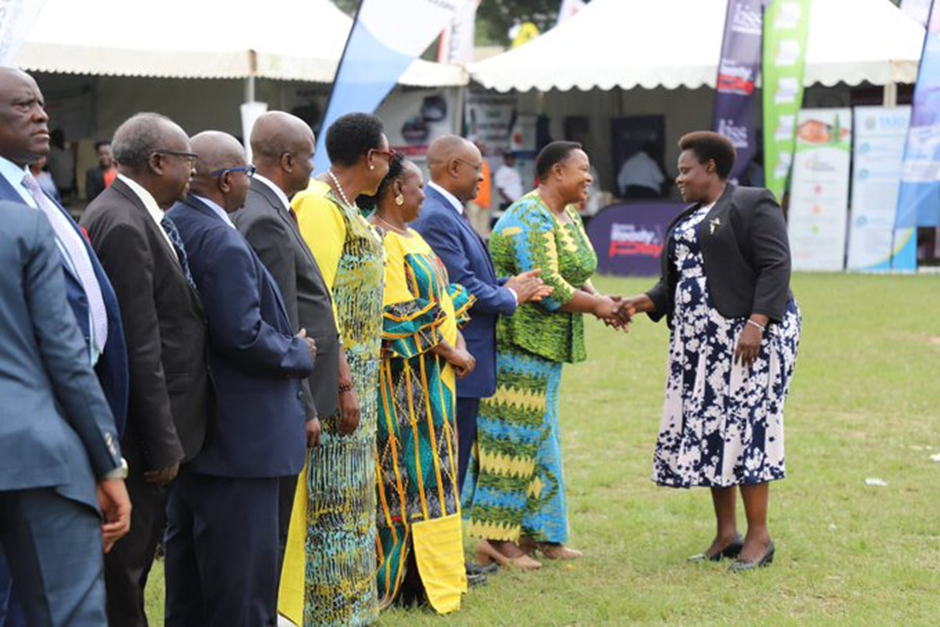
The Vice President, Hon. Jessica Alupo, represented President Yoweri Museveni at the event and presided over the day’s activities. She was received by the Minister for the Presidency, Hon. Milly Babalanda, alongside senior officials from the Uganda AIDS Commission (UAC), district leaders, and representatives from development agencies.
Upon arrival, the Vice President toured exhibition tents showcasing work by HIV response stakeholders, community groups, and local businesses. Exhibitors included the Igara West Women Entrepreneurs, Bushenyi Ankole Honey, and the National Forum of People Living with HIV/AIDS Networks in Uganda (NAFOPHANU). The displays highlighted the multi-sectoral approach Uganda continues to employ—linking economic empowerment, community mobilisation, and public health interventions to sustain gains in HIV prevention and treatment.
A key message of progress and cautious optimism came from the Director General of the Uganda AIDS Commission, Dr. Nelson Musoba, who presented the latest national and global data. Referring to the recent UNAIDS Global Targets Report, Dr. Musoba declared that “Uganda is winning the war against HIV,” attributing the gains to government leadership, donor support, and community-driven initiatives.
According to Dr. Musoba, Uganda is closing in on the international 95-95-95 fast-track targets set to curb HIV transmission. Current national figures indicate that 94% of people living with HIV (PLHIV) in Uganda now know their HIV status, 90% of those who know their status are receiving life-saving antiretroviral therapy (ART), and 96% of individuals on ART have achieved viral suppression. Viral suppression means the virus in their bodies is reduced to levels that protect their health and greatly diminish the risk of infecting others.
The high viral suppression rate is particularly notable, positioning Uganda among African countries making strong progress toward epidemic control.
Uganda is also pushing toward reducing new infections, with national targets aiming for a 65% reduction in adult and youth infections and the lowering of paediatric HIV cases to below 5% by the end of 2025. The World AIDS Day commemoration was widely viewed as a reinforcement of the country’s determination to meet these benchmarks and accelerate momentum toward the 2030 goal.
Yet the day’s messages were not limited to celebration. Speakers used the platform to highlight critical gaps, especially the lagging participation of men in the HIV response. Canon Dr. Ruth Senyonyi, Chairperson of the UAC Board, issued a direct appeal, urging men to take greater responsibility in testing, treatment, and prevention. She emphasised that men must become more engaged if Uganda is to sustain progress and protect vulnerable populations.
The event also foregrounded the voices and experiences of people living with HIV. Representatives from NAFOPHANU reiterated their commitment to championing prevention, adhering to treatment, and promoting positive living within their communities. Their statements underscored that Uganda’s HIV response extends beyond medical achievements to issues of dignity, social inclusion, and community empowerment.
Religious leaders offered prayers during the ceremony, reflecting the spiritual dimension that has long influenced Uganda’s HIV prevention and care efforts.
The 2025 World AIDS Day commemoration in Bushenyi painted the picture of a nation at an important crossroads—one that has made remarkable progress in treatment and suppression rates yet remains aware that sustained investment, targeted gender-responsive strategies, and community engagement are essential to reach the final milestones.
Uganda’s leaders reaffirmed that while the country is closer than ever to achieving epidemic control, success will depend on continued partnership between government, civil society, medical professionals, and the citizens most affected by the epidemic.