
By Diana N.Kintu
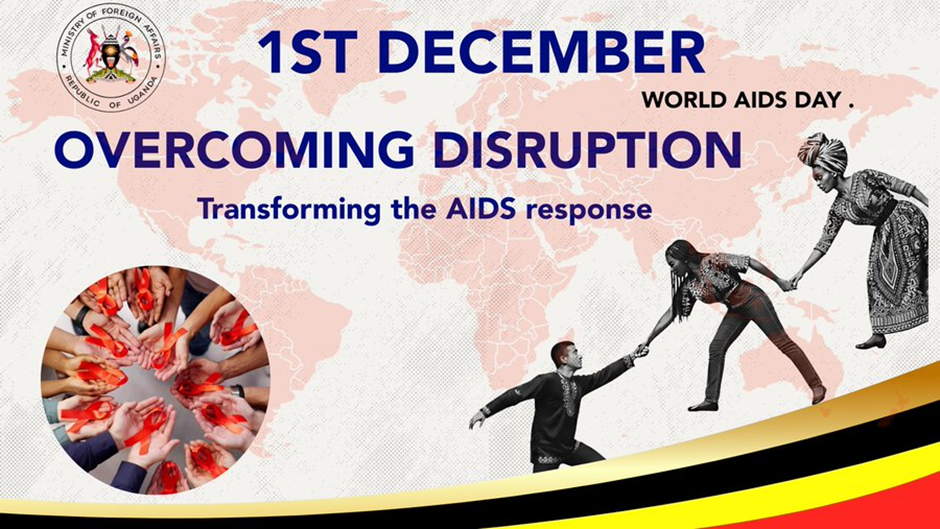
The Ministry of Foreign Affairs has reaffirmed Uganda’s commitment to international cooperation in the fight against HIV/AIDS, using this year’s World AIDS Day commemoration to underscore the importance of diplomacy, community leadership, and sustained global partnerships in strengthening public health systems.
In a statement released through its official communication channels on Monday, the Ministry joined governments, international organisations, and civil society worldwide in honouring the day, which is observed annually on December 1. The message emphasised that Uganda continues to view the HIV/AIDS response not only as a domestic health priority but also as a key pillar of its engagement within the global community.
World AIDS Day 2025 is being marked under the theme “Overcoming disruption, transforming the AIDS response.” The Ministry noted that the theme reflects ongoing challenges experienced by health systems—particularly those resulting from global crises such as pandemics, economic pressures, and humanitarian disruptions—while calling for renewed commitment to inclusive and resilient approaches. According to the statement, Uganda fully endorses this year’s theme as a reminder that sustained collaboration and community leadership remain essential for ending AIDS as a public health threat.
“The commemoration challenges us to continue strengthening inclusive health systems and fostering sustained international cooperation,” the Ministry said. It further paid tribute to communities at the forefront of the HIV response, recognising them as “the backbone of prevention, treatment, and awareness efforts.” The statement emphasised that the courage, adaptability, and leadership demonstrated by community-based organisations continue to shape Uganda’s progress in combating the epidemic.
A significant portion of the Ministry’s message focused on Uganda’s diplomatic role in advancing global health goals. It highlighted that through its missions abroad and engagement in multilateral platforms, the country actively works to reinforce partnerships that support community-driven interventions, scale up access to essential services, and facilitate long-term investment in healthcare.
“Through ongoing diplomatic engagement, we work to strengthen partnerships that support community-driven solutions, expand access to prevention and treatment, and reinforce resilient health systems in Uganda and across the globe,” the Ministry reported. It added that collaboration with host governments, development agencies, research institutions, and civil society organisations forms part of a broader strategy to promote shared learning, capacity-building, and innovation in public health.
Officials noted that global cooperation has played a crucial role in Uganda’s progress in controlling HIV transmission, increasing access to antiretroviral therapy, and supporting vulnerable populations. Uganda’s foreign missions have been instrumental in mobilising support for national health initiatives, advocating for equitable access to treatment, and participating in international forums aimed at addressing emerging challenges in the HIV/AIDS response.
The Ministry’s statement combined reflection with renewed determination—a tone aligned with the spirit of the global observance. “Today, we join the international community in remembering those we have lost, celebrating the resilience of millions, and reaffirming our commitment to a future free from AIDS,” it read. The message called on governments, partners, and communities to continue working collaboratively, stressing that solidarity remains essential to achieve sustainable progress.
As Uganda continues to align its national policies with international frameworks, health diplomacy has emerged as a central focus of its foreign policy agenda. The Ministry highlighted that efforts to strengthen health systems are connected to broader development goals, including poverty reduction, gender equality, and social inclusion.
Analysts note that Uganda’s approach reflects a growing recognition among countries that global health security requires cooperation across borders. Issues such as access to medicines, vaccine availability, research funding, and capacity-building increasingly rely on coordinated international action. Uganda’s stance, therefore, positions the country as both a beneficiary and a contributor to global health initiatives.
World AIDS Day 2025 arrives at a time when global attention is shifting toward addressing systemic disruptions that have affected HIV prevention and treatment services in recent years. Despite challenges, global health agencies have reported progress in reducing new infections and improving treatment coverage, although significant gaps remain, particularly in low- and middle-income countries. Uganda’s renewed commitment, as expressed by the Ministry, signals its determination to remain an active partner in bridging these gaps.
The Ministry concluded its message with a call to collective action: “Together, we can transform progress into lasting change.” The statement reaffirms Uganda’s belief that ending AIDS requires sustained investment, strengthened partnerships, and unwavering support for the communities that continue to drive the HIV response.