

By Caroline.N
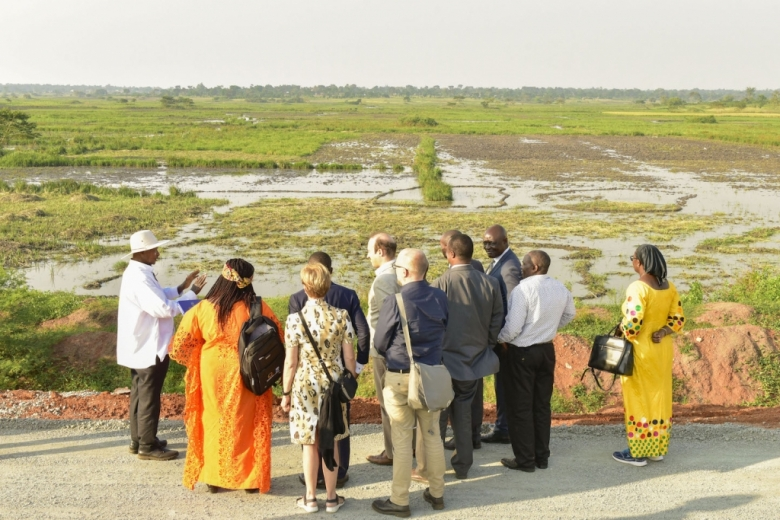
President Yoweri Museveni has praised the people of Rukiga District for their exemplary efforts in conserving wetlands, describing their initiatives as a model for the entire country. Speaking during a field visit to the district last week, Museveni commended local authorities and community members for successfully balancing agricultural development with ecological preservation.
“Rukiga is demonstrating how communities can use land productively while protecting our vital wetlands,” the president said. “This example should be replicated across Uganda to maintain our water sources, biodiversity, and climate resilience.”
Rukiga, located in southwestern Uganda, is renowned for its fertile soils and numerous wetland areas that play a critical role in regulating water flow, supporting agriculture, and sustaining local biodiversity. Over the past several years, the district has implemented several measures to protect these ecosystems. These include community-led wetland patrols, tree planting campaigns, and awareness programmes aimed at discouraging illegal encroachment and pollution.
Local leaders report that the conservation efforts have already yielded visible results. Water sources have become cleaner, indigenous plant and animal species are returning, and farmers are adopting more sustainable practices, enabling them to cultivate crops without damaging fragile wetlands.
Environmental experts emphasise that wetlands are among the most productive ecosystems globally, providing essential services such as water purification, flood control, and carbon sequestration. Uganda has been under increasing pressure to protect wetlands due to population growth, urbanisation, and agricultural expansion, making Rukiga’s model particularly important.
During his visit, Museveni also interacted directly with community members, discussing ways to maintain the wetlands while supporting sustainable livelihoods. He encouraged local leaders to involve young people in conservation activities and stressed the importance of integrating environmental education into schools.
“The youth are our future custodians of nature,” he said. “When they understand the value of wetlands, they will protect them for generations to come.”
Community leaders expressed appreciation for the president’s recognition, stating that it motivates residents to continue and expand conservation initiatives. One district official said, “Our people understand that protecting wetlands is not just about the environment, but also about securing our future and livelihoods.”
The president’s visit underscores the growing national focus on environmental protection and sustainable land management. With climate change posing increasing threats, Uganda’s leadership is advocating for proactive measures to safeguard ecosystems that are critical for survival and economic development.
Museveni’s endorsement of Rukiga’s wetland conservation efforts sends a strong message nationwide that environmental sustainability and development can go hand in hand. The hope is that other districts will take inspiration from Rukiga’s approach, adopting similar initiatives to protect Uganda’s wetlands for the benefit of present and future generations.