

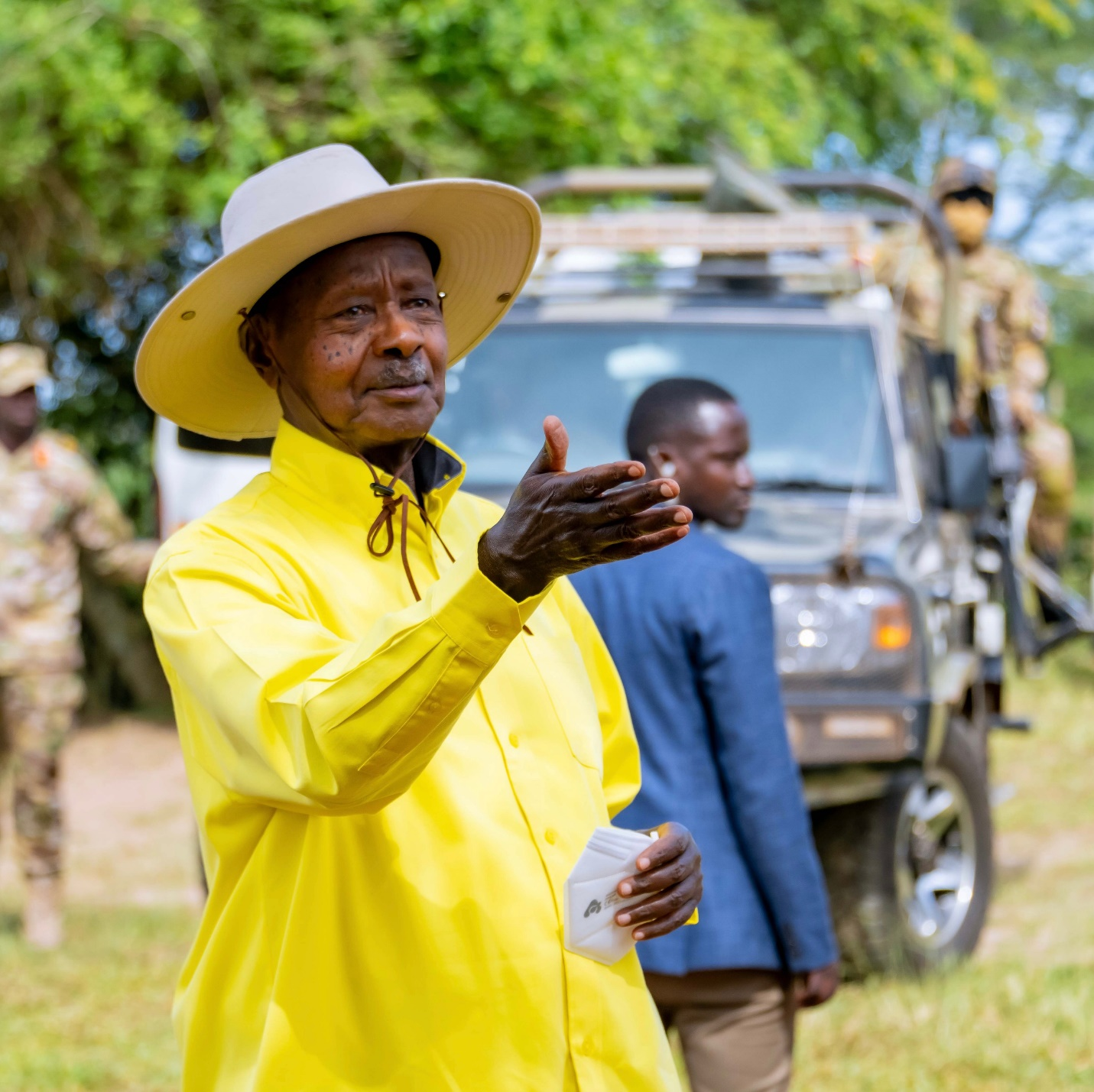
As Uganda draws closer to the 2026 general elections, the ruling National Resistance Movement (NRM) has formally launched a village-based mobilisation model — a grassroots strategy intended to strengthen its presence and performance across rural areas. The unveiling, which took place at the party offices in Kampala on October 13, 2025, marks a deliberate shift in how NRM intends to mobilise supporters for the upcoming polls.
The central pillar of the new strategy is empowering local branch leadership — particularly at the village level — to take more responsibility for canvassing, vote protection, and spreading awareness of the party’s manifesto. Some of the major components.
Guide has been developed to outline the sequence and highlights of mobilisation at village level. Party mobilisers from across Uganda have undergone induction sessions on how to implement the model.
Each of Uganda’s 72,000+ villages/branches will have a 63-member task force, responsible for ensuring mobilisation, voter turnout and protection at that very local level.
Mobilisers are being instructed to sensitise citizens about the contents of the NRM manifesto — the promises, projects (e.g. Emyooga) and procedures for accessing benefits.
The party is continuing with its policy of allocating 100 million shillings per parish for mobilisation, plus an extra 15 million for leaders for preparatory work.
NRM leadership emphasises that this approach harks back to its “mass party” and “grassroots party” identity. Their argument is that votes are not won in Kampala, districts, or high-level campaign events alone, but in the villages and sub-counties — where everyday people live, make decisions, and where mobilisation has real impact.
Deputy Secretary General Rose Namayanja pointed out that understanding, presence, and support must be solidified at these lower administrative units because those are where most voters are found.
Another rationale is that over time, internal party structures have shown some weakness at village level, either in voter mobilisation or in handling opposition or concerns that the party is disconnected from ordinary people. By investing in branch leadership and grassroots mobilisers, NRM aims to close that gap.
The strategy is already being rolled out in several districts. For example, in Busia District, a major mobilisation meeting brought together over 4,000 village chairpersons, flag bearers and mobilisers from all 568 villages. They were tasked with delivering votes and working to reverse declines in vote share seen in previous elections.
In national structures, the formation of village task forces (63 members per village) aims to institutionalise mobilisation and protection of votes. The idea is not only cultivation of support but ensuring that the votes gained are protected during both internal party primaries and the general elections.
It also suggests a longer-term shift: moving from top-down mobilisation to a more distributed, bottom-up model; creating deeper accountability at branch levels; and embedding mobilisers in everyday community life rather than only in election seasons.
However, success depends heavily on execution. Mobilisers must be well-trained, motivated, and credible; resources must reach the intended beneficiaries; and the party must ensure that its promises are backed by actual development outcomes. Otherwise, the risk is that mobilisers become seen as political agents without delivery, which could backfire.
The NRM’s launch of a village-based mobilisation model ahead of the 2026 polls is a calculated effort to win at the grassroots, to empower branch structures and to institutionalise vote mobilisation and protection. It offers both opportunity and risk. For the electorate, it raises expectations of greater engagement, clearer communication of campaign promises, and better service delivery. For the NRM, it offers a chance to shore up its base — but only if the wheels of this complex mobilisation machine are well oiled.