
By Walimbwa Moses
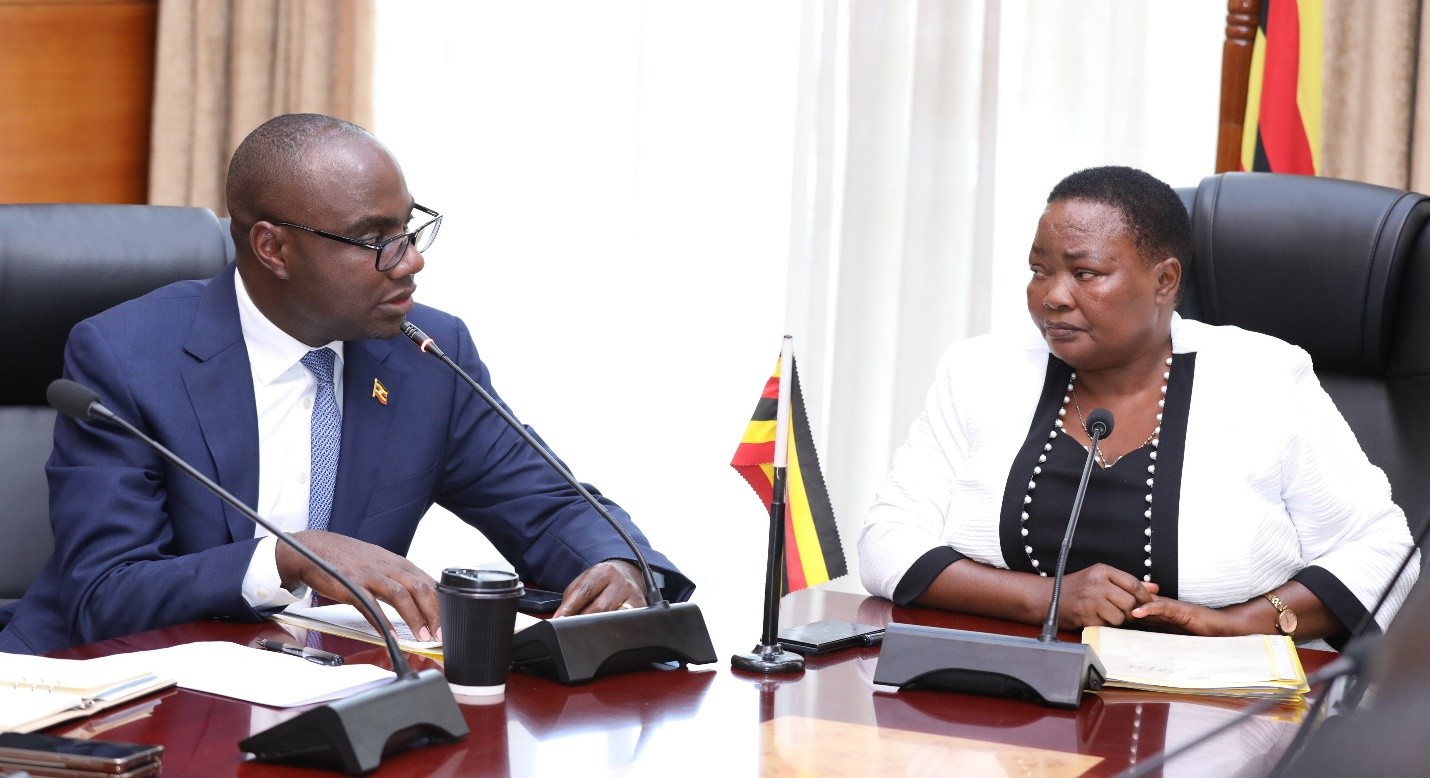
Finance Minister Henry Musasizi presents the FY2027/28 Budget Strategy during the launch of the Presidential Advisory Committee on Budget (PACOB).
Government has set a preliminary Sh79.22 trillion resource envelope for the 2027/28 financial year, down from Sh84.39 trillion for the current financial year, as it moves to tighten spending and focus resources on jobs, exports and household incomes.
Finance Minister Henry Musasizi presented the FY2027/28 Budget Strategy at Speke Resort and Convention Centre, Munyonyo, on September 10, outlining the policy direction for the next national budget.
The strategy is intended to deepen implementation of the Tenfold Growth Strategy, the Fourth National Development Plan and the NRM Manifesto for 2026–2031.
The budget will continue under the theme, “Full Monetisation of Uganda’s Economy through Commercial Agriculture, Industrialisation, Expanding and Broadening Services, Digital Transformation and Market Access.”
Musasizi said economic growth is projected at 7.6 percent in FY2026/27 and 9.1 percent in FY2027/28. The higher projection is linked mainly to the expected start of commercial oil and gas production and its wider effects on construction, manufacturing, services and exports.
On Friday, September 18, Prime Minister Robinah Nabbanja launched the Presidential Advisory Committee on Budget (PACOB), which is expected to scrutinise spending proposals and help Government identify areas that should take priority within the available resources.
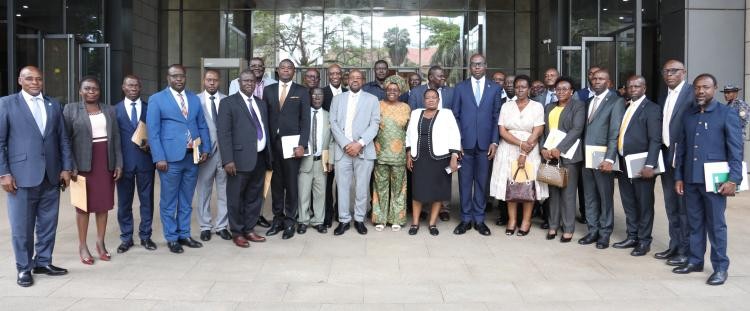
Prime Minister Robinah Nabbanja launches the Presidential Advisory Committee on Budget (PACOB) as Government begins preparations for the FY2027/28 national budget.
Nabbanja urged committee members to identify “priorities within priorities” and ensure that public resources deliver measurable results. She asked the committee to assess proposals based on strategic alignment, evidence of results, implementation readiness and value for money.
Among the areas highlighted are strategic roads and the Standard Gauge Railway, reliable and affordable electricity, irrigation, oil and gas infrastructure, digital connectivity, science and technology, exports, jobs and household incomes.
The strategy also places emphasis on agro-industrialisation, tourism, mineral-based industrial development and science, technology and innovation. Infrastructure, irrigation, industrial parks, wealth-creation programmes and regional export markets are also included.
Government plans to raise more domestic revenue while mobilising private capital through foreign direct investment, equity partnerships, joint ventures, infrastructure bonds, project finance and public-private partnerships. It also intends to strengthen tax administration through digital systems and improved data sharing.
The strategy calls for cautious management of oil revenues. The Finance Ministry says transfers to the Consolidated Fund will be capped at 0.8 percent of the previous year’s non-oil GDP, with the balance going to the Petroleum Revenue Investment Reserve.
The first Budget Call Circular for FY2027/28 was issued on September 18, directing Government entities to prepare their Budget Framework Papers and preliminary estimates within the set resource ceilings.
The Office of the Prime Minister will serve as the PACOB secretariat and track recommendations adopted during the budgeting process, with an action report expected by November 30.